What You'll Learn
This covers the specific setup and grip habits that make chef's knife use genuinely safer, not just theoretically safer in a way that's hard to actually remember mid-recipe. That means how to hold the knife, how to position your guiding hand, how to set up your cutting surface properly, and the handful of habits that account for the overwhelming majority of preventable kitchen cuts.
Step 1: Stabilize Your Cutting Board First
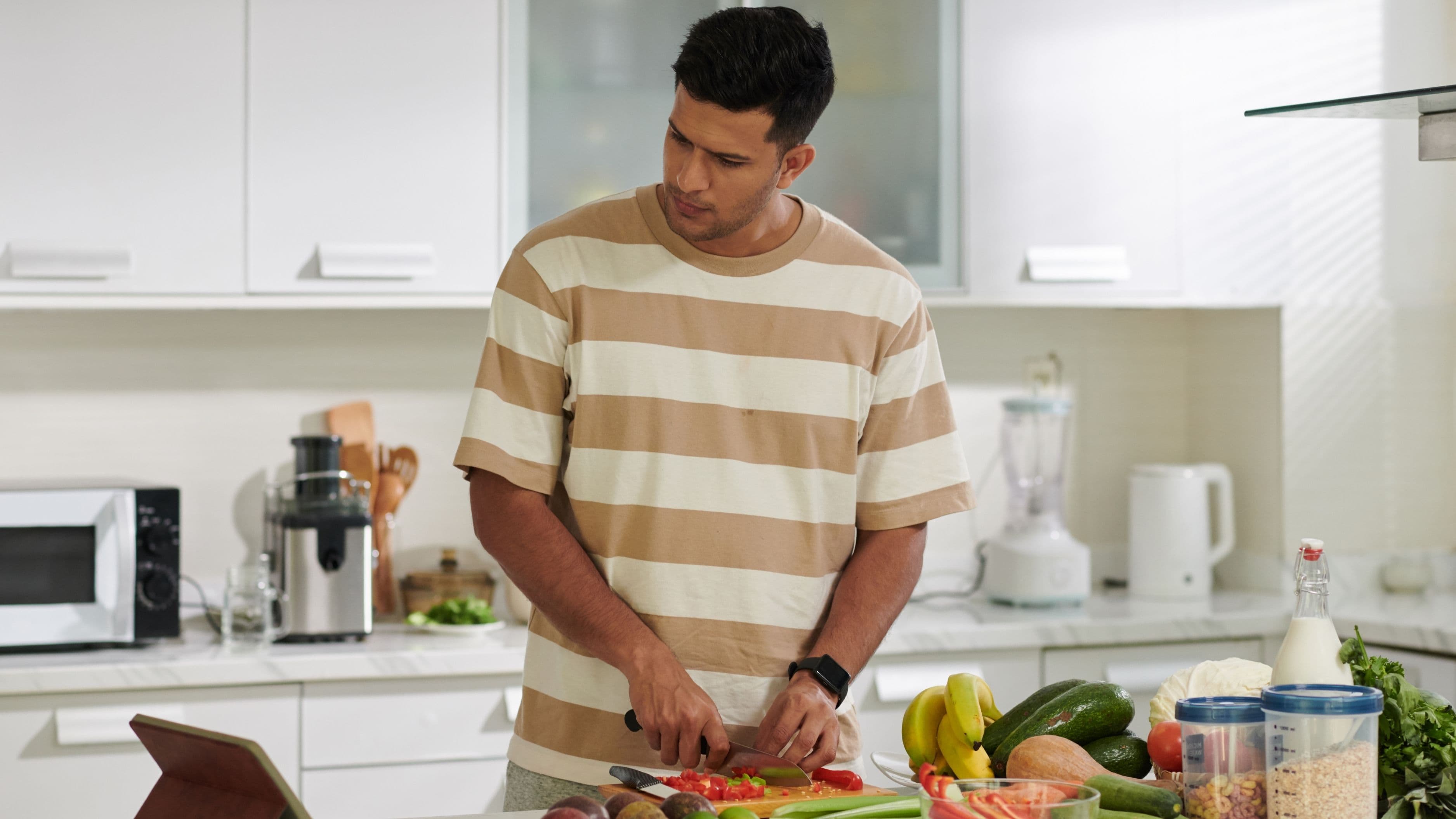
Before you even pick up the knife, check that your cutting board isn't sliding around on the counter. A board that shifts even slightly while you're cutting is one of the most common, and most overlooked, causes of a slipped cut, since your body naturally compensates for unexpected movement in ways that can pull your guiding hand closer to the blade.
Place a damp paper towel or a thin, non-slip mat underneath your cutting board to eliminate this movement entirely. It takes ten seconds and removes one of the biggest variables that makes cutting feel unstable in the first place, especially on smooth countertops where a bare board has nothing to grip against.
Step 2: Use a Proper Pinch Grip on the Blade
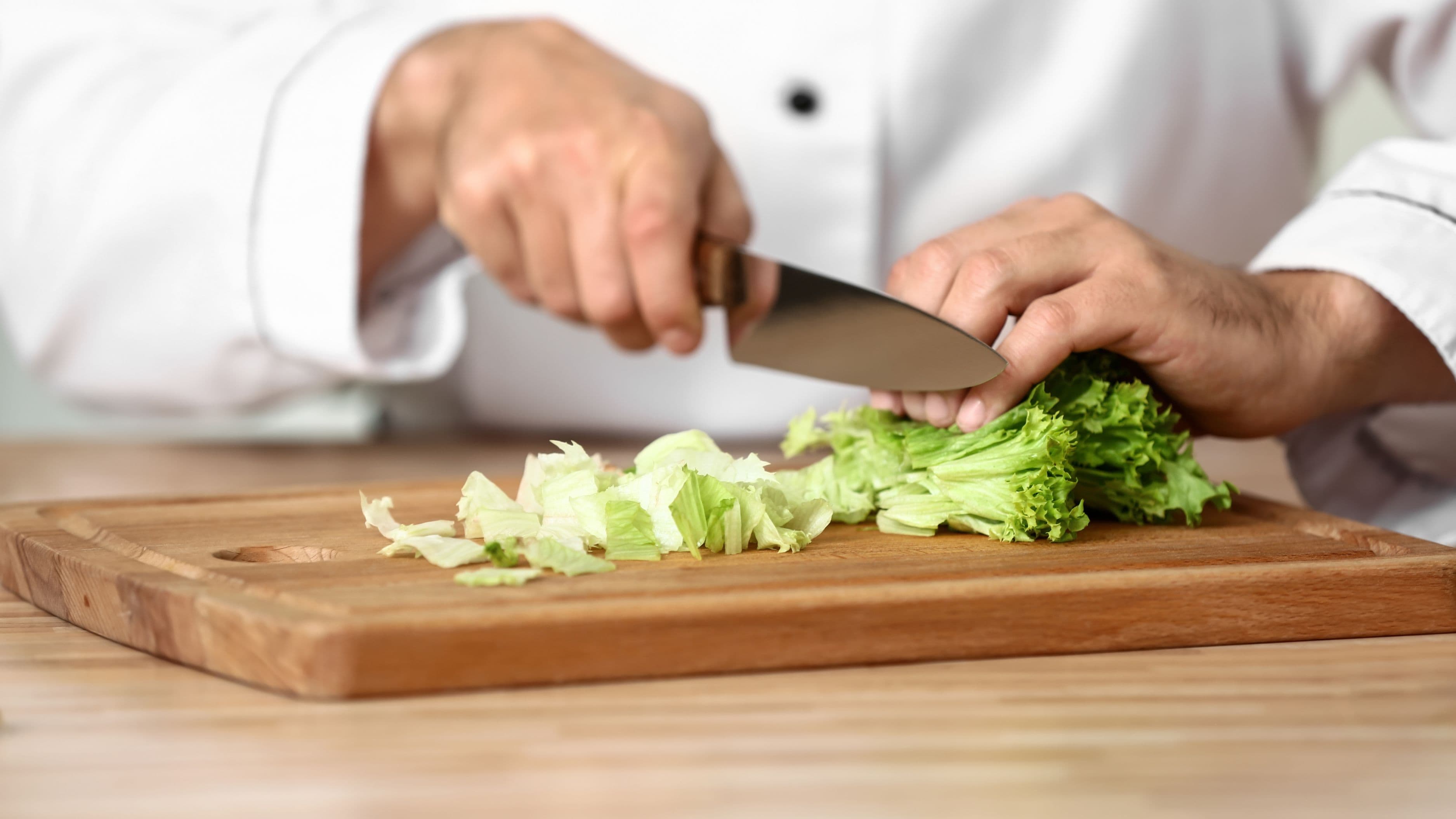
Hold the knife with your thumb and index finger pinched slightly forward onto the blade itself, right where it meets the handle, rather than gripping only the handle with your whole hand. This pinch grip gives you significantly more control over the blade's angle and stability than a full-handle grip, which tends to let the blade wobble slightly with each cut, increasing the chance of an inconsistent, unpredictable motion.
A wobbly blade is more likely to slip off whatever you're cutting, particularly with rounder or harder ingredients like onions or squash, which is exactly the scenario where most cutting injuries happen. The pinch grip solves this at the source by giving you direct control over the blade itself, not just the handle attached to it.
Step 3: Curl Your Guiding Hand Into a Proper Claw
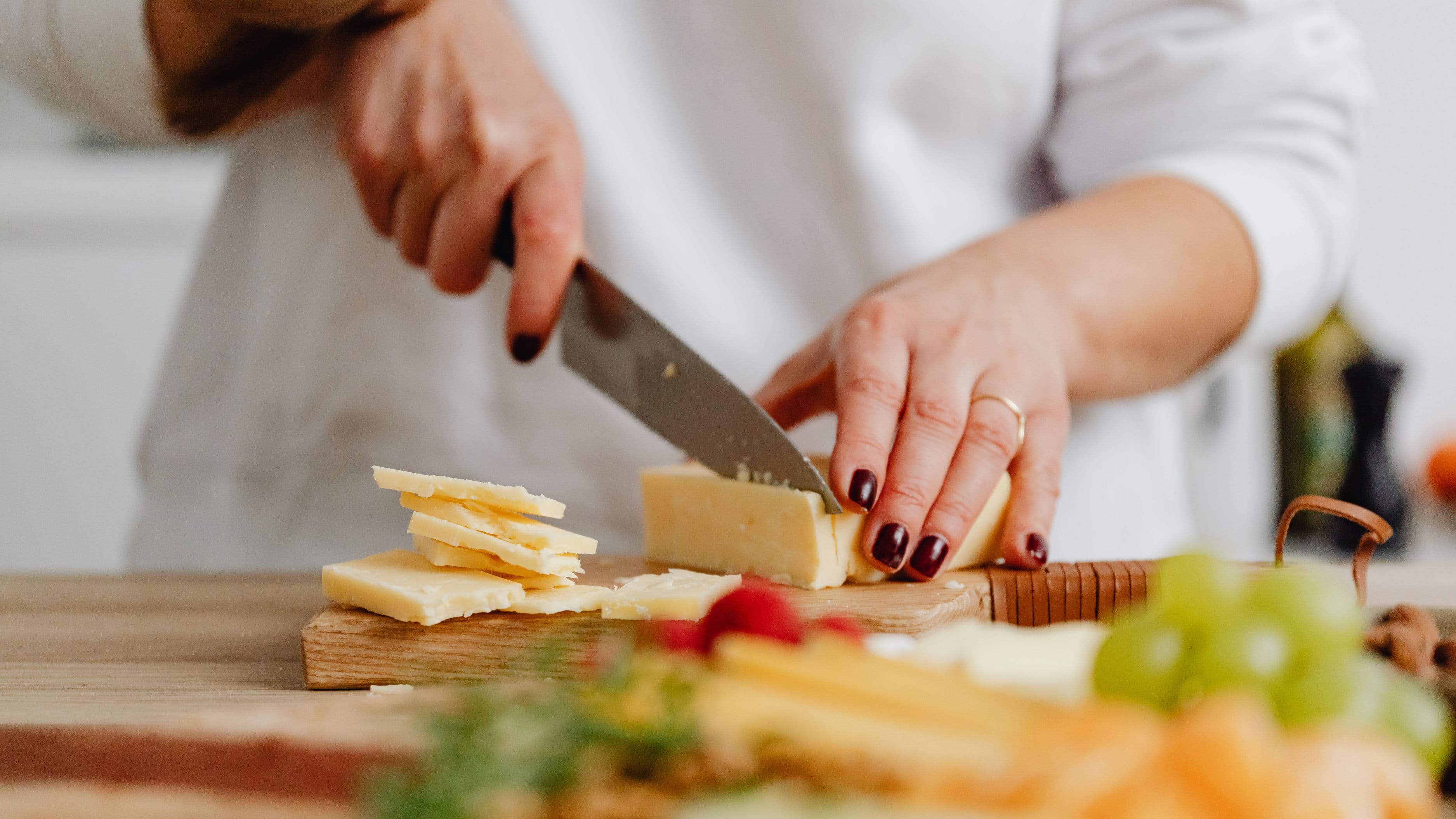
Your non-knife hand does the essential job of holding food steady while you cut, and how you position it matters just as much as your knife grip. Curl your fingertips under, knuckles facing forward toward the blade, so your fingertips are tucked safely away and your knuckles act as a guide the flat side of the blade can rest lightly against as you cut.
This claw position means that even if the blade were to slip slightly, it would contact your knuckles rather than an exposed fingertip, which is a meaningfully safer outcome. Avoid the common habit of holding food with fingers loosely extended or flat against the board, since that position puts fingertips directly in the blade's most likely path if anything shifts unexpectedly.
Step 4: Keep the Blade Tip Anchored While Cutting
For most everyday cuts, the tip of the knife should stay in light, consistent contact with the cutting board while the heel of the blade rises and falls in a controlled rocking motion. This anchored-tip technique keeps the blade's path predictable and consistent, rather than lifting the entire knife off the board with each cut, which introduces more variability and a higher chance of an inconsistent, less controlled motion.
An anchored, rocking cut also naturally keeps your cutting speed more controlled and deliberate, which matters more for safety than most people realize. A lot of kitchen injuries happen specifically when someone is rushing through repetitive cuts without maintaining consistent form, and an anchored tip helps maintain that consistency even as you build speed over time.
Step 5: Keep Your Knife Actually Sharp
This might be the most counterintuitive safety tip, but a dull knife is genuinely more dangerous than a sharp one. A dull blade requires significantly more downward pressure and force to cut through food, and that extra force, combined with an edge that's more likely to skate or slip rather than bite cleanly into what you're cutting, is a common recipe for an unpredictable, forceful slip.
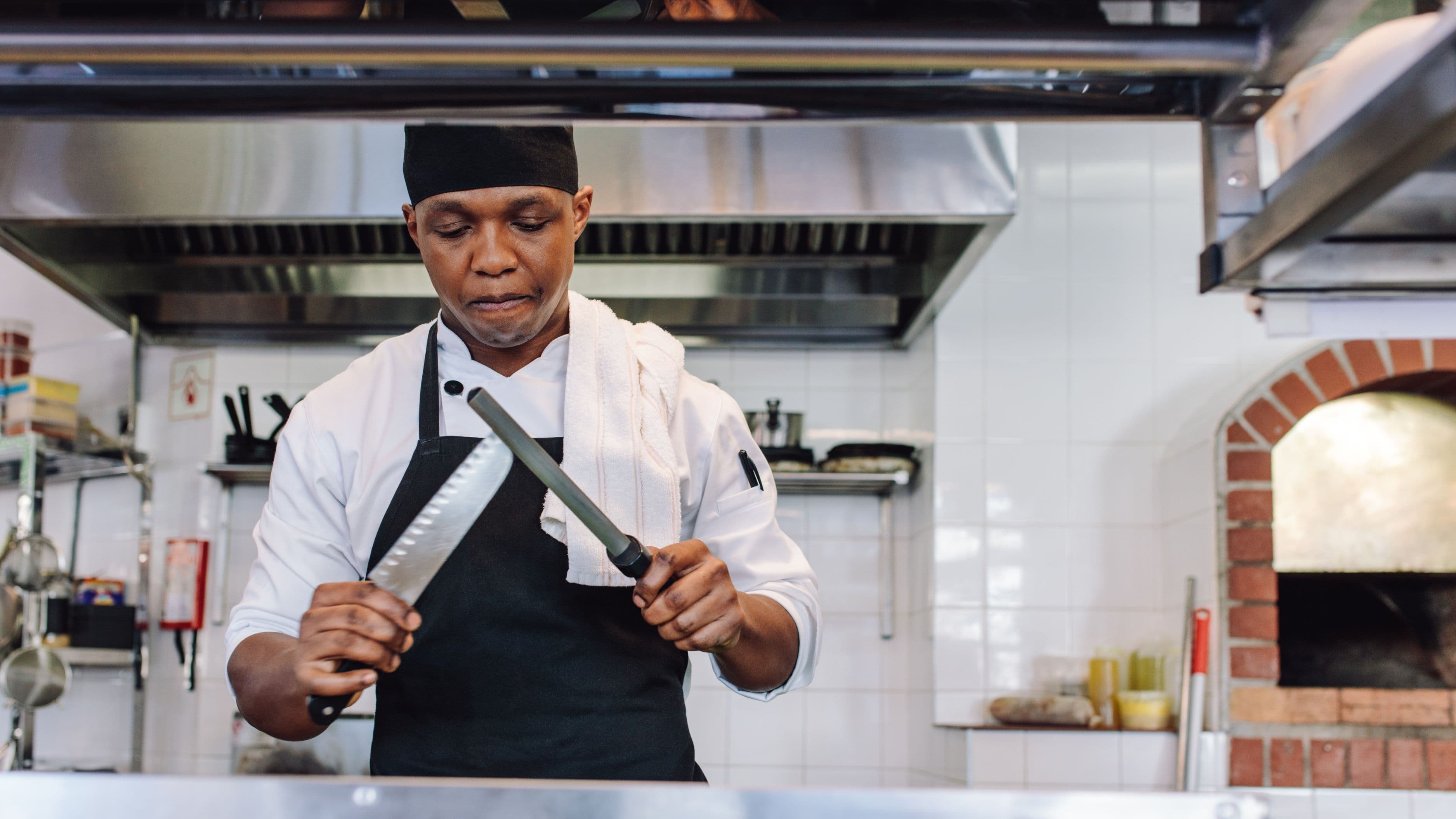
A properly sharp knife cuts with controlled, minimal pressure, which means less force behind the blade if something does go wrong, and a cleaner, more predictable cut overall. Getting your knife professionally sharpened every six months to a year, or learning to use a basic sharpening steel regularly between sharpenings, is a genuine safety habit, not just a performance upgrade.
When to Apply These Habits
These fundamentals apply every single time you pick up a chef's knife, not just for complex recipes or unfamiliar ingredients. The habits matter most, though, with foods that are round, slippery, or irregularly shaped, onions, tomatoes, and squash in particular, since these are the ingredients most likely to shift unexpectedly under the blade if your setup and grip aren't solid.
They're also worth double-checking specifically when you're tired, distracted, or cooking in an unfamiliar kitchen, since these are exactly the conditions where established safe habits matter most and where shortcuts are most tempting to take.
Tips for Building These Habits Long-Term
Slow down slightly when you're first working on any of these adjustments, even if it feels like it's costing you speed. The goal in the beginning is consistency and correct form, and speed naturally follows once these habits feel automatic rather than something you're consciously thinking through with every cut.
Keep a stabilizing mat or damp towel under your cutting board as a default habit, not just an occasional fix, since board stability is such a foundational part of safe cutting that it's worth making automatic rather than something you only remember after a near-miss.
Common Mistakes to Avoid
Don't cut on an unstable board, even briefly, assuming you'll be careful enough to compensate. An unstable surface undermines your control regardless of how careful or experienced you are, and it's one of the easiest variables to eliminate entirely rather than manage around.
Don't hold food with flat, extended fingers instead of a proper claw grip, even for quick or simple cuts. Injuries often happen during the "quick, simple" cuts specifically because that's when people are most likely to skip proper form, assuming the task is too basic to warrant it.
Don't keep using a knife you know is dull just because sharpening feels like an inconvenient extra step. A dull knife actively works against the safety habits described here, no matter how well you've built the rest of your technique.
FAQ
Is a sharper knife actually safer than a duller one? Yes, genuinely. A sharp blade requires less force and cuts more predictably, while a dull blade requires more pressure and is more likely to slip unpredictably off whatever you're cutting.
What's the single most important habit for safer cutting? The claw grip on your guiding hand is arguably the most directly protective habit, since it physically removes fingertips from the blade's likely path even if something else goes wrong.
How often should I sharpen my chef's knife? Professional sharpening every six months to a year is a reasonable baseline for regular home use, with a honing steel used between sharpenings to maintain the edge in the meantime.
Are cut-resistant gloves worth using while learning proper knife technique? They can be a reasonable extra precaution while you're building confidence, though they shouldn't replace learning proper grip and cutting board stability, since those fundamentals matter regardless of what protective gear you're using.