What You'll Learn
This guide covers how to choose the right wine for cooking, how much you actually need for common recipes, and practical ways to use up the rest of the bottle before it goes to waste. None of this requires buying special "cooking wine," which is generally lower quality and often loaded with added salt that can throw off a dish's seasoning.
Choosing the Right Wine for Cooking
The general rule for cooking wine is simple: if you wouldn't want to drink it, don't cook with it. Wine's flavor concentrates as it reduces during cooking, so any harsh or unpleasant notes in a low-quality wine become more pronounced, not less, once it's been simmered down into a sauce or braise. You don't need an expensive bottle, but a wine you'd be reasonably happy sipping on its own is a good baseline.
For most savory cooking, dry white wines like Sauvignon Blanc or a dry Chardonnay work well in lighter sauces, poultry dishes, and seafood. Dry reds like Cabernet Sauvignon or Merlot suit heartier dishes like braises, red sauces, and red meat. Sweet wines, like a dessert wine or port, have their place in specific dessert recipes or reductions where that sweetness is intentional, but they're not a good substitute in savory cooking unless a recipe specifically calls for that character.
Step-by-Step: Cooking With Wine Effectively
Start by adding wine early enough in the cooking process to allow the alcohol to cook off and the flavor to mellow and integrate with the rest of the dish, rather than adding it at the very end when the sharp, alcoholic taste won't have time to cook down. For sauces and braises, this typically means adding wine after you've sautéed your aromatics, letting it reduce for a few minutes before adding other liquids like stock.
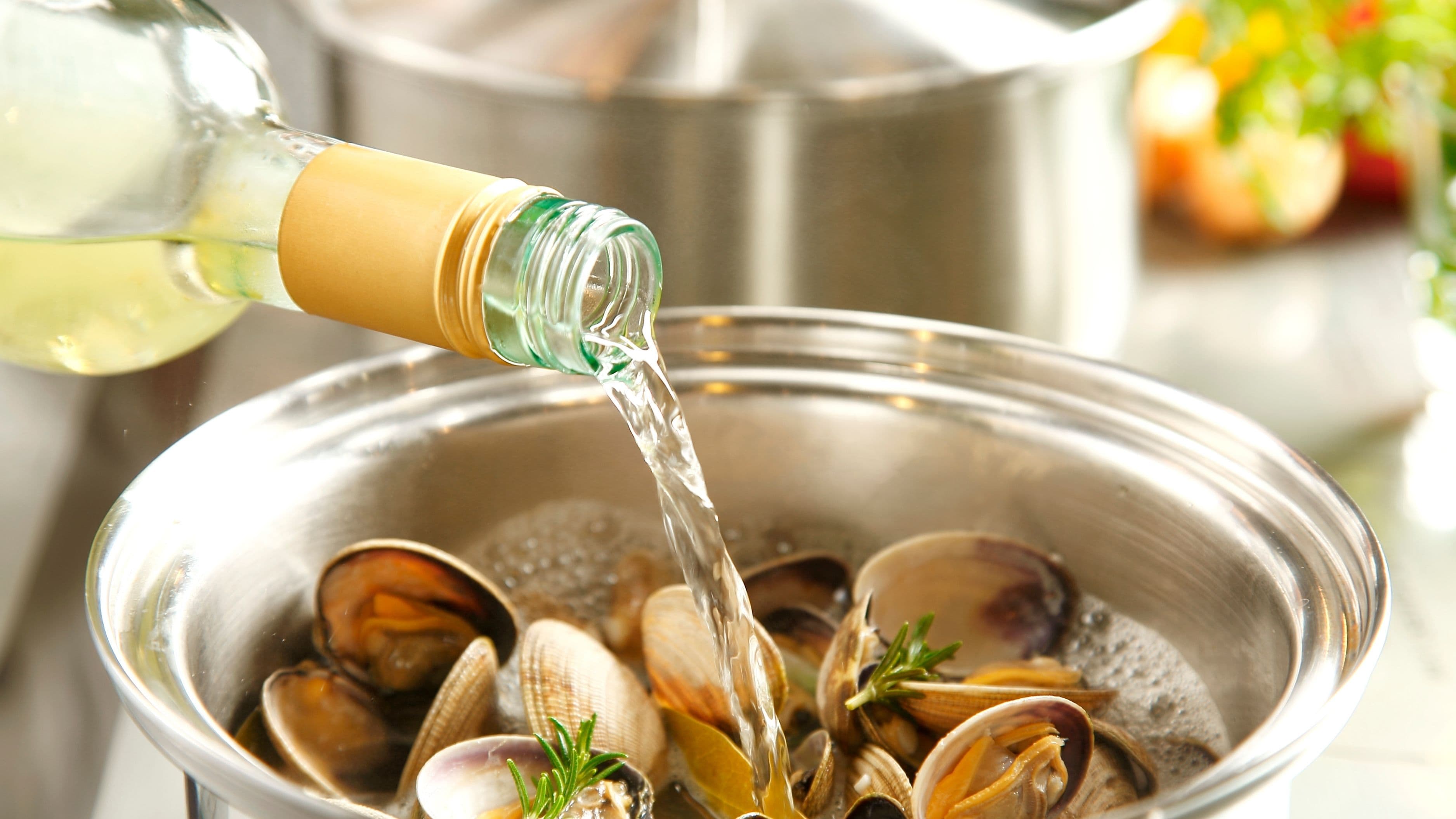
When deglazing a pan, meaning using liquid to loosen the browned bits stuck to the bottom after searing meat, pour in the wine while the pan is still hot and scrape up those browned bits with a wooden spoon; this step alone adds significant depth of flavor to a pan sauce and is one of the most reliable ways to use a small amount of wine in everyday cooking.
Let the wine reduce, meaning simmer until much of the liquid evaporates and the flavor concentrates, before adding other ingredients like stock or cream. Skipping this reduction step often leaves a dish tasting too sharp or overtly alcoholic, since the flavor hasn't had time to mellow and integrate properly.
Tips for Best Results
Measure your wine rather than eyeballing it, especially in recipes where a large volume is called for, like a braise or a wine-based sauce, since too much wine relative to other ingredients can make a dish taste unbalanced and overly acidic. A splash for deglazing is fairly forgiving, but a full cup or more in a sauce is worth measuring carefully the first time you make a recipe.
Taste as you go, particularly after the wine has had time to reduce and integrate, since the intensity of different wines varies enough that a recipe's suggested amount is a starting point rather than a strict rule. If a sauce tastes too acidic after reducing, a small amount of butter, cream, or a pinch of sugar can help balance it out.
How to Use Up the Rest of the Bottle
This is where most home cooks actually struggle, ending up with a partially used bottle that goes flat or turns before they get around to using more of it. A few practical strategies can solve this. First, plan two or three wine-based recipes for the same week when you open a bottle specifically for cooking, so you have a built-in reason to use more of it before it goes bad.
Second, freeze leftover wine in ice cube trays, then transfer the frozen cubes to a freezer bag once solid. This gives you pre-portioned amounts ready to drop directly into a pan sauce, soup, or braise without needing to open a full bottle for a small amount later on. Each cube typically holds about two tablespoons, which is a convenient unit for most quick cooking uses.
Third, use leftover wine in a marinade. Wine's acidity works well as a tenderizing and flavoring component for meat marinades, and this is an easy way to use up a meaningful amount of wine that's started to lose its drinking quality but is still perfectly fine for cooking. Fourth, consider making a quick wine reduction or vinaigrette base, both of which store well in the fridge for a week or more and give you a flavorful ingredient ready to use across multiple future meals.
Storage Tips to Slow the Clock
Once opened, wine intended for cooking keeps noticeably better if resealed tightly and stored in the refrigerator, even red wines that are traditionally served at room temperature. Cold storage slows the oxidation process that causes wine to lose its fresh flavor and eventually turn vinegary, buying you extra days to use it in cooking even after it's no longer at its best for drinking.
A wine preservation tool, like a vacuum pump stopper, can extend this window further by removing some of the air that accelerates oxidation, though this is an optional investment rather than a necessity if you're already planning to use the bottle within a week or two through the strategies above.
Common Mistakes to Avoid
Don't use wine that's turned, meaning it smells sharply of vinegar or has an off, musty odor, since cooking won't fix a wine that's genuinely spoiled; at that point, it's better used as a base for a quick vinegar-style dressing than a savory dish. Avoid adding wine at the very last minute of cooking without giving it any time to reduce, since this often results in a harsh, boozy taste that overwhelms the rest of the dish rather than complementing it.
Don't feel obligated to buy a new bottle every time a recipe calls for wine if you already have an open one in the fridge that's still good, even if it's not the exact varietal a recipe specifies; most dry wines within the same general color category, red or white, can be used somewhat interchangeably in everyday cooking without dramatically changing the outcome.
FAQ
Does all the alcohol actually cook out of a dish made with wine? Not entirely, though the longer a dish simmers, the more alcohol evaporates. Short cooking times retain more alcohol content than a dish simmered for an extended period, which is worth knowing if you're cooking for someone avoiding alcohol entirely.
Can I substitute wine with something non-alcoholic in a recipe? Yes, options like broth with a splash of vinegar or lemon juice can approximate some of wine's acidity and depth, though the flavor won't be identical to what wine specifically contributes to a dish.
How long does an opened bottle of wine actually stay good for cooking? Refrigerated and resealed tightly, most wines remain suitable for cooking for about one to two weeks, even after they're no longer ideal for drinking on their own.
Cooking with wine doesn't have to mean wasting most of the bottle. A little planning around how you store, freeze, and reuse what's left turns an occasional splurge ingredient into something you can keep on hand and actually finish using.
📚 Sources
Serious Eats – A Guide to Cooking With Wine – https://www.seriouseats.com/cooking-with-wine-guide
America's Test Kitchen – How to Cook With Wine – https://www.americastestkitchen.com/