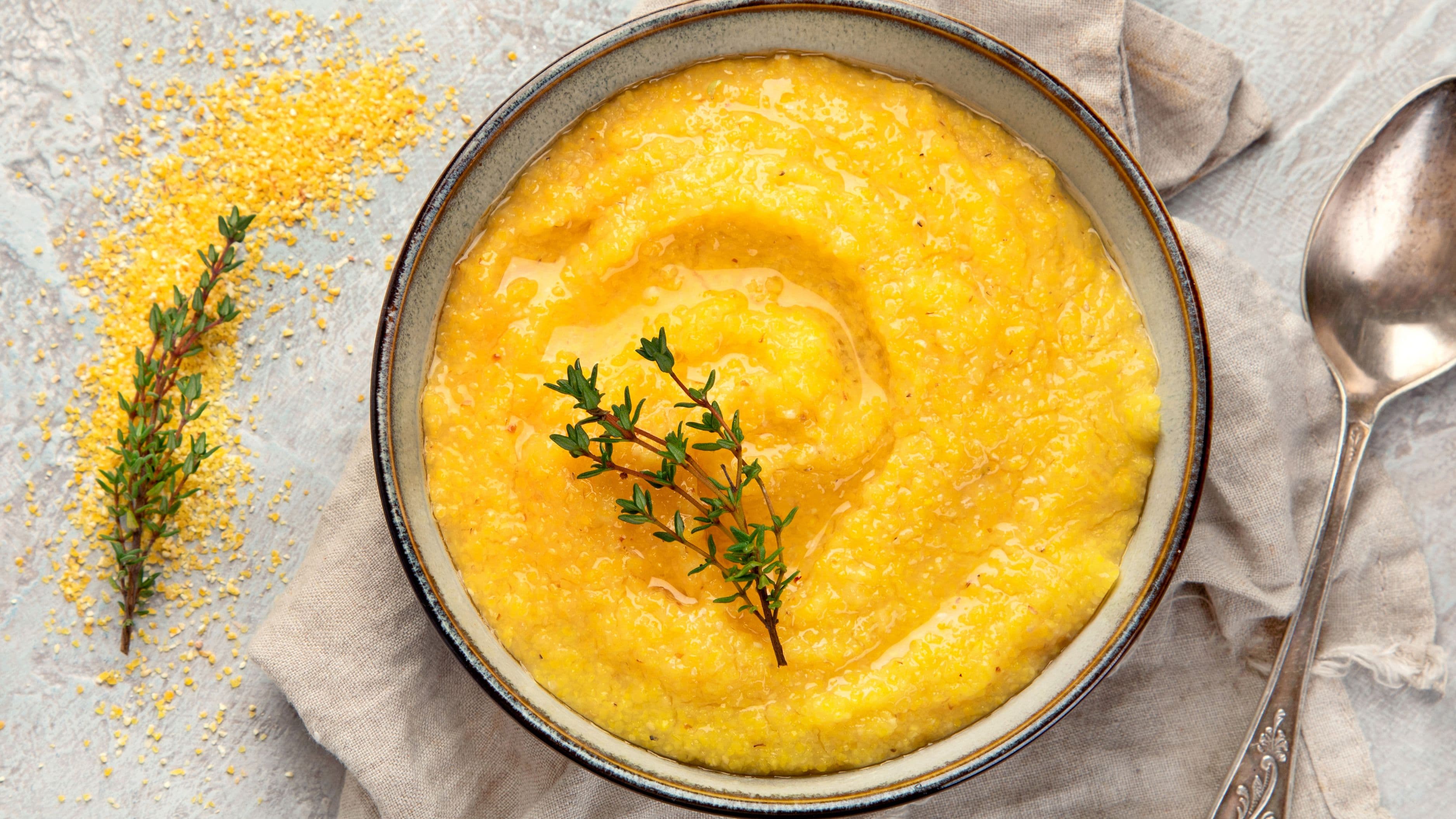
The good news is that creamy, spoonable polenta isn't about constant stirring or restaurant tricks. It comes down to three things: enough liquid, low heat, and patience. This guide walks you through a reliable method that works on a regular weeknight stove, plus the mistakes that cause most polenta disasters.
Skill level: Beginner
Active time: About 15 minutes
Total time: 45 to 55 minutes
Serves: 4 as a side
What Polenta Actually Is
Polenta is both an ingredient and a dish. The ingredient is ground cornmeal, usually from flint corn, and the dish is that cornmeal slowly cooked in liquid until it becomes soft and porridge-like. It's a staple of northern Italian cooking and pairs beautifully with braised meats, roasted vegetables, mushrooms, and saucy dishes.
You'll see a few types at the store. Coarse or medium-grind polenta gives the best flavor and texture but takes longer. Instant polenta cooks in about five minutes but tends to taste flatter and set up faster. Tubes of precooked polenta are firm and best for slicing and grilling, not creamy bowls.
Ingredients
1 cup coarse or medium-grind polenta (not instant)
3 cups water
2 cups whole milk (or more water or stock)
1 teaspoon kosher salt, plus more to taste
3 tablespoons unsalted butter
¾ cup finely grated Parmesan cheese
Black pepper, to taste
The ratio here is about 5 parts liquid to 1 part polenta. That's more liquid than many package instructions call for, and it's the single biggest reason this version stays creamy.
Step-by-Step Instructions
Step 1: Heat the liquid and salt
Combine the water, milk, and salt in a heavy-bottomed saucepan and bring it to a gentle simmer over medium heat. A heavy pan distributes heat evenly, which helps prevent scorching on the bottom. Watch the milk closely so it doesn't boil over.
Step 2: Whisk in the polenta slowly
Lower the heat slightly and pour the polenta in a thin, steady stream while whisking constantly. Adding it slowly is how you prevent lumps, since dumping it in all at once lets the outside of clumps cook before the inside gets wet. Keep whisking for a minute or two until the mixture starts to thicken.
Step 3: Cook low and slow
Turn the heat down to low so the polenta barely bubbles, with an occasional lazy blip. Switch to a wooden spoon or silicone spatula and stir every 5 to 10 minutes, scraping the bottom and corners. It doesn't need nonstop stirring, just regular attention.
Step 4: Give it time
Cook for 40 to 50 minutes. At first it will taste gritty, and that's normal. Over time the grains absorb liquid and soften, and the texture turns smooth and velvety. If it gets too thick before it's tender, stir in a splash of hot water or milk.
Step 5: Finish with butter and cheese
When the polenta is soft and no longer gritty, remove it from the heat. Stir in the butter and Parmesan until melted and glossy. Taste and adjust with more salt and black pepper.
Step 6: Serve right away
Creamy polenta firms up as it cools, so serve it immediately in warm bowls or on plates. If it needs to wait, keep it covered on the lowest heat and stir in a little extra liquid right before serving.
Tips for Best Results
Use a heavy pot. Thin pans create hot spots and scorch the bottom, which forces you to stir constantly.
Taste for texture, not the timer. Different brands and grinds cook at different speeds. The polenta is ready when it's smooth with no sandy bite.
Keep hot liquid nearby. A small pot of warm water or stock makes it easy to loosen the polenta without dropping its temperature.
Try the oven method for hands-off cooking. Some cooks bake polenta covered in a 350°F oven for about an hour, stirring once or twice. It's a great option when your stovetop is busy.
Variations
For a richer version, swap some of the water for chicken or vegetable stock, or stir in a spoonful of mascarpone at the end. For a dairy-free version, use all stock or water, finish with olive oil instead of butter, and add a pinch of nutritional yeast for savory depth. You can also stir in roasted garlic, fresh herbs like thyme or rosemary, or a handful of sharp cheese like fontina or gorgonzola.
What to Avoid
Using too little liquid. A 3:1 or 4:1 ratio often produces thick, stiff polenta.
Cooking on high heat. It scorches the bottom and cooks the outside before the grains soften.
Adding polenta all at once. This is the fastest route to lumps.
Pulling it off the heat too early. Undercooked polenta tastes gritty no matter how much cheese you add.
Letting it sit uncovered. It forms a skin and firms up quickly.
Storing and Reheating
Leftover polenta sets firm in the fridge, and that's actually useful. Store it in an airtight container and refrigerate within two hours of cooking, then use it within three to four days. To make it creamy again, break it into pieces in a saucepan with a splash of milk or water and whisk over low heat until smooth. Or slice the firm polenta, brush with oil, and pan-fry or grill it until crisp.
FAQ
Why is my polenta gritty?
It usually needs more time or more liquid. Coarse polenta can take 40 minutes or more to fully soften.
Can I make creamy polenta with instant polenta?
Yes, but the flavor and texture are less rich, and it sets up faster. Use extra liquid and finish with butter and cheese.
Is polenta the same as grits?
They're similar but not identical. Grits are traditionally made from dent corn or hominy, while polenta is usually made from flint corn, which gives a slightly different texture.
Is polenta gluten-free?
Cornmeal is naturally gluten-free, but check the packaging for cross-contamination warnings if you need to avoid gluten strictly.
The Takeaway
Creamy polenta isn't difficult. It just asks for more liquid and more time than most people give it. Whisk it in slowly, cook it low, stir now and then, and finish with butter and cheese, and you'll have a silky, comforting side that works with almost anything on your table.
📚 Sources
USDA Food Safety and Inspection Service – "Leftovers and Food Safety": https://www.fsis.usda.gov/food-safety/safe-food-handling-and-preparation/food-safety-basics/leftovers-and-food-safety
Serious Eats – "Creamy Polenta": https://www.seriouseats.com/creamy-polenta
Celiac Disease Foundation – "Sources of Gluten": https://celiac.org/gluten-free-living/what-is-gluten/sources-of-gluten/