What You'll Learn
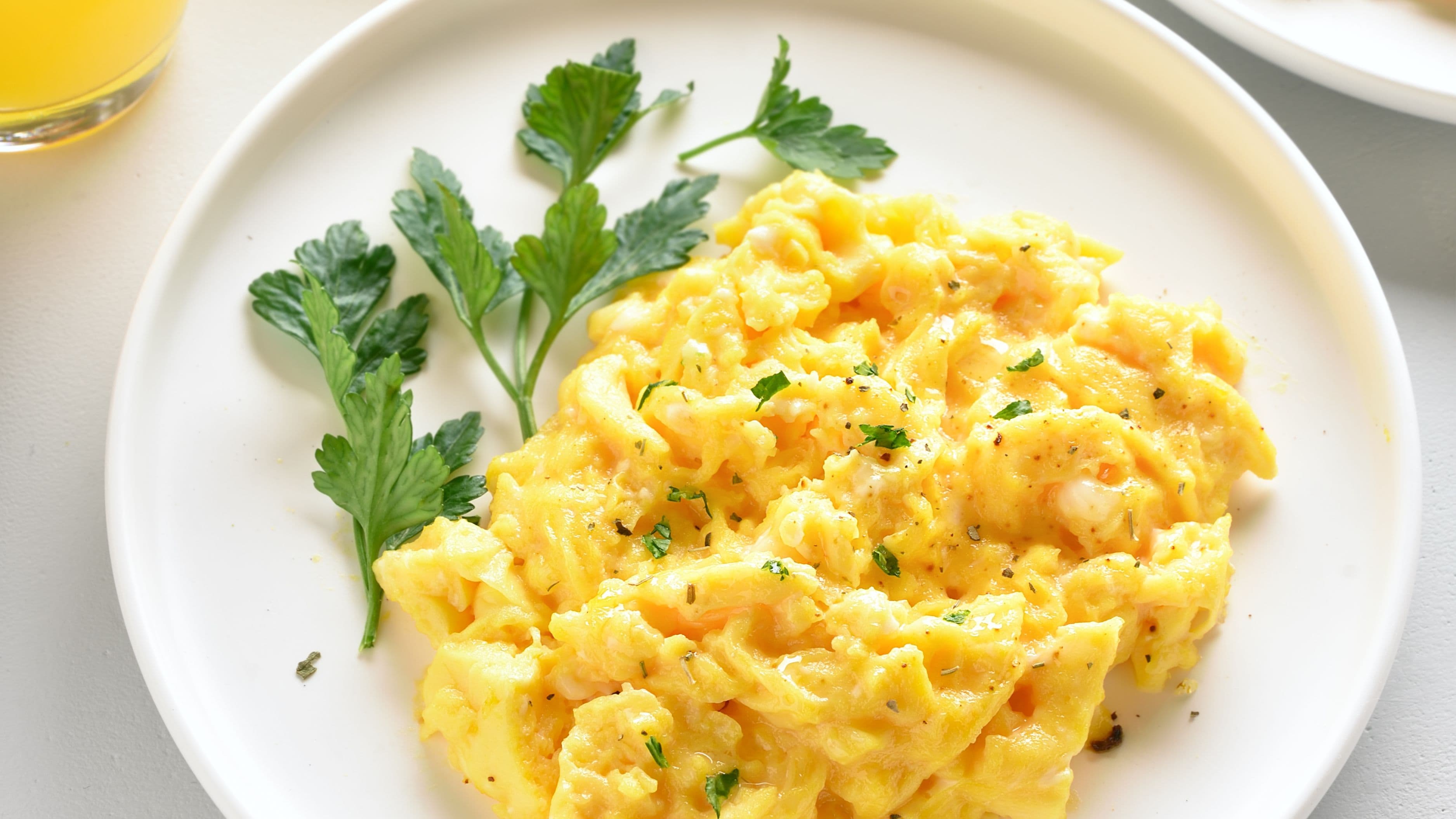
This guide covers the full technique for making restaurant-quality creamy scrambled eggs at home – the kind with soft, barely-set curds, a glossy finish, and a texture that holds together without being stiff. It takes about ten minutes and works whether you're cooking for one or four.
Ingredients
For 2 servings:
4 large eggs
1 tablespoon unsalted butter (plus a small extra knob for finishing)
1–2 tablespoons heavy cream or crème fraîche (optional but recommended)
Salt and freshly ground black pepper
Chives or fresh herbs to finish (optional)
A note on eggs: use the freshest eggs you can find. Fresh eggs have tighter whites and more flavorful yolks, both of which make a visible and tasteable difference in scrambled eggs. If you have access to pasture-raised or farm-fresh eggs, this is a good recipe to use them on.
A note on the cream: it's optional, but a small amount of heavy cream or crème fraîche stirred in at the end adds richness and helps slow down the final cooking. Crème fraîche gives a subtle tang that works particularly well.
Step-by-Step Instructions
Step 1 – Crack and Beat the Eggs
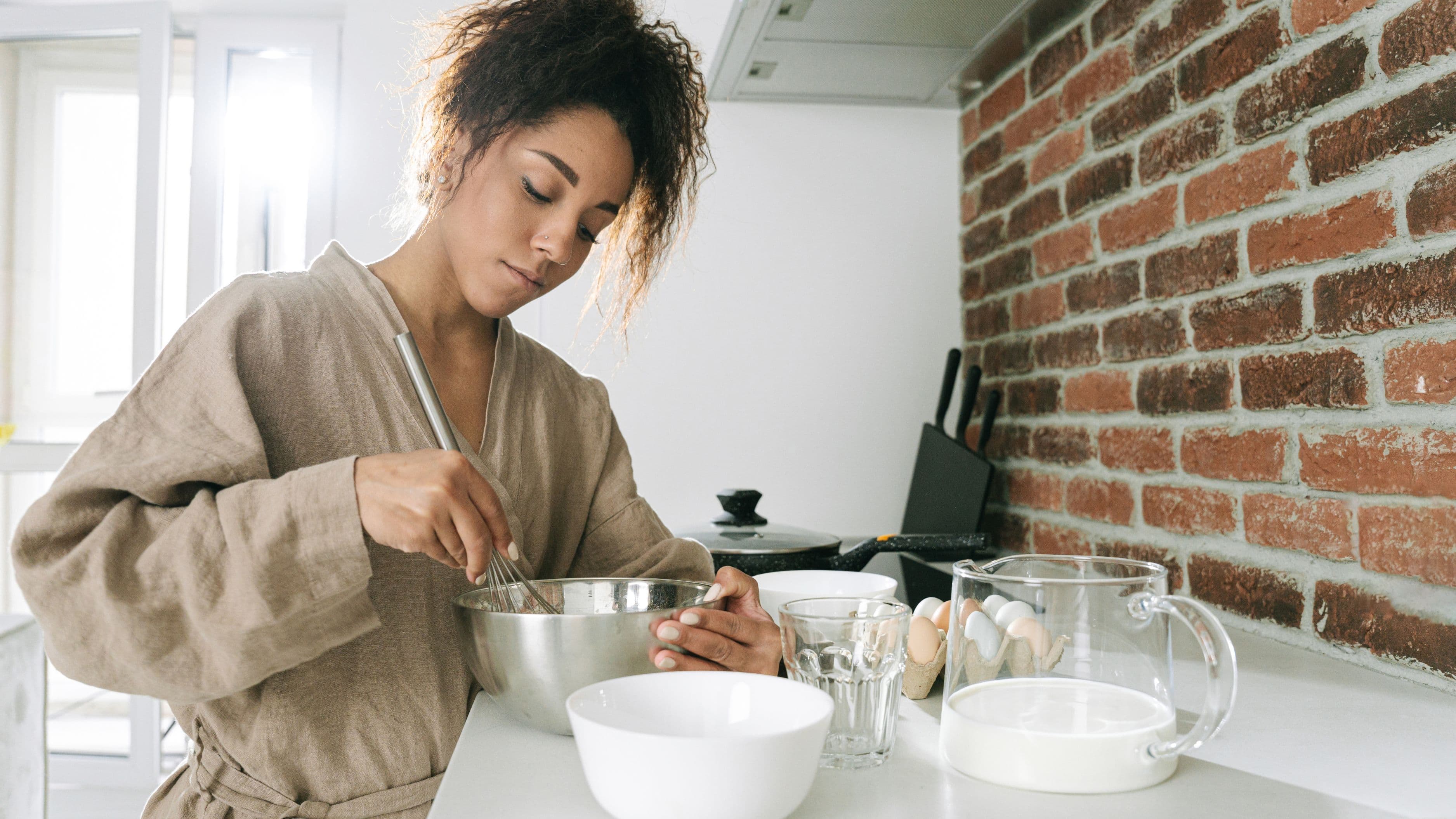
Crack the eggs into a bowl and beat them well with a fork or whisk. You want the whites and yolks fully combined – no streaks of white remaining. Beat until the mixture is uniform and slightly frothy. Don't add salt yet; salting eggs before cooking can break down the proteins slightly and result in a watery texture. Season just before they hit the pan or after plating.
Step 2 – Start with a Cold Pan and Cold Butter
Here's where most people go wrong. Put the butter in your pan before turning on the heat. Place the pan on the burner and turn it to low – lower than feels right. You want the butter to melt slowly and the pan to warm up gradually. This gentle start is the foundation of the entire technique. A screaming hot pan shocks the proteins in the egg and sets them too fast, which is exactly what produces rubbery results.
Use a small nonstick pan if you have one. An 8-inch pan works well for two to four eggs. Nonstick makes cleanup easier and reduces the risk of sticking during the slow cook.
Step 3 – Add the Eggs Before the Pan Gets Hot
Once the butter has melted and is just beginning to foam – not sizzling, not browning – pour in the beaten eggs. The pan should be barely warm at this point. This is intentional. You're starting the cook from a very low temperature so the eggs have time to develop soft curds rather than setting all at once.
Step 4 – Stir Constantly and Move the Pan On and Off the Heat
Stir the eggs continuously with a rubber spatula, using slow, sweeping strokes across the bottom of the pan. You're looking to move the eggs in large, soft waves – not scrambling them aggressively into small crumbles. The goal is big, pillowy curds.
As the eggs start to set (you'll see the mixture beginning to thicken from a liquid to a soft solid), move the pan off the heat for 15–20 seconds while continuing to stir. Then return it to low heat. Repeat this on/off process two or three times during cooking. This technique gives you precise control over the final temperature, which is the key to that creamy, slightly underdone texture. It sounds fussy but becomes natural quickly.
The entire cook from adding the eggs to finishing should take four to six minutes on low heat. If it's taking less than two minutes, your heat is too high.
Step 5 – Pull Them Off Just Before They Look Done
Remove the pan from the heat when the eggs look about 80% cooked – they should be mostly set but still look slightly wet and glossy. They'll continue cooking from residual heat in the pan, and that carryover cooking is exactly what takes them from "slightly underdone" to "perfectly creamy." This is called carryover cooking, and it's the reason professional cooks always pull eggs early.
If you wait until the eggs look done before pulling them off the heat, they'll be overcooked by the time they reach the plate.
Step 6 – Add Butter and Cream to Finish
As soon as you pull the pan from the heat, add a small knob of cold butter and, if you're using it, a tablespoon of heavy cream or crème fraîche. Stir both in with the spatula. The cold butter chills the eggs slightly, stopping the cooking immediately, and adds a silky richness to the final texture. The cream (if using) does the same and adds a custardy quality to the finish.
Season with salt and pepper now, taste, and adjust.
Step 7 – Plate and Serve Immediately
Creamy scrambled eggs wait for no one. Transfer them to a warm plate immediately and eat right away. As they sit, they continue to cook and release moisture, which will eventually make them watery if you wait too long. Have your toast ready before the eggs go in the pan.
Tips for the Best Results
Use a rubber or silicone spatula, not a wooden spoon. A flexible spatula lets you get into the edges of the pan and move the eggs in those slow, sweeping strokes without breaking the curds too small.
Low heat is non-negotiable. If you're impatient and crank up the heat to speed things up, the eggs will be rubbery. The slow cook is the whole technique. If your stove runs hot, use the lowest possible setting and rely more on the on/off method.
Don't overcrowd the pan. If you're cooking for more than two people, cook in two batches rather than adding too many eggs to one pan. Overcrowding drops the pan temperature unevenly and makes it harder to control the cook.
Cold butter at the end is the pro move. This is borrowed directly from restaurant cooking. Adding cold fat to a hot pan at the end is called "mounting" in professional kitchens, and it's what gives eggs (and sauces) that glossy, emulsified finish. Don't skip it.
Warm your plate. Cold plates pull heat out of eggs almost instantly. Run your serving plate under hot water for 30 seconds and dry it before plating. It makes a real difference in how long the eggs stay at their ideal texture.
Variations
Herbed eggs: Stir in a tablespoon of finely chopped chives, tarragon, or dill at the finishing stage. Don't add hardy herbs (rosemary, thyme) unless they've been softened in butter first.
Cheese eggs: Fold in a small amount of finely grated Parmesan, Gruyère, or goat cheese during the last 30 seconds of cooking. The cheese melts into the curds without making them dense if you use it sparingly.
Truffle eggs: A few drops of truffle oil or a small scrape of fresh truffle stirred in at the finish turns this into a genuinely special dish. The richness of the slow-cooked eggs pairs particularly well with truffle.
Toast toppings: Creamy scrambled eggs work beautifully on buttered sourdough, alongside smoked salmon, or topped with a few capers and pickled red onion for a brunch-style presentation.
What to Avoid
Don't add salt before cooking. Salt draws moisture out of the eggs and can make them slightly watery. Season at the end.
Don't walk away. Unlike a fried egg, creamy scrambled eggs require your full attention for the five or six minutes they're on the stove. This isn't a background task.
Don't use high heat to speed things up. The entire technique depends on low, slow heat. If you rush it, you'll get dry, overcooked eggs regardless of everything else you do correctly.
Don't skip pulling them early. The single most common reason home cooks end up with overcooked scrambled eggs is leaving them on the heat until they look done. Pull them at 80% – the carryover cooking does the rest.
Don't leave them in the pan. Once they're cooked, plate them immediately. Leaving creamy scrambled eggs in the pan, even off the heat, continues cooking them and makes them watery as moisture separates from the proteins.
FAQ
What's the difference between French-style and American-style scrambled eggs? French-style scrambled eggs (the technique described in this guide) are cooked low and slow into large, soft, creamy curds. American-style scrambled eggs are typically cooked faster over medium heat, producing smaller, firmer curds. Both are valid – it's a texture preference. French-style takes more attention but produces a richer, silkier result.
Can I use milk instead of cream? You can, but the result is slightly less rich and can make the eggs a touch watery if you use too much. If using milk, use just a teaspoon or two rather than a tablespoon. Heavy cream or crème fraîche gives the best texture.
Why do my scrambled eggs get watery? Watery eggs are usually caused by overcooking (the proteins tighten and squeeze out moisture), salting too early, or letting them sit in the pan or on the plate too long. Cook low and slow, season at the end, and serve immediately.
Can I make creamy scrambled eggs without a nonstick pan? Yes, though it requires more attention. A well-seasoned carbon steel pan or a stainless steel pan with enough butter works. The key is making sure there's enough fat in the pan and keeping the heat genuinely low so the eggs don't stick before they set.
How many eggs per person? Two eggs is a light serving (good alongside other breakfast items). Three eggs makes a satisfying standalone serving. Four eggs is generous for one person or comfortable for two as part of a larger spread.
Once you've made creamy scrambled eggs this way a couple of times, the technique becomes completely natural. The low heat and constant stirring stop feeling like effort and just become how you make eggs. It's one of those techniques where the gap between what you were doing before and what you're doing now is immediately obvious in the result – and once you taste the difference, it's hard to go back.
📚 Sources
Serious Eats – The food lab: perfect scrambled eggs: https://www.seriouseats.com/the-food-lab-how-to-make-creamy-scrambled-eggs
The Kitchn – How to make French scrambled eggs: https://www.thekitchn.com/how-to-make-french-style-scrambled-eggs-cooking-lessons-from-the-kitchn-172468
BBC Good Food – How to make perfect scrambled eggs: https://www.bbcgoodfood.com/howto/guide/how-make-perfect-scrambled-eggs