
The good news is that this is a fixable problem, and the fix doesn't require meal planning apps, laminated checklists, or any kind of system that takes longer to maintain than it saves. It comes down to how you build the list before you go — and one simple way of thinking about what belongs on it.
Why Most Grocery Lists Slow You Down
A typical grocery list is a stream of consciousness: things you ran out of, meals you vaguely want to make, things you saw in a recipe and wrote down, things a family member mentioned. It reads in the order you thought of them, not in any order that reflects the store. You end up in the dairy section and realize you need eggs, then you head back to produce for the one thing you missed, then back to the middle aisles for something you forgot to write down at all.
The other problem is that most lists are either too vague ("vegetables") or too specific to one meal ("½ cup dry white wine for the risotto"). Vague items lead to impulse buying because you're making decisions in the store instead of at home. Over-specific items tie your hands — if the wine is only for one recipe, you've bought a bottle for a few tablespoons and now you have to decide what to do with the rest.
A better list solves both problems: it's organized to match how you'll move through the store, and it's built around flexible ingredients that serve multiple purposes rather than single-recipe items.
The Strategy: Category-First, Purpose-Driven
The list structure that makes grocery shopping genuinely faster has two components. First, you organize items by store section — produce together, dairy together, proteins together, pantry and dry goods together, frozen items last. Second, you think in terms of what each item can do across the week, not just what it's for tonight.
Most stores follow a broadly similar layout: produce around the perimeter near the entrance, proteins and dairy along the back and side walls, packaged and canned goods in the central aisles, frozen foods toward the back or in a separate aisle. Organizing your list to follow that rough circuit means you move through the store once, in order, without backtracking. You're not perfect-routing a stranger's floor plan — you're just grouping items so you don't have to double back for the things you passed ten minutes ago.
The second part — thinking about what each item can do — is where the real time savings come from, because it changes what you write down. Instead of listing ingredients for five separate meals, you identify the ingredients that cross multiple meals and buy those. One bag of spinach for Monday's pasta, Wednesday's eggs, and a lunchtime salad. One tin of chickpeas for Tuesday's curry and Friday's grain bowl. One bunch of cilantro that goes into three different things. You buy less because each item pulls more weight, and you spend less time in the store because the list is shorter.
How to Build the List in Under 10 Minutes
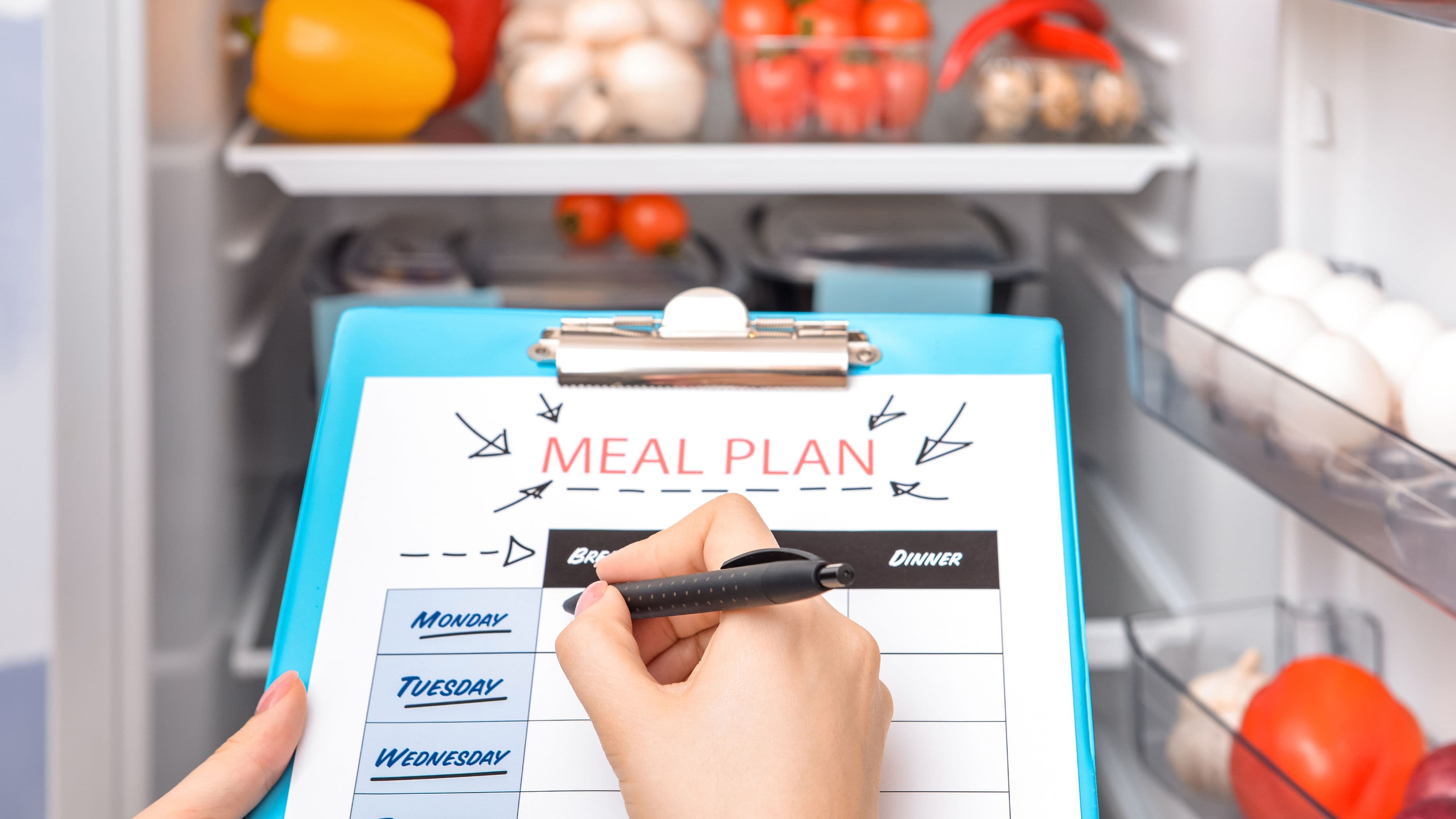
The weekly list-building process doesn't have to be a planning session. It's a quick inventory plus a rough idea of what you'll eat — nothing more formal than that.
Start by looking at what you already have. Check the fridge for anything that needs to be used up, scan the pantry for what's running low, and note any proteins in the freezer you could build a meal around. This takes two or three minutes and immediately tells you what you don't need to buy, which is just as important as knowing what you do.
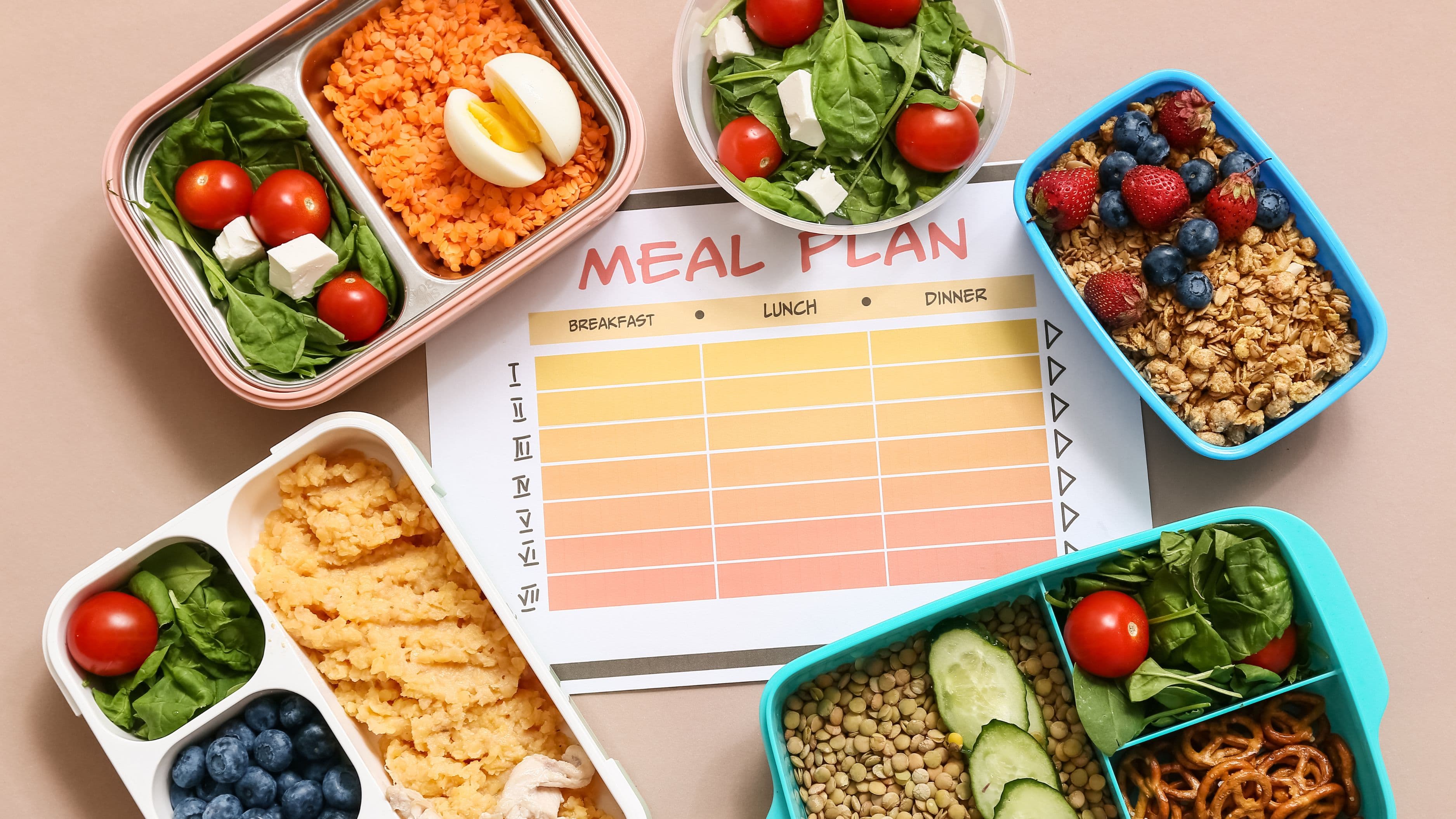
Then think loosely about 3–4 dinners you might cook — not assigned to specific nights, just a general idea of what sounds good and what's realistic for your week. You're not locking in a plan; you're identifying the ingredients that will serve those meals. If two of your dinners use chicken, one uses fish, and one is vegetarian, your protein section of the list writes itself: two chicken thighs or a small pack, one piece of fish, eggs or a can of legumes. That's it. No over-buying, no under-buying.
Now write the list in sections. Produce, proteins, dairy, pantry staples, frozen, and anything miscellaneous (bread, snacks, household items). Each section should have no more than 4–6 items. If your list for a section is longer than that, either you're buying for more meals than you'll realistically cook, or some of the items belong in your pantry baseline rather than your weekly shop.
The Pantry Baseline: Your Built-In Shortcut
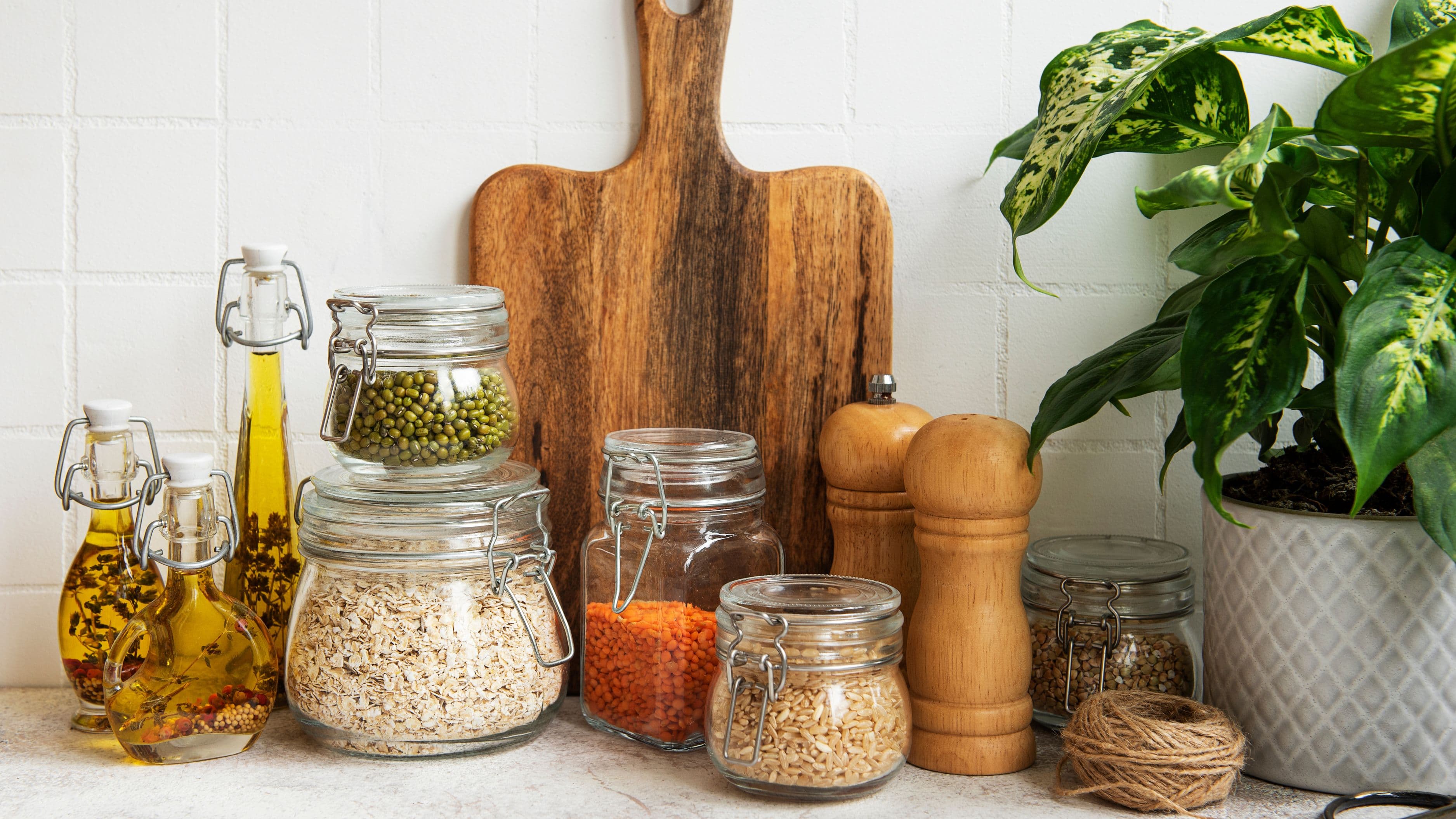
One of the things that makes grocery lists long and shopping trips slow is buying pantry items alongside weekly fresh ingredients as if everything needs to be decided from scratch each time. The smarter approach is maintaining a baseline pantry — a set of staples that you restock automatically rather than think about each week.
Your pantry baseline should include the things you use constantly regardless of what you're cooking: olive oil, garlic, onions, salt, a grain or two, tinned tomatoes, soy sauce or similar, pasta or rice, eggs. These aren't meal-specific. They're the infrastructure of your kitchen. When you run low on one, you add it to the list without needing a recipe to justify it.
When your pantry baseline is in good shape, your weekly list shrinks significantly because you're only shopping for the fresh and perishable items that week's cooking actually requires. The difference between a 40-item list and a 20-item list is often just pantry items you should already have and wouldn't need if the baseline was in place.
A Simple Template to Follow
You don't need an app or a printed template — a notes app on your phone, divided into sections, works perfectly well. Here's the basic format:
Produce: Aim for 3–5 items that work across multiple meals. Think about what can be used as a base (onions, garlic), what adds freshness (a leafy green, cherry tomatoes), and what makes things more interesting (a lemon, fresh herbs).
Proteins: One or two main proteins for the week, plus an easy backup (eggs, tinned fish, canned legumes). Choose proteins that can go in at least two different directions.
Dairy & Refrigerated: Milk, cheese, yogurt, or whatever you reliably use. Only add things you actually need — this section is easy to over-buy.
Pantry & Dry Goods: Restocks only — items from your baseline that are genuinely low. Not new ingredients for a specific recipe unless you're confident you'll actually make it.
Frozen: One or two items at most. Frozen vegetables (peas, edamame, spinach) are worth keeping stocked as a fallback. Avoid buying fresh and frozen versions of the same thing.
Other: Bread, snacks, household items, anything that doesn't fit elsewhere. Keep this list short.
In the Store: How to Use the List Effectively
A well-organized list still only saves time if you actually follow it through the store. The biggest time-waster in grocery shopping isn't a bad list — it's browsing. When you've moved past produce and you're standing in the middle of the cereal aisle wondering whether to try something new, you've left the circuit and you're making decisions you didn't need to make. The list is there to make most decisions before you arrive so you can move through quickly.
Work through each section in order and check things off. When something isn't available or looks poor quality, make a quick substitution in the same category rather than adding a new item. If cherry tomatoes look terrible this week, a roma tomato or a tin of whole tomatoes does the same job in most meals. You don't need to rethink the whole week — you just need a functional replacement.
The only time it's worth pausing is when something genuinely useful is on sale or looks especially good — a protein you use regularly at a significantly reduced price, or a seasonal vegetable that fits what you're already planning. Opportunistic additions to a planned list are fine. Impulse additions that don't connect to anything are what extend your trip and inflate your bill.
Mistakes to Avoid
Writing the list in no particular order. Even if everything is on the list, a disorganized list sends you back and forth across the store. Grouping by section before you go costs 60 extra seconds at home and saves 10 minutes in the store.
Writing ingredients for specific recipes without thinking about overlap. If every item on your list belongs to exactly one meal, you're not using flexibility to your advantage. Look for ingredients that serve double or triple duty before you add single-use items.
Leaving the list at home — or worse, not making one. Shopping without a list doesn't make you a spontaneous, confident cook. It makes you a slow shopper who comes home missing half of what's needed and with several things you didn't need at all.
Buying produce for meals you won't realistically cook. Be honest with yourself about your week. If there's a good chance Wednesday and Thursday will be takeout or simple fallback meals, don't buy fresh ingredients that will sit and go soft by the weekend. Frozen vegetables and pantry staples don't expire mid-week.
Adding "just in case" items. Every "I might need this" item is a decision made in the store under uncertainty. Most of them don't get used. If you're genuinely not sure whether you'll use something, leave it off and add it next week if you realize you missed it.
FAQ
Is a grocery list app worth using? It depends on how you like to work. Apps like AnyList or OurGroceries let you organize items by section and share lists across a household, which is genuinely useful. The built-in notes app on your phone, with the list organized into sections as described above, works just as well if you'd rather keep it simple. The format matters more than the tool.
How often should I update my pantry baseline list? You don't need a separate "pantry list" — just note when something is running low as you use it, the same way you'd notice you're almost out of anything. The goal is being aware before you run completely out, so it lands on the grocery list before the next trip rather than mid-recipe.
What if different family members have different preferences? Work with one list, but flag items that are for specific people when relevant. The structure stays the same — organized by section, anchored to ingredients that cross multiple meals. The more meals you're cooking for a household, the more valuable the flexible-ingredient approach becomes, because your list gets more complex and overlap reduces the length.
Does this strategy still work for larger households? Yes — you're just scaling quantities, not the approach. The same logic applies: organize by section, choose flexible ingredients, maintain a pantry baseline, keep the list as short as the week's actual cooking requires. Larger households often benefit most from this because the temptation to over-buy "just in case" is stronger.
How do I handle specialty items I only need occasionally? Add them to the list when you need them, but treat them as extras rather than anchors of the week's shopping. Specialty items — a specific spice, an unusual ingredient for one dish — belong at the end of the relevant section, after the basics that apply to multiple meals.
A Shorter List Is a Better Trip
The goal isn't a shorter list for its own sake — it's a list that reflects what you'll actually use, organized to move through the store efficiently, built around flexible ingredients that don't commit you to a specific plan before you know what your week actually holds.
Build the list in sections, keep the pantry baseline stocked, and think about what each ingredient can do across multiple meals rather than assigning it to one recipe. That shift alone — from meal-specific shopping to ingredient-flexible shopping — is what makes the list shorter, the trip faster, and the week's cooking easier.
📚 Sources
USDA – Smart shopping and reducing food waste: https://www.usda.gov/media/blog/2018/10/25/how-can-you-reduce-food-waste-home
Harvard T.H. Chan School of Public Health – Healthy eating on a budget: https://www.hsph.harvard.edu/nutritionsource/healthy-eating/healthy-eating-on-a-budget/
FDA – Refrigerator storage chart and food safety: https://www.fda.gov/media/74435/download
EatingWell – How to meal plan for the week without stress: https://www.eatingwell.com/article/7824685/how-to-meal-plan-beginners/
🔍 Explore Related Topics
How to stock a pantry for easy weeknight meals
How to make the most of a grocery trip