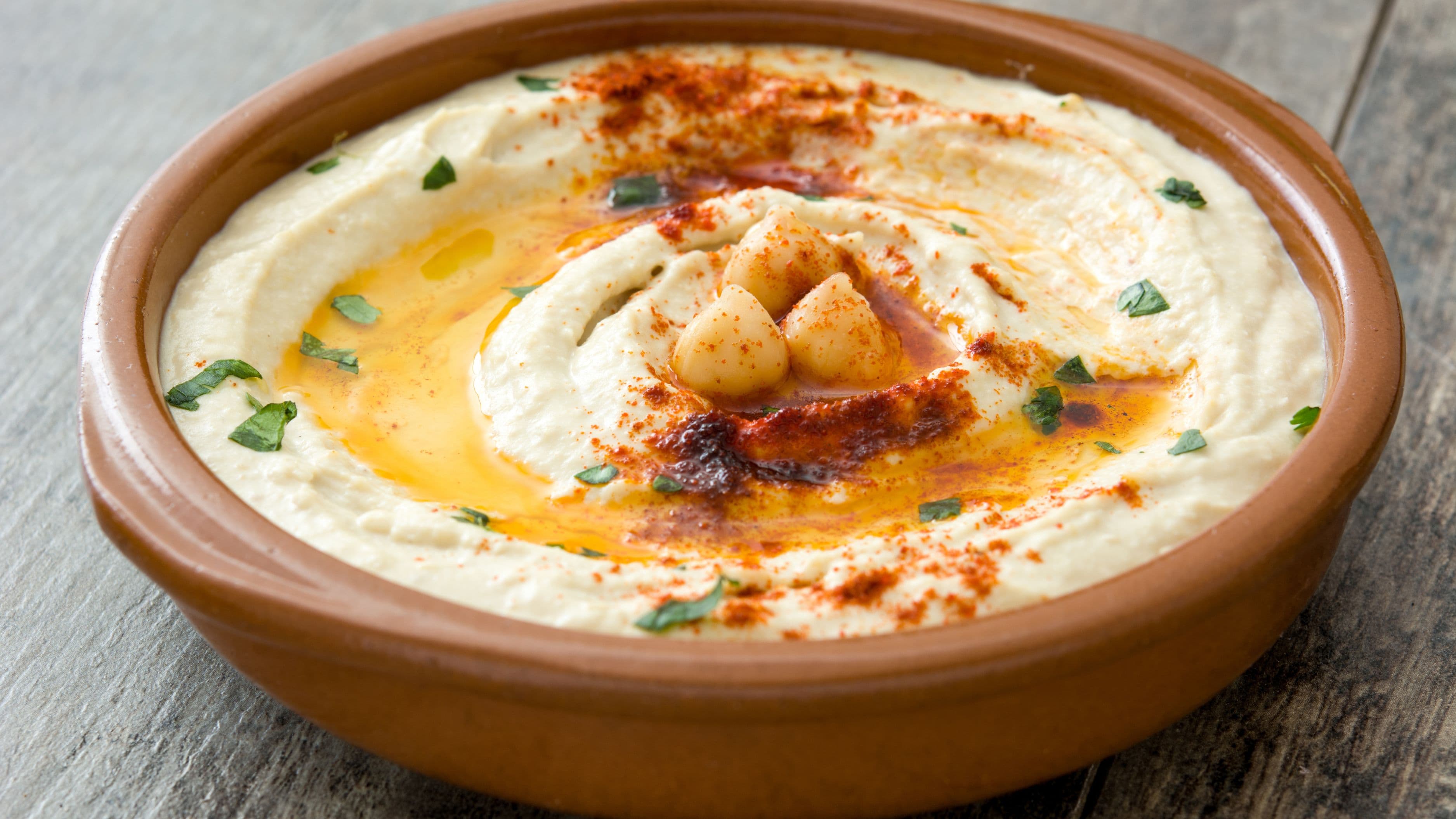
Why Homemade Hummus Often Comes Out Grainy
The most common culprit is the chickpea skins. Every chickpea has a thin outer skin that doesn't break down completely in a food processor, and those tiny bits of skin are exactly what create that slightly gritty texture homemade hummus is known for. Store-bought versions often use processing methods that strip this out more thoroughly, which is a big part of why they feel so much smoother straight from the container.
The second factor is technique: how you blend, what order you add ingredients, and whether you're giving the tahini and lemon juice time to properly emulsify before the chickpeas go in. Getting both the skin issue and the blending technique right closes most of the gap entirely.
Step 1: Cook Your Chickpeas Until They're Genuinely Soft
If you're using dried chickpeas, cook them longer than feels necessary, until they're falling-apart soft, almost mushy when you press one between your fingers. Undercooked chickpeas are the single biggest reason for grainy hummus, since firm chickpeas simply can't break down smoothly no matter how powerful your blender is.
If you're using canned chickpeas, a quick simmer for 10–15 minutes in fresh water before blending softens them further and makes a noticeable difference in final texture, even though canned chickpeas are already technically cooked.
Step 2: Remove the Skins
This step gets skipped constantly, but it's the one that closes most of the smoothness gap. After cooking or draining canned chickpeas, rub them gently between a clean kitchen towel, or between your palms under running water, to loosen and remove the thin outer skins. It's a bit tedious, but even removing most of the skins (you don't need to be perfect) makes a real difference.
An alternative shortcut: add a pinch of baking soda to the cooking water when boiling dried chickpeas, which helps break down the skins during cooking and makes them easier to remove or blend smooth afterward.
Step 3: Make Tahini-Lemon Emulsion First
Before adding chickpeas, blend your tahini and lemon juice together first, on their own, until the mixture turns pale and creamy. This step, borrowed from more traditional hummus-making methods, creates a proper emulsion that gives the final hummus a lighter, whipped texture rather than a dense, paste-like one.
Add a splash of ice water during this step if the mixture seizes up or looks too thick; tahini can behave unpredictably when lemon juice is added directly, and a little cold water smooths it back out.
Step 4: Blend Longer Than You Think You Need To
Once the chickpeas go in, blend for significantly longer than feels intuitive, often 4–5 minutes total, scraping down the sides periodically. A food processor or high-powered blender running continuously breaks down remaining texture that a quick 60-second blend simply won't touch.
Add ice water gradually during this stage, a tablespoon at a time, to help the mixture keep moving smoothly and reach that lighter, almost whipped consistency rather than staying thick and heavy.
Step 5: Adjust With Ice Water, Not Just Olive Oil
While good olive oil adds flavor, ice water is actually the better tool for adjusting texture toward smoothness specifically. Oil can make hummus richer but doesn't lighten the texture the way cold water does when blended in properly. Use both, oil for flavor, ice water for that lighter, smoother consistency.
What to Avoid
Don't skip the skin removal step entirely if smoothness is your priority; it's the single change that most reliably eliminates graininess, even more than blending time alone.
Don't rush the chickpea cooking stage. Firm or underdone chickpeas simply can't reach a smooth consistency regardless of how long you blend them afterward.
Don't add all your liquid at once at the start. Gradual addition during blending gives you better control over the final consistency and avoids ending up with hummus that's too thin to fix without starting over.
FAQ
Does the brand of tahini matter for smoothness? Yes, meaningfully. Tahini varies in consistency between brands, and a thinner, more pourable tahini generally blends into a smoother final texture than a thick, stiff one.
Can I make smooth hummus without a food processor? A high-powered blender can work, though you'll need to stop and scrape down the sides more frequently since blender blades aren't always optimized for thick mixtures the way food processor blades are.
How long does homemade hummus keep in the fridge? Properly stored in an airtight container, homemade hummus typically keeps well for about 5–7 days, and the texture often holds up nicely throughout that window.
📚 Sources
Hummus texture and preparation techniques – https://www.seriouseats.com/the-best-hummus-recipe
Chickpea cooking and preparation guidance – https://www.bonappetit.com/story/how-to-cook-dried-chickpeas