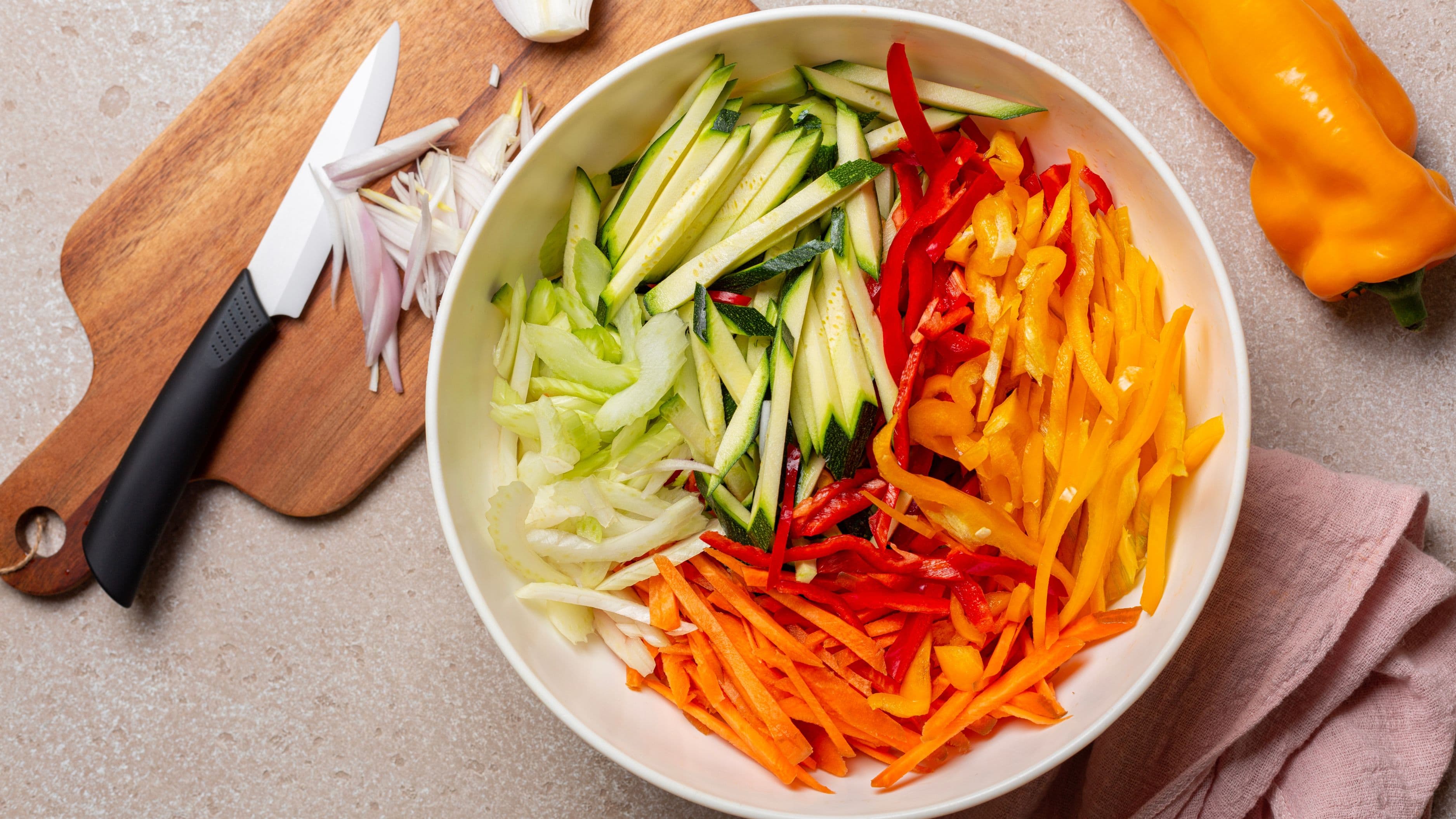
This guide covers the classic knife method step by step, a useful shortcut with a mandoline or julienne peeler for when you're in a hurry, and all the common mistakes that make the process harder than it needs to be.
What Julienne Actually Means
Julienne (pronounced zhoo-lee-ENN) refers to cutting vegetables into thin, uniform matchstick-shaped strips, typically about 2 inches (5cm) long and 1/8 inch (3mm) wide on each side. The thin, even shape serves a practical purpose: it creates more surface area, which means faster cooking, better texture, and more even seasoning.
You'll see julienne cuts most often in Asian cooking – pad thai, spring rolls, stir-fries – as well as in composed salads and garnishes where texture and visual presentation matter. The method works on most firm vegetables: carrots, bell peppers, zucchini, cucumber, kohlrabi, leek, and daikon radish all julienne well. Soft vegetables like tomatoes or overripe avocado don't hold up to the cut.
Don't worry too much about perfect uniformity at first. Slightly varied strips cook almost identically and taste exactly the same. Precision comes with practice – getting started is more important than getting it perfect.
What You Need
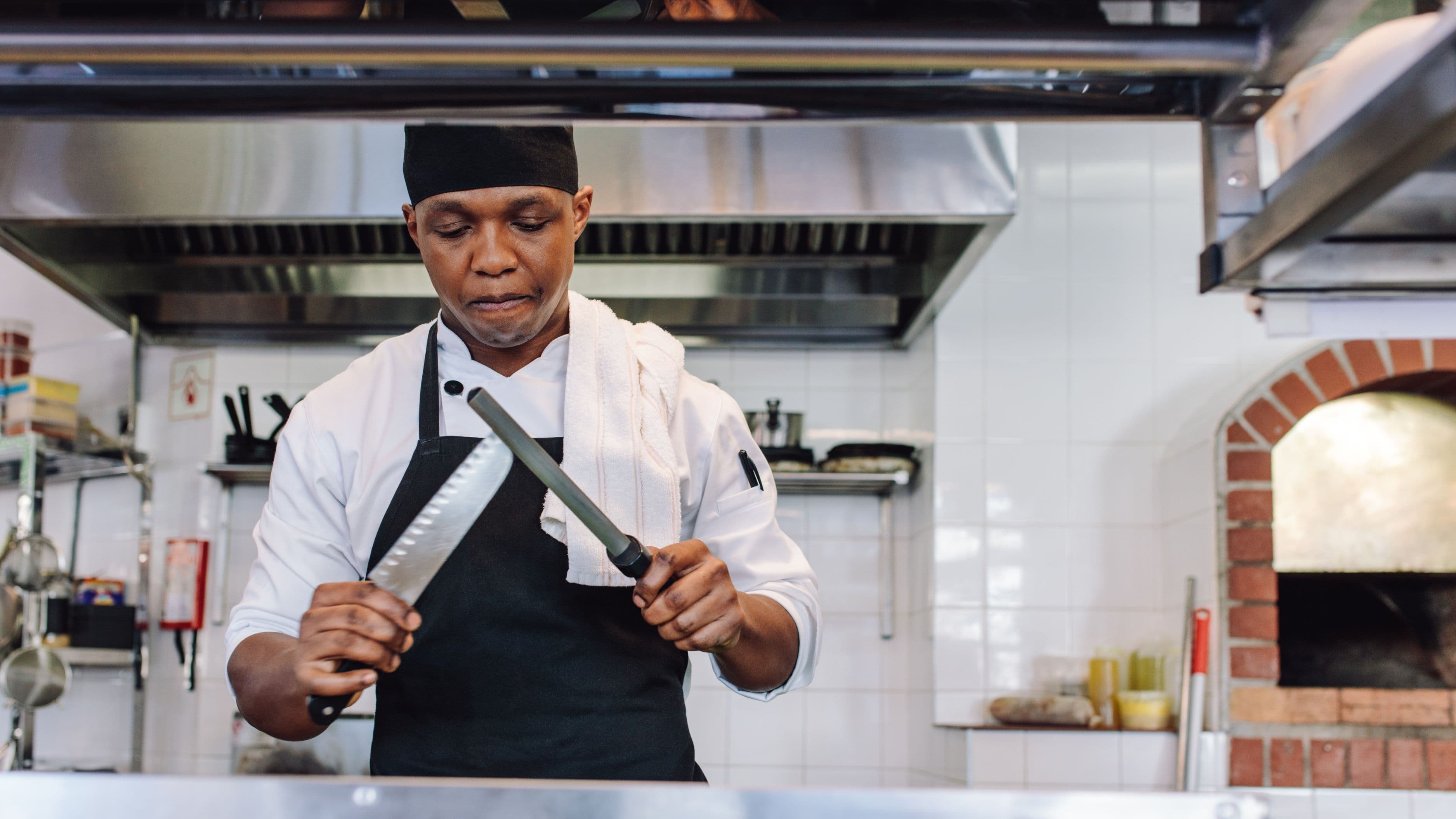
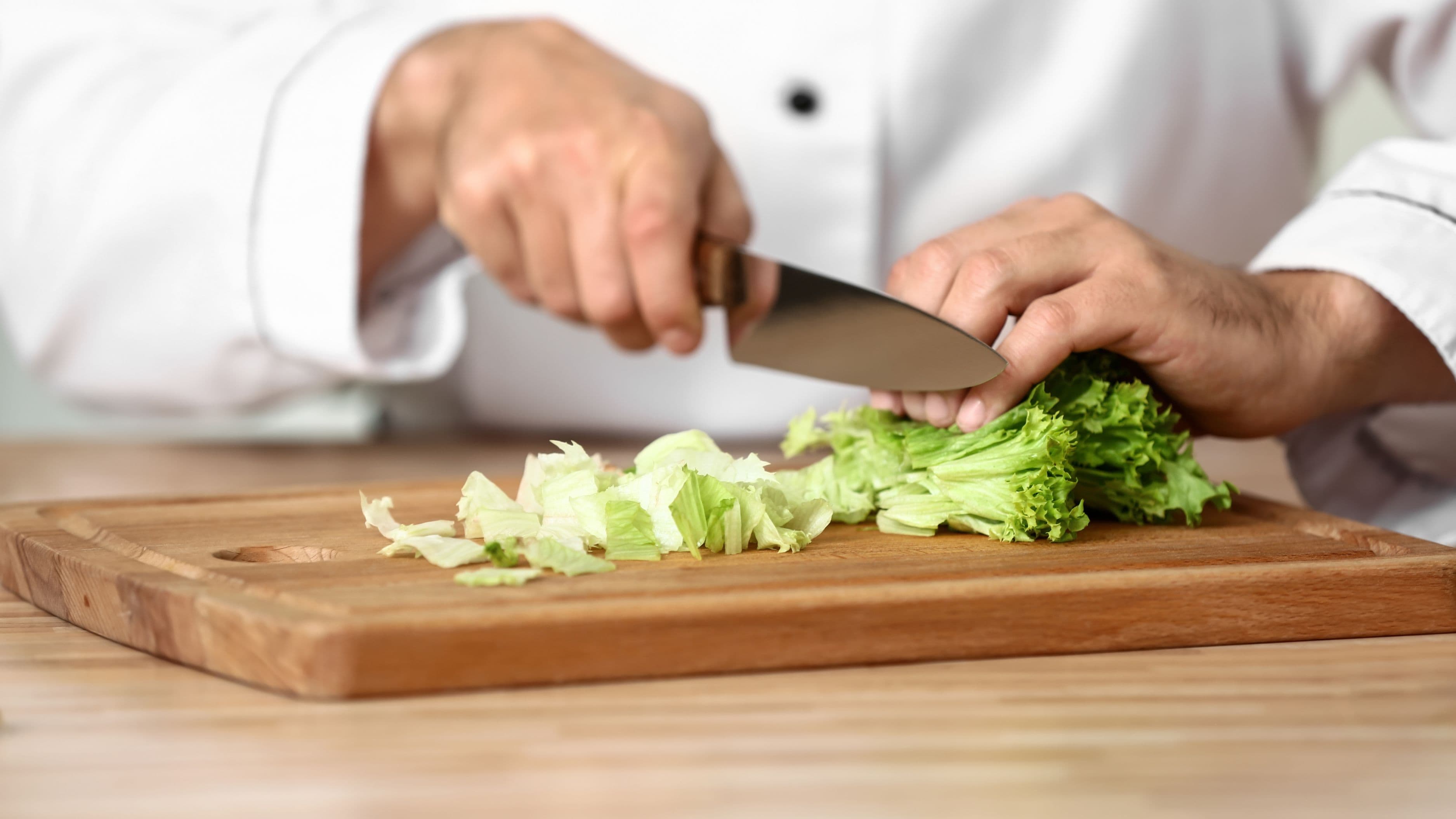
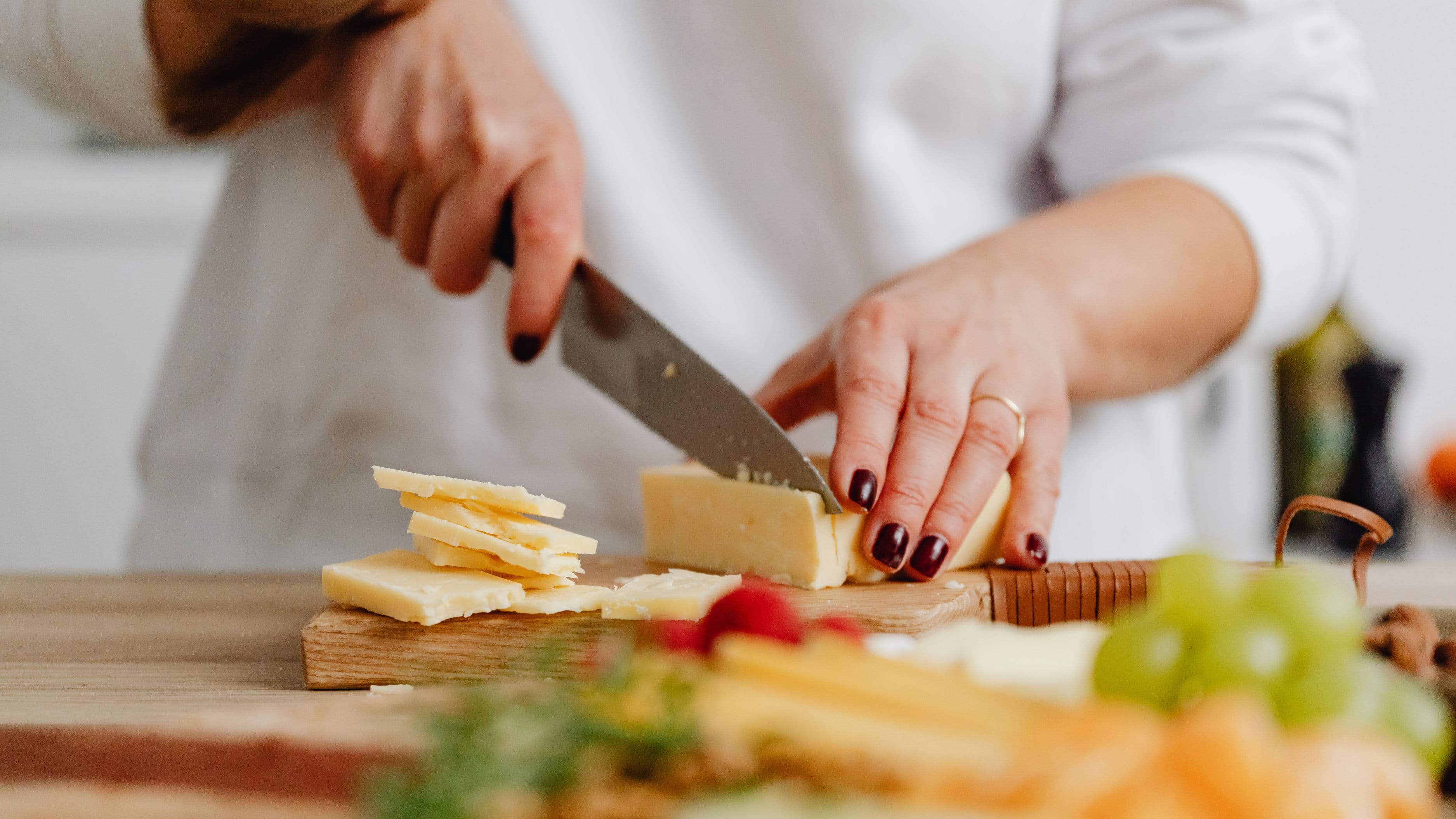
A sharp chef's knife or a santoku knife is all you really need. A sharp blade is more important than the type – a dull knife will slip and compress the vegetable rather than cut cleanly through it, which makes the process genuinely frustrating and less safe. If your knife isn't sharp, run it through a honing steel or a simple pull-through sharpener before you start.
A stable cutting board – ideally a large, heavy one that doesn't slide – is equally important. Place a damp kitchen towel or a non-slip mat underneath if your board moves around. Stability is a big part of making knife work feel easy rather than anxious.
Optional tools that help: a mandoline slicer (with a cut-resistant glove) speeds up the initial slicing stage considerably, and a julienne peeler is a useful gadget for thin vegetables like carrots and zucchini where you want very fine strips quickly. Neither is required.
The Knife Method: Step by Step
Step 1: Wash, Peel, and Trim the Vegetable
Rinse your vegetable under cold water and dry it off. Peel it if the skin is tough or bitter – carrots and kohlrabi always need peeling, zucchini and bell peppers generally don't. Trim both ends flat so you have a stable, flat surface to work from.
For round or irregular vegetables like carrots, cut a thin slice off one side lengthwise to create a flat base. This flat edge prevents the vegetable from rolling when you cut it, which is the biggest safety and accuracy issue in knife work.
Step 2: Cut Into Manageable Lengths
Cut the vegetable crosswise into sections about 2–3 inches long. This is your target length for the final julienne strips. Working with shorter pieces is much easier to control than trying to julienne a whole long carrot in one go – shorter pieces stay stable, produce more consistent results, and are quicker to work through.
Step 3: Slice Into Thin Planks
Stand each vegetable section on its flat base and cut it lengthwise into thin, even slabs about 1/8 inch (3mm) thick. Work slowly and keep your fingers curled in the "claw" position – fingertips tucked under, knuckles guiding the blade. Stack the slabs neatly as you go.
Consistent plank thickness here determines the consistency of your final julienne. If some planks are much thicker than others, your strips will be uneven. Take your time with this step; it's the one that matters most.
Step 4: Stack and Slice Into Strips
Stack three or four planks on top of each other and cut them lengthwise into thin strips, the same width as your planks – about 1/8 inch (3mm). Cutting through several planks at once is much faster than doing them individually, and the stack holds together well if the planks are relatively flat and even.
These strips are your julienne. Transfer them to a bowl or continue until you've worked through all your vegetable sections.
That's the full method. Wash, trim, create a flat base, cut into lengths, slice into planks, stack and slice into strips. Once you've done it a few times, the whole process becomes quick and automatic.
The Mandoline Shortcut
If you regularly cook dishes that need julienned vegetables – stir-fries, Vietnamese salads, Korean banchan – a mandoline with a julienne blade is a worthwhile tool. It reduces a 10-minute knife job to about 2 minutes, produces perfectly uniform strips every time, and requires almost no technique.
The important thing with a mandoline is the cut-resistant glove. Mandoline blades are extremely sharp and the slipping risk is real, especially as you get to the end of a vegetable and your hand gets close to the blade. A cut-resistant glove (available cheaply at kitchen stores) makes mandoline use genuinely safe and stress-free. Always use one – or use the food holder that comes with the mandoline and stop before your hand gets close.
To use it: set the mandoline to julienne mode and the thickness to 1/8 inch, then pass the vegetable firmly along the cutting surface in smooth, controlled strokes. The strips fall through directly.
The Julienne Peeler Shortcut
A julienne peeler looks like a regular vegetable peeler but has multiple small blades that cut thin strips rather than a single thin shave. It's particularly useful for carrots, zucchini, and cucumber, and takes up almost no space in a drawer.
Hold the vegetable firmly in one hand and draw the julienne peeler along it in long, smooth strokes, the same motion you'd use for peeling. Each stroke produces a cluster of thin strips. It works best on the outer part of the vegetable – once you get to the softer core of zucchini or cucumber, the strips get a bit watery and soft, so stop there.
The strips from a julienne peeler are a little more rustic than knife-cut or mandoline strips, but they cook and taste identically. For a weeknight stir-fry where precision doesn't matter, a julienne peeler is the fastest route.
When to Use Julienne Cuts
The julienne cut is most useful when you want the vegetable to cook quickly and evenly, or when texture and visual presentation are part of the dish.
In a stir-fry, julienned vegetables hit the wok with maximum surface area and cook in 2–3 minutes rather than the 6–8 minutes a thicker piece might need. They also absorb sauce more readily. In a Vietnamese or Thai salad, julienned carrot and cucumber provide a satisfying crunch and make it easy to eat with chopsticks or a fork without cutting. In spring rolls and rice paper wraps, the thin shape is what allows clean rolling without the vegetables bulging out.
You don't need to julienne for every dish. For roasted vegetables, soups, or anything that cooks for a long time, a julienne cut isn't necessary and the thin strips may actually become too soft. Reserve it for dishes that benefit from fast cooking or raw/lightly dressed preparations.
Tips That Make a Real Difference
Dry your vegetables before cutting. Surface moisture makes the cut surface slippery and reduces control. A quick pat with a kitchen towel after washing makes a noticeable difference.
Chill the vegetable slightly before cutting if it's too soft. A cold carrot or zucchini is firmer and easier to slice cleanly than a room-temperature one. Five minutes in the fridge if it's been sitting out is enough.
Keep your knife dry during cutting. Moisture on the blade causes it to drag slightly rather than glide cleanly. Wipe it with a kitchen towel periodically if you're working through a large amount.
Work in batches and stay organized. Keep your cut strips in a bowl rather than letting them pile up on the board. A clear, organized board is easier to work on and produces better results.
Don't stress about uniformity. Strips that vary by a millimeter in width cook essentially the same way and are indistinguishable in a finished dish. The goal is "roughly matchstick-sized," not "mathematically identical."
Common Mistakes to Avoid
Using a dull knife is the most impactful mistake you can make. A dull knife forces you to use pressure instead of sharpness to cut, which makes the vegetable slide unpredictably, compresses the texture, and genuinely increases the risk of slipping. Sharpen or hone your knife before you start.
Skipping the flat base step causes the vegetable to roll while you're trying to cut planks, which is both inaccurate and unsafe. That one extra cut at the beginning prevents a lot of frustration.
Cutting planks that are too thick makes it harder to stack and cut into strips, and produces strips that are square in cross-section rather than thin matchsticks. Aim for around 1/8 inch and adjust as you go.
Trying to stack too many planks at once causes the stack to slide and collapse while you're cutting strips. Three or four planks is the sweet spot – enough to be efficient, few enough to be stable.
Rushing the plank-slicing stage at the cost of consistency is the other common pitfall. The more even your planks, the easier and faster the strip-cutting goes. The first stage is worth slowing down for.
FAQ
Do I need an expensive chef's knife to julienne vegetables? No. A mid-range chef's knife or santoku that's been kept reasonably sharp will do the job well. What matters far more than price is sharpness – a sharp $30 knife outperforms a dull $200 one for this kind of precision work. If your current knife needs sharpening, that's the investment to make first.
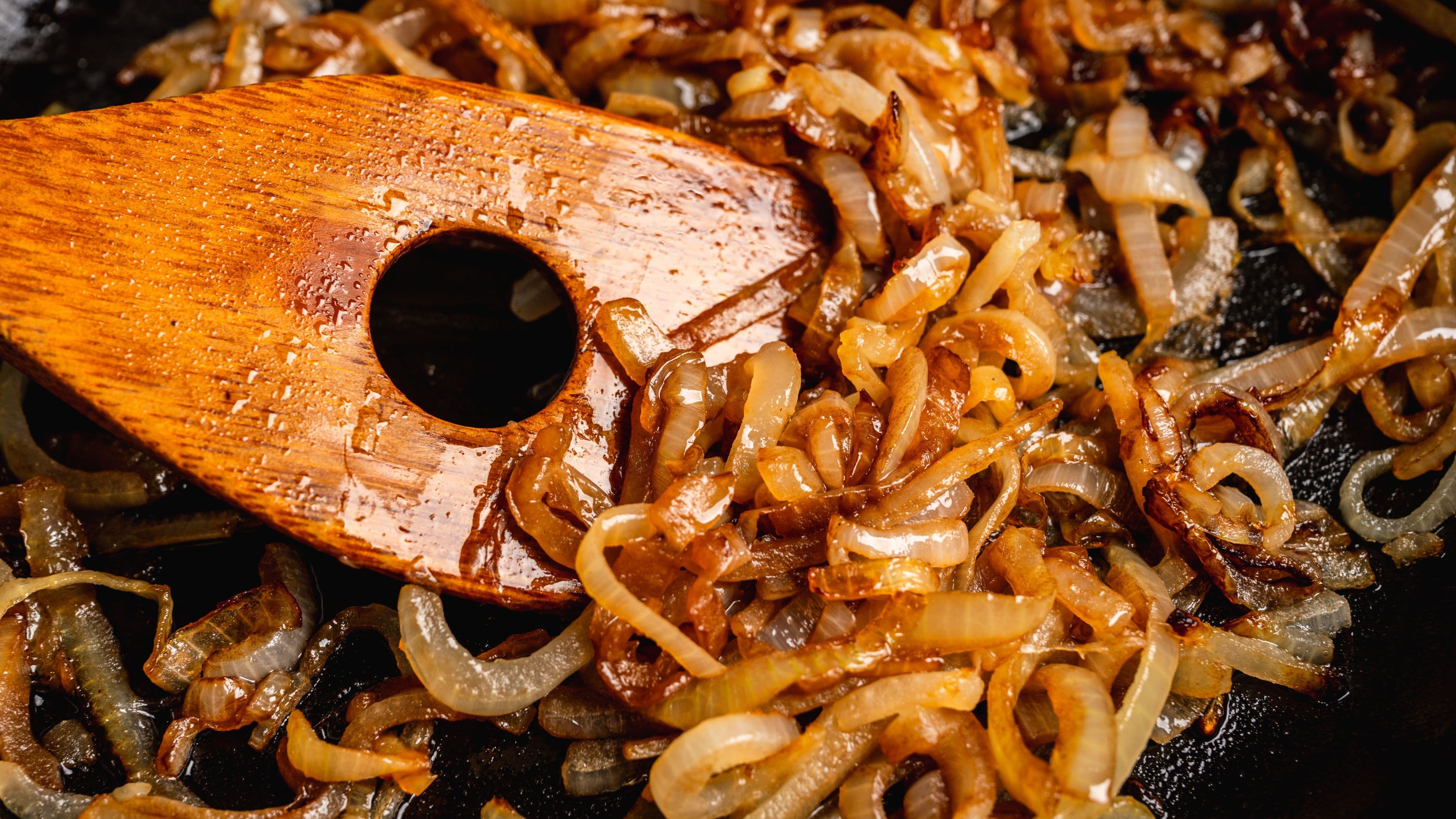
Can I julienne onions? Technically yes, but the method is slightly different because onions have layers that separate. For onions, most cooks slice them in half from root to tip, place cut-side down, and then slice thinly lengthwise – this produces long, thin strips similar to julienne that work well for stir-fries and caramelizing. True julienne technique is better suited to firm, solid vegetables.
How far in advance can I julienne vegetables? Most julienned vegetables keep well for 1–2 days in an airtight container in the fridge. Softer ones like zucchini and cucumber are better cut the day of, as they release water and soften over time. Carrot, bell pepper, and daikon hold up better and are good for 2 days without significant texture loss. Store with a piece of damp kitchen paper to keep them from drying out.
What's the difference between julienne and chiffonade? Julienne refers specifically to vegetables cut into thin matchstick strips. Chiffonade is a similar fine-cut technique applied to leafy herbs and greens – you stack the leaves, roll them into a tight cylinder, and slice across to produce thin ribbons. Both produce thin, uniform cuts; the technique and the starting ingredient are different.
Is there a faster way if I'm cooking for a crowd? A mandoline with a julienne attachment is the fastest method for large quantities. A food processor with a julienne disc is another option, though the strips tend to be slightly ragged compared to a mandoline or knife. For very large batches, a mandoline fitted with a cut-resistant glove is the best combination of speed and results.
📚 Sources
Serious Eats – Knife Skills: How to Julienne Vegetables: https://www.seriouseats.com/knife-skills-how-to-julienne-vegetables
America's Test Kitchen – Essential Knife Skills for Home Cooks: https://www.americastestkitchen.com/articles/knife-skills
BBC Good Food – How to Chop, Slice and Dice Vegetables: https://www.bbcgoodfood.com/howto/guide/how-chop-slice-and-dice
The Kitchn – How to Julienne Carrots (And Any Vegetable): https://www.thekitchn.com/how-to-julienne-carrots-and-any-vegetable-cooking-lessons-from-the-kitchn-192139
Jacques Pépin – New Complete Techniques (knife skills reference): https://www.penguinrandomhouse.com/books/211101/new-complete-techniques-by-jacques-pepin/
Fine Cooking – Getting the Most From Your Mandoline: https://www.finecooking.com/article/choosing-and-using-a-mandoline
Food52 – A Beginner's Guide to Knife Cuts: https://food52.com/blog/25462-a-guide-to-knife-cuts
Bon Appétit – How to Keep Your Knife Sharp: https://www.bonappetit.com/story/how-to-sharpen-a-knife
The Woks of Life – Knife Skills for Chinese Cooking: https://thewoksoflife.com/knife-skills/
Taste of Home – Vegetable Cutting Guide for Beginners: https://www.tasteofhome.com/article/vegetable-cutting-guide/