What You'll Learn
This isn't a one-time lesson you read and forget. It's a small set of foundational habits, the claw grip, the rock chop, and a few basic cuts, practiced consistently enough that your hands eventually do them without you thinking through each step. Once these become automatic, everything else in the kitchen gets easier, because chopping stops being the slow, tedious part of cooking and starts being something you barely notice doing.
Step 1: Get the Grip Right Before Anything Else
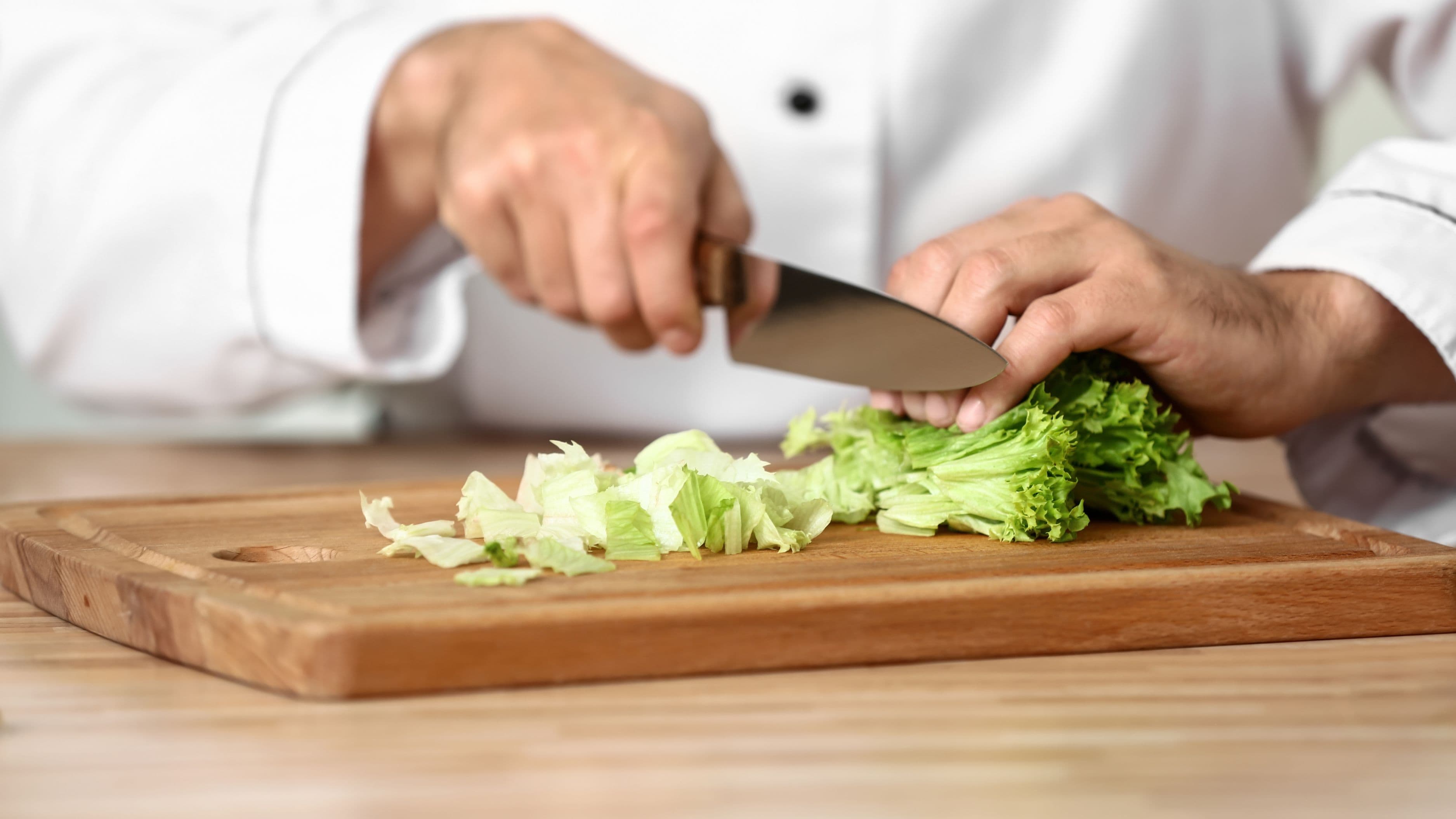
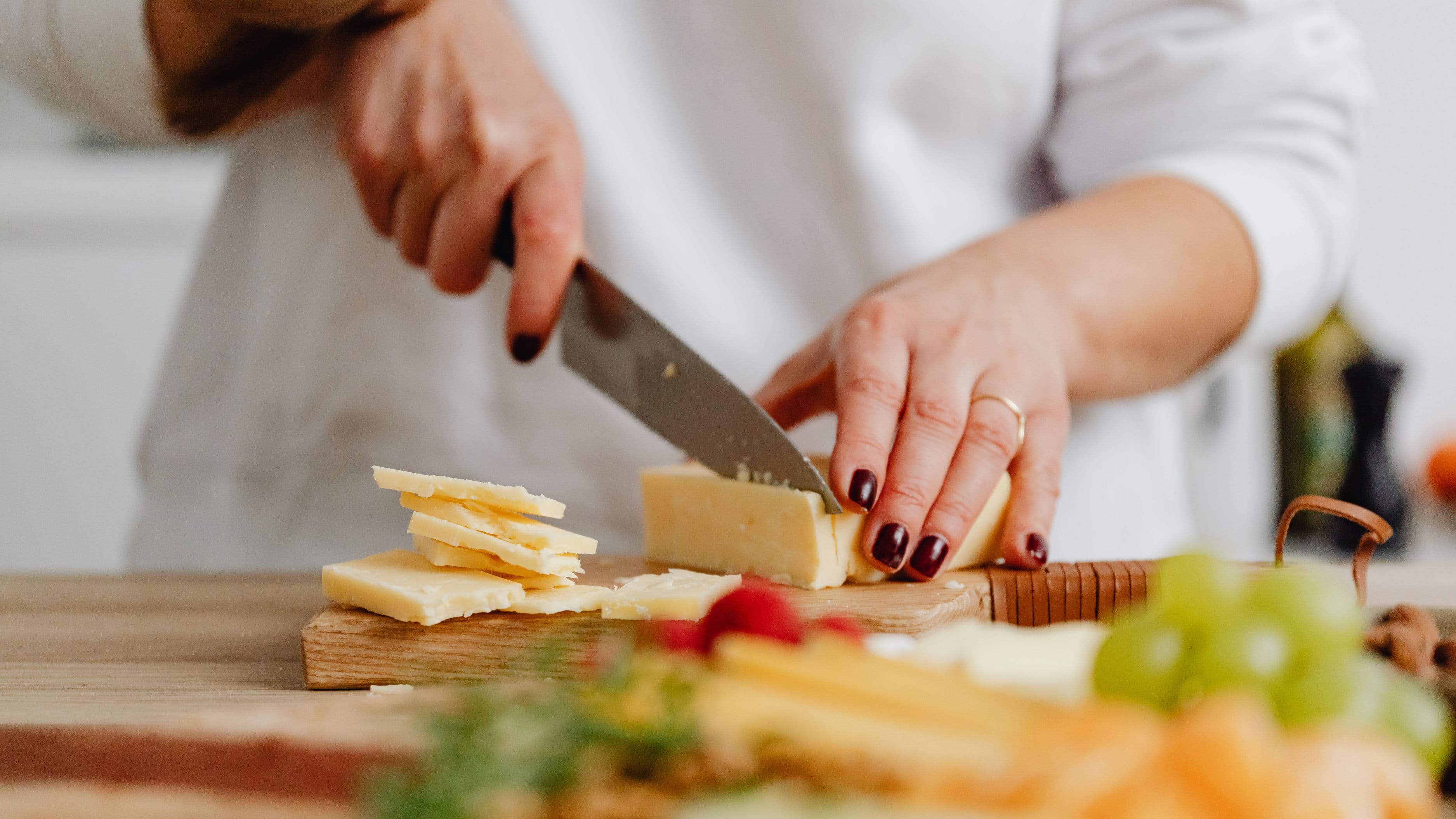
Almost every knife skill problem traces back to how you're actually holding the knife. Grip the handle with your thumb and index finger pinched slightly up onto the blade itself, right where it meets the handle, rather than wrapping your whole hand around just the handle. This pinch grip gives you far more control over the blade's angle and pressure than a full-handle grip does, and it's the single biggest technique upgrade most home cooks are missing.
Your other hand does the equally important job of holding the food steady using what's called the claw grip, fingertips curled under and knuckles facing forward, guiding the food while keeping your fingertips safely tucked away from the blade. The flat side of the knife should rest lightly against your curled knuckles as you cut, using them as a guide rather than looking directly at the blade tip with every single cut.
Step 2: Practice the Rock Chop Motion Separately From Actual Cooking
The rock chop is the basic forward-and-down motion most knife cuts are built on, where the tip of the knife stays in light contact with the cutting board while the heel rises and falls in a smooth rocking motion. Trying to learn this motion for the first time while also trying to cook dinner under time pressure is exactly why it never sticks for most people.
Instead, set aside five minutes with a cheap bunch of celery or a few carrots you're not worried about wasting, and just practice the rocking motion itself without worrying about perfect uniform pieces yet. Focus purely on keeping the tip anchored and letting the blade do a smooth rocking arc, rather than lifting the entire knife off the board with each cut, which is the habit most beginners default to and the one that keeps chopping slow and effortful.
Step 3: Build Muscle Memory With One Cut at a Time
Rather than trying to learn dicing, mincing, and julienning all in the same week, pick one basic cut and repeat it across several different meals before moving to the next. A rough dice on onions, used in nearly every savory dish you'll cook, is a natural starting point precisely because you'll get so many repetitions in naturally just by cooking normally.
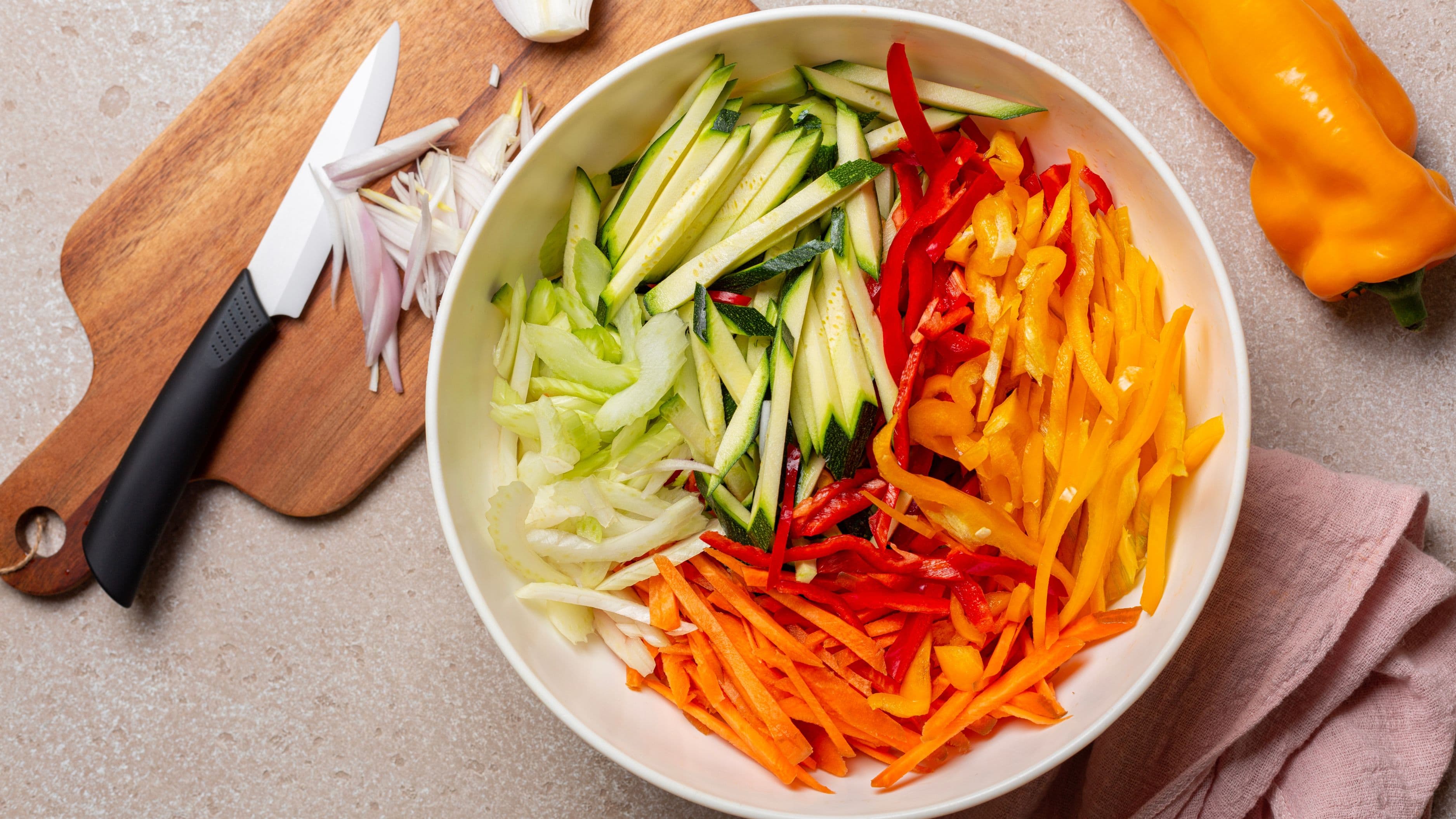
Once a basic dice feels comfortable without needing to consciously think through each step, move to a simple julienne on something like carrots or bell peppers, since that thin, uniform strip cut reinforces the same steady claw grip and rock motion you've already been building, just applied to a slightly different shape. Layering skills this way, one at a time, on top of an already-comfortable foundation, is what actually makes knife skills stick long-term, rather than trying to absorb everything at once and retaining very little of it.
When to Use These Specific Skills
The claw grip and rock chop apply to the overwhelming majority of everyday home cooking, which is exactly why they're worth prioritizing over more specialized cuts you'll rarely need. Dicing onions, garlic, carrots, celery, and peppers for a base to almost any soup, sauce, or sauté is where you'll get the most repetitions and the fastest improvement simply through normal weekly cooking.
More specialized cuts, a fine brunoise for garnish, or precise bias cuts for stir-fry vegetables, are worth learning eventually but aren't where your practice time is best spent early on. Building rock-solid fundamentals on the basic grip and rough dice pays off far more in daily cooking than jumping straight to advanced technique videos before the basics are automatic.
Tips for Making It Actually Stick
Practice on foods you're already planning to cook rather than treating knife skills as a separate practice session every time. The repetition that actually builds muscle memory comes from doing this consistently across real meals, not from occasional dedicated practice sessions that are easy to skip when you're busy or tired.
Slow down deliberately for the first few weeks, even though it feels counterintuitive when you're trying to get faster. Rushing before the motion is comfortable reinforces bad habits, like lifting the knife too high or losing the anchor point at the tip, which are much harder to unlearn later than they are to avoid picking up in the first place.
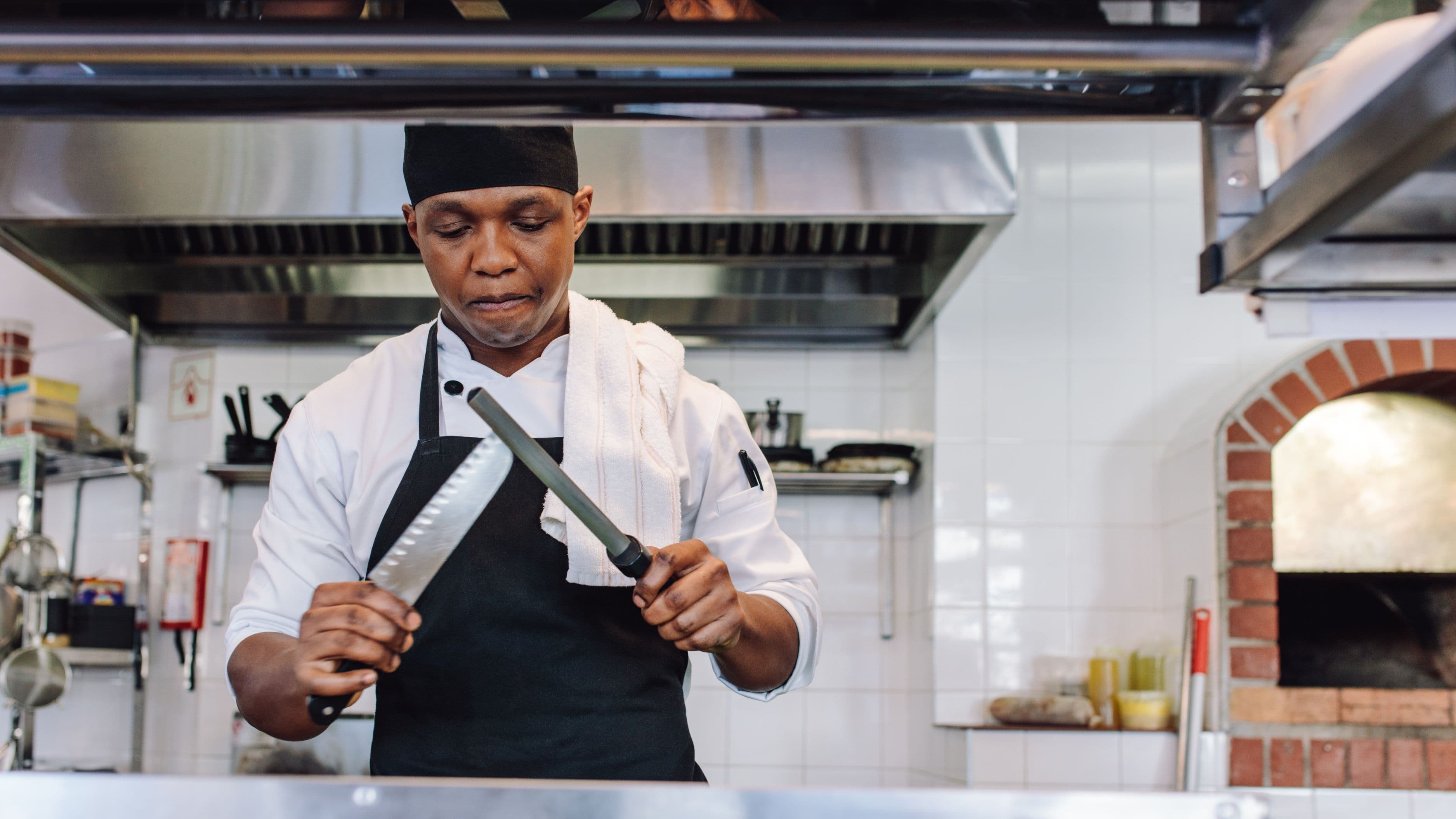
Keep your knife actually sharp, since a dull blade requires more pressure and unpredictable force to cut through food, which undermines the control you're trying to build and makes the whole learning process feel harder and less safe than it needs to be.
Common Mistakes to Avoid
Don't grip the knife handle with your whole hand wrapped around it, since this significantly limits your control over the blade angle and is one of the most common habits that keeps cutting slow and imprecise indefinitely.
Don't tuck your guiding hand's fingers loosely instead of using a proper curled claw grip. An uncurled hand near the blade is one of the most common causes of minor kitchen cuts, and it's a habit worth correcting immediately rather than after an actual injury.
Don't try to learn multiple new cuts simultaneously in your first few weeks. Spreading practice too thin across several unfamiliar motions at once slows overall progress compared to mastering one cut thoroughly before adding the next.
Realistic Expectations
Most home cooks notice a real, comfortable improvement in their basic grip and rock chop within two to three weeks of regular cooking, assuming you're applying the technique consistently rather than reverting to old habits when rushed. Full comfort with a rough dice at a reasonably quick pace typically takes a few months of regular use, not a single practice session, and that timeline is completely normal rather than a sign you're behind somehow.
Speed will come naturally as the motion becomes automatic, and trying to force speed before the fundamentals feel comfortable usually backfires, leading to sloppier cuts and a higher chance of a slip. Prioritizing correct, comfortable motion first is what actually gets you to faster, more confident chopping later.
FAQ
Do I need an expensive knife to build good knife skills? No, a mid-range, well-balanced chef's knife that you keep properly sharp matters far more than price. Many culinary schools recommend affordable, reliable options over premium knives for beginners specifically learning technique.
How often should I practice for skills to actually stick? Practicing during your regular cooking, several times a week, is more effective long-term than occasional dedicated practice sessions, since consistent repetition in real context is what builds lasting muscle memory.
Is it normal to feel awkward or slow at first? Yes, completely normal, and it typically passes within a few weeks of consistent practice. Feeling clumsy initially doesn't indicate you're doing something wrong, it's a normal part of building new muscle memory.
Should I watch video tutorials to learn proper technique? Yes, watching a few reputable video demonstrations to see the grip and motion in action is genuinely useful before practicing, since seeing the technique performed correctly helps you understand what you're aiming for before building it into muscle memory yourself.