Why This Approach Works
The reason sale-first meal planning saves money isn't just because individual items cost less – it's because sales are typically deepest on proteins and produce, which are the most expensive parts of any meal. Chicken thighs marked down 40%, a large pork shoulder at half price, salmon on special this week only – these deals represent real savings on the items that drive your grocery bill the most.
Building your meals around what's already discounted also naturally reduces food waste, because you're buying what's available and fresh rather than buying specific ingredients that might sit around until they're forgotten. You stop buying six different things for six different recipes and start thinking about how to use what you already have in multiple ways. That shift in thinking is where the real savings stack up over time.
The other thing that makes this approach effective is that it forces a small amount of flexibility into your week. You're not locked into a rigid plan – you're working with ingredients that are worth buying, then deciding what to cook from them. For most home cooks, that's actually less stressful than trying to track down a specific ingredient a recipe calls for.
Step 1: Check the Weekly Circular Before You Plan Anything
Your grocery store's weekly sales circular is the starting point for everything. Most major chains release their new ad on Wednesday or Thursday, and it covers the following week's deals. You can find it in the store's app, on their website, or as a physical flyer near the entrance.
Look for two categories first: proteins and fresh produce. These are where the biggest price differences between sale and regular pricing tend to live, and they're the items that most directly shape what meals make sense to cook. If chicken breast is on sale this week but pork tenderloin isn't, that's your signal to plan a couple of chicken-forward dinners rather than the other way around.
Don't ignore the pantry deals either. Canned tomatoes, dried pasta, olive oil, beans, and broth are all items that store well and are worth stocking up on when they're discounted, because they're the building blocks that turn cheap proteins and produce into actual meals. A well-stocked pantry is what makes sale-based meal planning fast and flexible rather than stressful and limited.
Step 2: Identify 2–3 Anchor Proteins
Once you know what's on sale, choose two or three proteins to anchor the week's meals around. An anchor protein is something you buy in enough quantity to cook more than once or to use in multiple different ways throughout the week.
If chicken thighs are the deal this week, buying a family pack gives you enough to make roasted chicken thighs one night, a quick stir-fry another night, and a simple chicken soup or grain bowl by the end of the week. That's three dinners from one sale item, one shopping trip, and very little meal-planning complexity. The key is thinking about one protein in multiple forms rather than buying a different protein for every single dinner.
Cheaper cuts often make better anchor proteins than premium ones because they hold up to longer cooking methods and reheat well. Bone-in chicken, pork shoulder, beef chuck, ground turkey, and whole fish are all excellent candidates. A pork shoulder on sale can become pulled pork tacos, a rice bowl topping, and a quick hash – the same purchase doing a lot of work across the week.
Step 3: Build Meals Around What's on Sale in Produce
After your proteins are decided, look at what produce is currently discounted or in season. These two things often overlap – seasonal produce is cheaper because it's abundant, and stores frequently run deals to move it quickly. A bag of sweet potatoes marked down, bell peppers on special, or a head of cabbage at a low price all suggest meals that can naturally incorporate them.
The goal here is to build at least two or three of your planned dinners around a combination of your anchor protein and one or two sale produce items. A discounted protein plus discounted vegetables equals a genuinely inexpensive meal. The pairing does most of the menu planning for you: sausage on sale plus cabbage on sale suggests a simple sausage and cabbage skillet or a quick soup. Salmon on sale plus asparagus in season means a sheet pan dinner that requires almost no planning.
Don't force every meal to use sale items. Some nights a simple pasta with pantry ingredients is what makes sense. But the more you can anchor your main dishes around what's already discounted, the lower your weekly bill will be.
Step 4: Plan One Flexible "Leftover" Meal
Build at least one meal into your week that's explicitly designed to use up whatever you have left rather than requiring you to buy anything new. This is usually the most valuable dinner of the week from a cost perspective because it has a zero additional grocery cost.
Fried rice, frittatas, grain bowls, simple soups, and tacos or wraps are all formats that absorb almost any combination of leftover ingredients without feeling like a sad fridge cleanout. If you have leftover roasted chicken, some rice from earlier in the week, and a few wilting vegetables, that's a fried rice or a quick soup that costs nothing and wastes nothing.
Planning this meal in advance rather than hoping you'll figure something out Friday night is what makes it actually happen. Put it on the schedule, reserve it for the night before your next shopping trip when your fridge is most likely to be running low, and let it clear the slate before you buy anything new.
Step 5: Write a Focused Shopping List
With your anchor proteins, produce items, and meal ideas in place, writing the shopping list becomes straightforward. You're not browsing – you're buying the specific things that make your planned meals work plus the pantry staples you want to stock up on while they're discounted.
A focused list based on actual planned meals wastes far less money than a vague list assembled from memory. Write it out by section of the store (produce, proteins, pantry, dairy) to make the shopping trip faster and to reduce the temptation to browse for things that aren't on the plan.
Stick to the list with one deliberate exception: if you notice an unadvertised markdown or a clearance item on something useful – a rotisserie chicken marked down at end of day, a bruised but perfectly good bag of apples at reduced price – those are worth adding if they fit your week. Stores regularly discount perishables that are approaching their sell-by date, and these can be used immediately or frozen for later.
Step 6: Use Your Freezer as a Buffer
One of the most powerful tools in sale-based meal planning is the freezer. When proteins go on deep discount, buying more than you need for this week and freezing the rest means you're stocking your own sale prices for future weeks rather than paying full price later.
A chicken sale this week means you can freeze an extra pack for next week when prices return to normal. Ground beef on special can go directly into the freezer in meal-sized portions. A whole pork shoulder can be slow-cooked in one batch and frozen in portions that become quick meals for the next month.
This takes a small amount of organization – labeling what goes in and roughly when it should be used by – but it fundamentally changes how much you're actually spending on proteins over time. You're buying at the bottom of the price cycle rather than whenever you happen to run out, which is almost always more expensive.
A Simple Weekly Example
To make this concrete, here's what a week built around a typical circular might look like. Chicken thighs are on sale for $1.49/lb (down from $3.99), bell peppers are discounted in a three-pack, and canned crushed tomatoes are buy-two-get-one. Those three deals suggest a week that looks roughly like this:
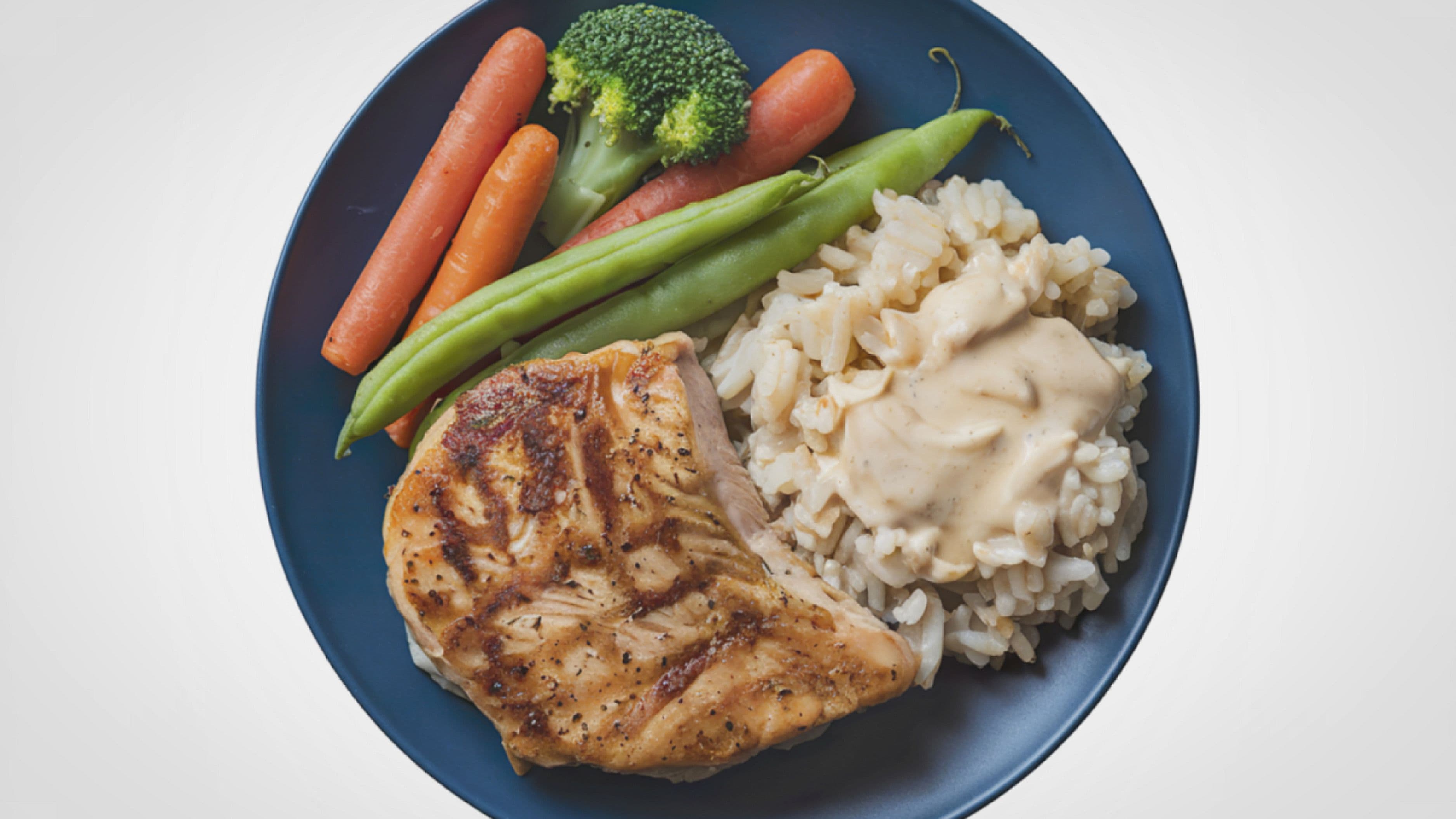
Monday is baked chicken thighs with roasted bell peppers and rice – straightforward, cheap, minimal effort. Wednesday uses the leftover chicken thighs in a quick tomato-based chicken and pasta dish, using the discounted canned tomatoes. Friday is a bell pepper stir-fry with ground turkey or eggs, clearing out the remaining peppers. Sunday is a fridge-cleanout soup or grain bowl using whatever's left. You bought for the deals, planned around what you bought, and spent very little time making decisions along the way.
Common Mistakes to Avoid
The biggest mistake in sale-based meal planning is buying too many different discounted items without a plan for how to use them all. A sale on zucchini, another on leeks, a discount on tilapia, and a deal on lamb – four separate deals from four different meal contexts don't work together into a coherent week. Focus on depth over breadth: fewer deals used thoroughly rather than every deal used once.
Ignoring store brand and generic options is another missed opportunity. Store brand staples – canned goods, pasta, rice, frozen vegetables – are almost always cheaper than name brands and frequently just as good. The circular deals are often on name brands, but checking what's adjacent on the shelf can save additional money without any planning overhead.
Finally, avoid planning meals that require a specific ingredient that isn't on sale when a simpler, cheaper version would do just as well. A recipe calling for pine nuts when they're $9 per ounce, or fresh herbs when dried would work perfectly, adds cost that undercuts the savings from buying the sale protein. Keep your meal decisions grounded in what's actually available and affordable this week.
FAQ
How long does this kind of meal planning actually take each week? Once you've done it a couple of times, it takes about 15–20 minutes from checking the circular to writing the shopping list. The first week or two might take a bit longer while you're getting used to thinking in terms of anchor proteins and flexible meals, but the process becomes fast quickly.
What if the sales don't include things I normally cook? That's the signal to try something new. Sale-based planning pushes you toward whatever is cheap and abundant right now, which often means trying cuts of meat or varieties of produce you wouldn't normally reach for. This is usually a positive thing – many of the most flavorful, cook-friendly ingredients (bone-in cuts, root vegetables, leafy greens) are consistently the cheapest.
Is this realistic for families with picky eaters? Yes, with one adjustment: identify the two or three proteins and produce items your family reliably eats, and anchor the plan around those when they go on sale. You don't need to introduce unfamiliar ingredients every week – you just need to be flexible about which familiar ingredients you're cooking with this week versus last week.
Should I use a meal planning app for this? You don't need one, but apps like Mealime, Plan to Eat, or even a simple notes app work well if you prefer a digital system. The most important tool is the store's own app, which lets you browse the weekly deals without driving to the store first. Beyond that, any format that gets your plan on paper (or screen) before you shop will do the job.
What about stores that don't have a predictable weekly circular? Most major chains and many regional grocers still publish weekly ads, even if they're not always well-promoted. If your store doesn't, use the produce section as your guide – whatever's displayed prominently and abundantly is usually what's cheapest that week. Store staff can also tell you what's been marked down.
📚 Sources
USDA – Thrifty Food Plan: How Americans Can Eat Nutritiously on a Budget: https://www.fns.usda.gov/cnpp/usda-food-plans-cost-food-reports-monthly-reports
Cooperative Extension – Meal Planning and Grocery Shopping on a Budget: https://extension.usu.edu/Utah/files/Meal_Planning_on_a_Budget.pdf
FDA – How to Reduce Food Waste at Home: https://www.fda.gov/food/consumers/food-loss-and-waste
USDA MyPlate – Weekly Meal Planning Tips: https://www.myplate.gov/tip-list/meal-planning-tips
University of Minnesota Extension – Saving Money on Food: https://extension.umn.edu/cook-save-money/saving-money-food