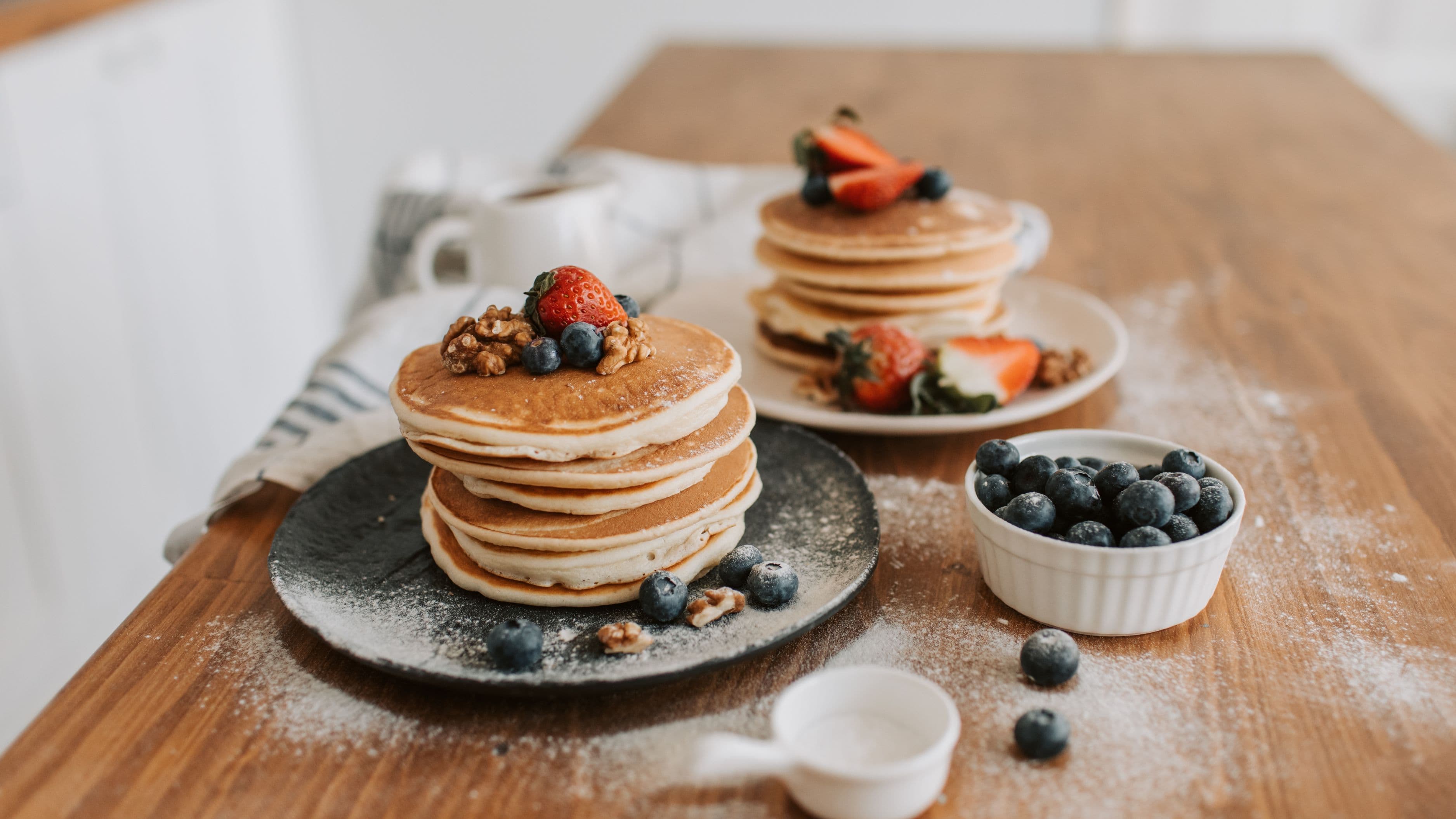
This is a simple, reliable pancake recipe that works every time, comes together in about 20 minutes, and is forgiving enough for a half-awake cook. Master this one and you'll never reach for a box again. Here's how to make it, plus the small tricks that take pancakes from fine to genuinely fluffy.
What You'll Need
This recipe makes about 8 to 10 pancakes, enough for two to three people, and uses pantry staples.
For the batter you'll need 1 and 1/2 cups all-purpose flour, 2 tablespoons sugar, 2 teaspoons baking powder, 1/2 teaspoon baking soda, and 1/2 teaspoon salt for the dry ingredients. For the wet ingredients, gather 1 and 1/4 cups buttermilk (or a quick substitute, below), 1 large egg, 3 tablespoons melted butter (slightly cooled), and 1 teaspoon vanilla extract. You'll also want a little extra butter or oil for the pan.
No buttermilk? Stir 1 tablespoon of lemon juice or white vinegar into 1 and 1/4 cups of regular milk and let it sit for 5 minutes. It curdles slightly and works exactly like buttermilk – this is the trick that keeps pancakes tender and lightly tangy.
Step-by-Step Instructions
Step 1: Mix the dry ingredients
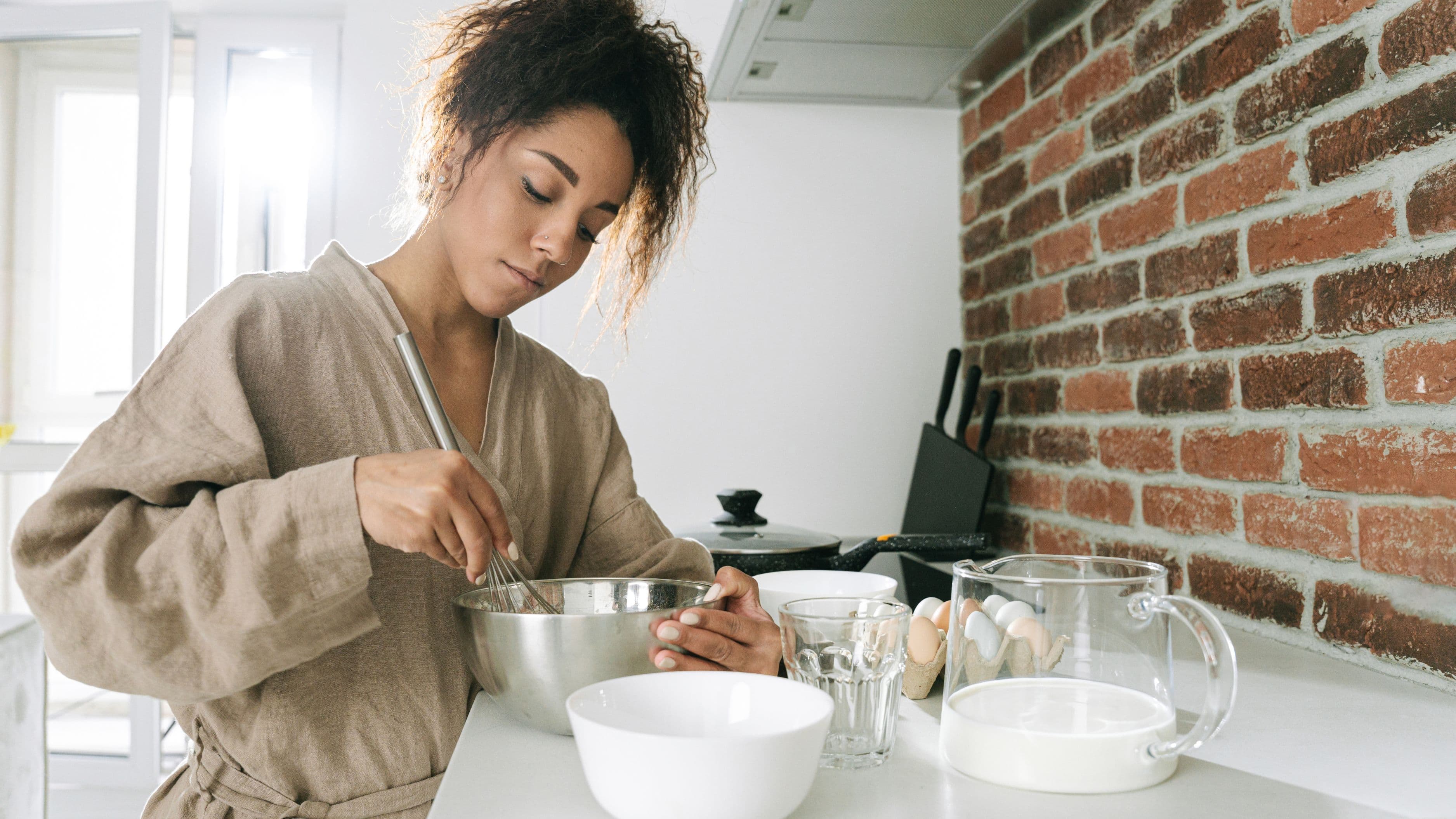
In a large bowl, whisk together the flour, sugar, baking powder, baking soda, and salt. Whisking these together first ensures the leavening is evenly distributed, so every pancake rises the same. This takes about 30 seconds and is worth not skipping.
Step 2: Combine the wet ingredients
In a separate bowl, whisk the buttermilk, egg, melted butter, and vanilla until smooth. Make sure your melted butter has cooled a little first, so it doesn't scramble the egg on contact.
Step 3: Bring them together – gently
Pour the wet ingredients into the dry and stir just until combined. This is the most important step: stop mixing while the batter is still lumpy. A few lumps are exactly what you want. Overmixing develops the gluten in the flour and gives you flat, tough, chewy pancakes instead of fluffy ones.
Step 4: Let the batter rest
Leave the batter alone for 5 to 10 minutes. This lets the flour absorb the liquid and the leavening start working, which gives noticeably thicker, fluffier pancakes. Use this time to heat your pan and set the table – it's a free upgrade that costs you nothing but a little patience.
Step 5: Cook over steady medium heat
Heat a nonstick pan or griddle over medium heat and add a little butter or oil. Pour about 1/4 cup of batter per pancake. Cook until you see bubbles forming on the surface and the edges look set – usually 2 to 3 minutes – then flip once and cook the other side for another 1 to 2 minutes until golden. Resist the urge to flip more than once or press them down; both let the air escape and flatten them.
Step 6: Keep them warm and serve
If you're making a big batch, keep finished pancakes warm on a plate in a low oven (around 200°F) while you cook the rest. Serve with butter, maple syrup, fresh fruit, or whatever your Sunday calls for.
Tips for the Best Results
A few small habits make a real difference. Getting the pan temperature right is the biggest one – too hot and the outsides burn before the insides cook, too low and you get pale, dense pancakes. Medium heat is the sweet spot, and if your first pancake comes out wrong, that's normal; it's the test pancake that tells you whether to adjust the heat.
Measuring flour correctly matters too. Spoon it into the measuring cup and level it off rather than scooping straight from the bag, which packs in too much flour and makes heavy pancakes. And use the bubbles as your timer rather than guessing – when bubbles form and pop across the surface and the edges look dry, it's ready to flip.
Easy Variations
Once you've got the base down, it's easy to make it your own. Fold in a handful of blueberries, chocolate chips, or sliced banana – add them after the batter is mixed, or sprinkle them onto each pancake right after pouring so they spread evenly. A pinch of cinnamon in the dry ingredients adds warmth, and a little lemon zest brightens the whole stack.
For a heartier version, swap up to half the all-purpose flour for whole wheat flour, adding a splash more buttermilk if the batter gets too thick. The recipe is forgiving, so feel free to experiment once you're comfortable with it.
What to Avoid
The most common pancake mistakes are easy to sidestep. Overmixing the batter is the top one – it's the difference between fluffy and rubbery, so stop stirring while it's still lumpy. Cooking on too-high heat is a close second, giving you burnt outsides and raw centers; keep it at medium and be patient.
Flipping too early or too often lets the air escape and flattens pancakes, so wait for those surface bubbles and flip just once. Pressing pancakes down with the spatula does the same damage, so leave them be. And skipping the rest period means thinner, less fluffy results – those few minutes genuinely matter. None of these are hard to avoid; they're just easy to do when you're rushing on a sleepy morning.
FAQ
Can I make the batter the night before? You can, but pancakes are fluffiest with fresh batter because the leavening loses some power overnight. If you do prep ahead, expect slightly flatter results, or mix the dry and wet separately and combine in the morning.
Why are my pancakes flat? Usually overmixing, old baking powder, or skipping the rest period. Stir the batter just until combined, check that your leavening is fresh, and let the batter rest a few minutes before cooking.
How do I know when to flip? Wait until bubbles form and pop across the surface and the edges look set and slightly dry – typically 2 to 3 minutes on the first side. Flip once, and only once.
Can I freeze leftover pancakes? Yes. Let them cool completely, then freeze in a single layer before transferring to a bag. Reheat in a toaster or oven for a quick weekday breakfast that tastes freshly made.
What if I don't have buttermilk? Stir 1 tablespoon of lemon juice or vinegar into 1 and 1/4 cups of regular milk and let it sit 5 minutes. It works just like buttermilk and keeps the pancakes tender.
A Final Word
This is the kind of recipe worth knowing by heart – simple ingredients, forgiving steps, and a fluffy stack that makes any Sunday feel a little more relaxed. The real secrets aren't fancy: don't overmix, let the batter rest, and cook on steady medium heat. Make it once and you'll see how easy it is, then make it your own with whatever fruit or flavors you love. Pour yourself a coffee, take your time, and enjoy the kind of breakfast that's worth slowing down for.
📚 Sources
King Arthur Baking – How to Measure Flour Correctly: https://www.kingarthurbaking.com/blog/2020/04/13/how-to-measure-flour
King Arthur Baking – Tips for Better Pancakes: https://www.kingarthurbaking.com/recipes/simply-perfect-pancakes-recipe
Serious Eats – Light and Fluffy Pancakes: The Science: https://www.seriouseats.com/light-and-fluffy-pancakes-recipe
USDA FoodKeeper – Storing and Freezing Cooked Foods: https://www.foodsafety.gov/keep-food-safe/foodkeeper-app