What You'll Need
Fresh eggs, a pot with enough water to fully submerge them, a slotted spoon, a timer, and a bowl of ice water for the immediate cooling step. That's genuinely all the equipment this requires.
The Method: Start With Boiling Water, Not Cold
The most reliable approach starts the eggs in already-boiling water rather than bringing eggs and water up to temperature together, since the second method makes it much harder to control exact cooking time and leads to inconsistent results between batches. Bring a pot of water to a full rolling boil first, then gently lower your eggs in using a slotted spoon so they don't crack against the bottom of the pot.
Once the eggs are in, note the time or start a timer immediately. For a classic soft-boiled egg with a fully set white and a warm, runny yolk, six to seven minutes is the target range, with six minutes producing a slightly looser yolk and seven minutes a touch firmer, so choose based on your personal preference within that range.
The Ice Bath Step Matters More Than People Realize
As soon as your timer goes off, transfer the eggs immediately into a bowl of ice water for about a minute. This step does two important things: it stops the cooking process instantly so your yolk doesn't continue setting from residual heat, and it makes the shell noticeably easier to peel if you're planning to peel the egg rather than serve it in the shell with a spoon.
Skipping this step is one of the most common reasons soft-boiled eggs come out overcooked, since the egg continues cooking from residual internal heat for a minute or two after you remove it from the boiling water, even off the direct heat source.
Room Temperature Versus Cold Eggs
Eggs straight from the refrigerator take slightly longer to reach the same doneness as eggs that have sat at room temperature for about twenty minutes before cooking, since a colder starting temperature means more time is needed to bring the egg's interior up to the same point. If you're using cold eggs directly from the fridge, add about thirty seconds to your cooking time to compensate for this difference.
For the most consistent results across multiple cooking sessions, try to keep your starting egg temperature consistent, whether that means always cooking straight from the fridge or always letting eggs sit out briefly beforehand, since mixing the two approaches is a common source of inconsistent results.
Tips for Best Results
Use a timer rather than estimating, since even a difference of thirty seconds noticeably changes the yolk's texture at this stage of cooking. Keep the water at a full rolling boil throughout the cooking time rather than letting it drop to a gentle simmer, since a lower temperature will require longer cooking time to reach the same result. And if you're cooking more than a few eggs at once, make sure your pot is large enough that all the eggs are fully submerged in a single layer, since crowding can lead to uneven cooking.
Older eggs, generally a week or two past their pack date, tend to peel more easily than very fresh eggs if you plan to peel them, since the air pocket inside the shell expands slightly as an egg ages, making it separate more easily from the membrane during peeling.
How to Serve a Soft-Boiled Egg
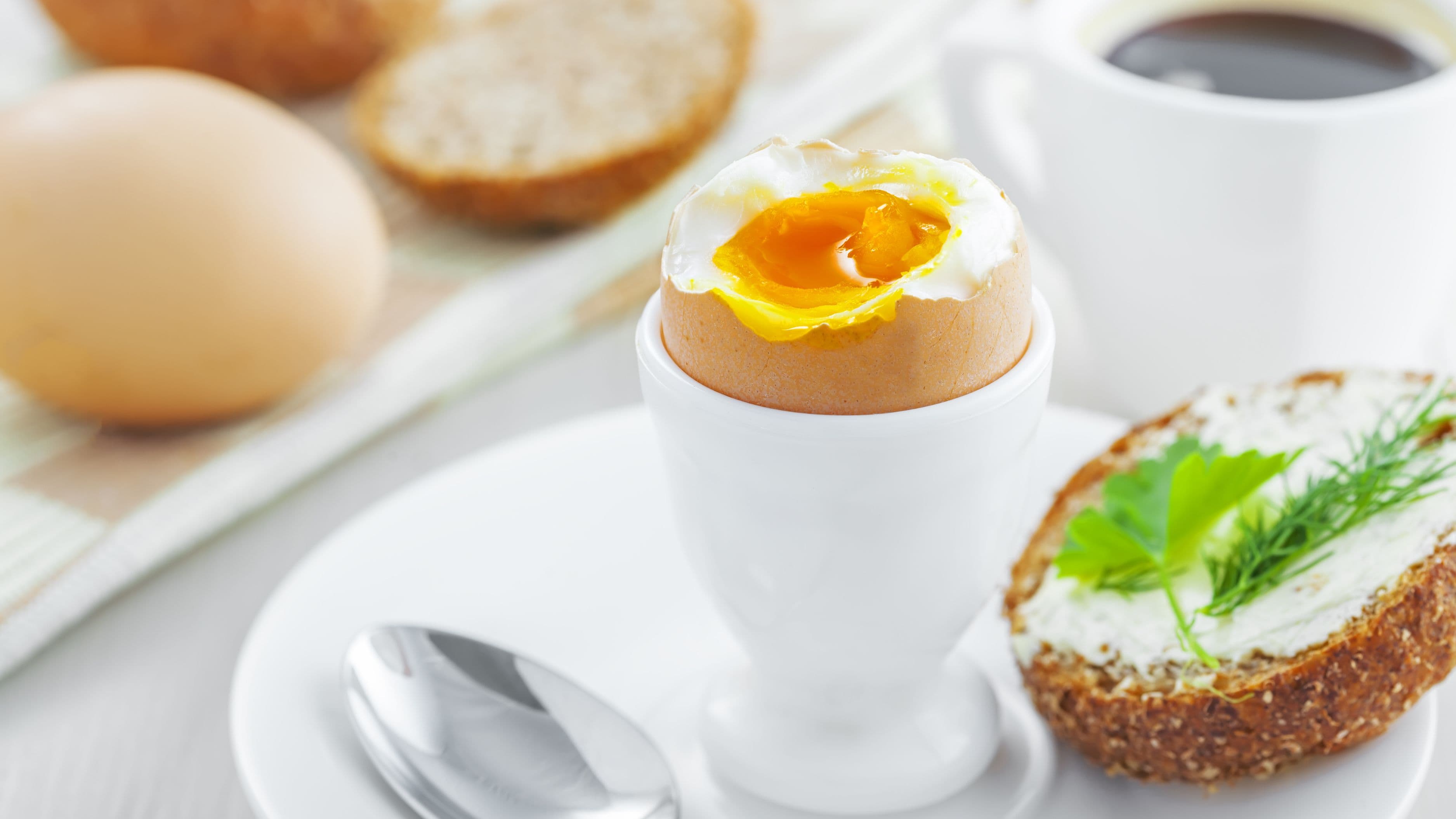
If serving in the shell, place the egg in an egg cup, gently tap and remove the very top of the shell with a small knife or the back of a spoon, and eat directly from the shell with a small spoon, seasoning the exposed yolk and white with salt, pepper, or a touch of hot sauce as desired. If peeling, gently tap the cooled egg all over on a hard surface to crack the shell, then peel starting from the wider end where the air pocket sits, ideally under a thin stream of running water to help separate any stubborn shell fragments from the membrane.
Soft-boiled eggs work beautifully on their own as a quick, protein-rich snack, sliced over avocado toast, added to a bowl of ramen just before serving, or served alongside asparagus for dipping the runny yolk as a simple, elegant side dish.
Variations
For a slightly firmer yolk that's still soft in the center rather than fully runny, extend your cooking time to eight minutes, which lands somewhere between a classic soft-boiled and a medium-boiled egg. For a jammy egg, popular as a ramen topping, aim for seven to seven and a half minutes, which produces a yolk with a fudgy, slightly set but still creamy texture throughout.
What to Avoid
Avoid starting your eggs in cold water if you're aiming for a soft-boiled result, since this method makes exact timing far less predictable and often results in an overcooked white by the time the yolk reaches your desired doneness. Avoid skipping the ice bath, since residual heat will continue cooking the egg beyond your intended doneness. And avoid overcrowding your pot, since eggs that aren't fully submerged or that are packed too tightly together can cook unevenly.
FAQ
Why do my soft-boiled eggs sometimes crack while cooking? Cracking usually happens when eggs are dropped into boiling water too roughly, or when eggs go from a very cold refrigerator directly into boiling water without any adjustment. Lowering them in gently with a spoon and allowing a brief rest at room temperature beforehand both help prevent this.
Can I make soft-boiled eggs ahead of time? They're best enjoyed fresh, since the texture that makes a soft-boiled egg special doesn't hold up well to reheating or extended storage. If you need to prepare in advance, keep unpeeled cooked eggs in the refrigerator for up to a day and bring them close to room temperature before serving.
What's the difference between soft-boiled and poached eggs? Soft-boiled eggs are cooked inside their shell in boiling water, while poached eggs are cracked directly into simmering water without a shell, resulting in a different texture and presentation, though both typically aim for a similarly runny yolk.
📚 Sources
USDA Food Safety and Inspection Service, "Shell Eggs from Farm to Table" – https://www.fsis.usda.gov/food-safety/safe-food-handling-and-preparation/egg-products-preparation/shell-eggs-farm-table
Serious Eats, "The Food Lab's Complete Guide to Egg Cookery" – https://www.seriouseats.com/