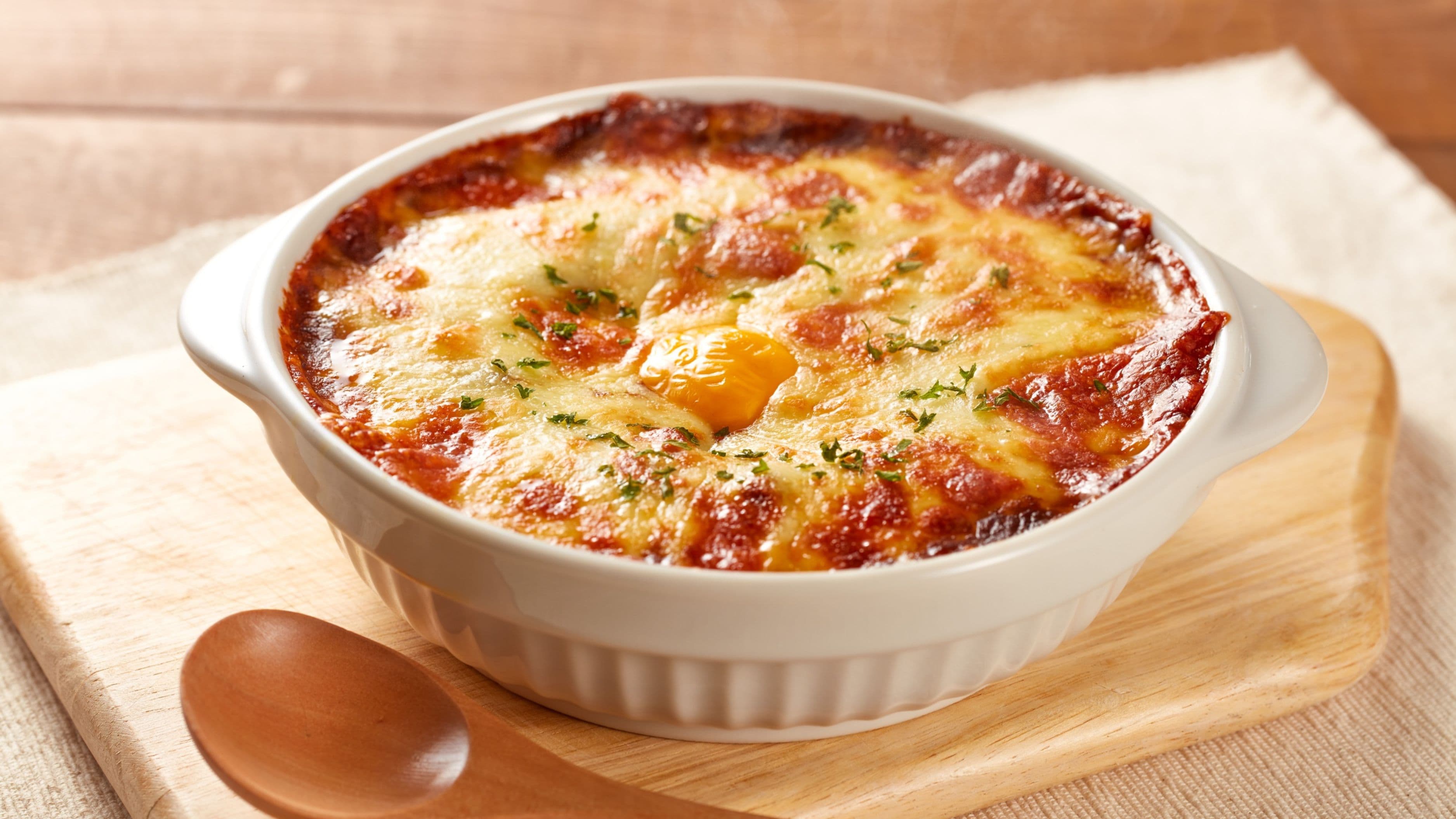
Here's how to scale shakshuka properly for a crowd, without ending up with a watery sauce, overcooked eggs on one side of the pan, and undercooked eggs on the other.
What You'll Need to Scale This Successfully
The biggest challenge with crowd-sized shakshuka isn't the sauce, it's making sure every egg cooks evenly at the same time. A single standard skillet gets overcrowded quickly once you're cracking more than 6-8 eggs into it, which leads to uneven cooking and a messy presentation. The solution is either using a genuinely large, wide pan (a 15-16 inch skillet or a wide braiser) or splitting the sauce across two pans once it's made, finishing the eggs in each separately.
Plan for roughly 1-2 eggs per person depending on whether you're serving this as a main dish alongside bread, or as one of several brunch dishes on a table. For a crowd of 8-10 people, that means preparing enough sauce for 12-16 eggs total, which is where the wide pan or dual-pan approach becomes genuinely necessary.
Tips for Best Results
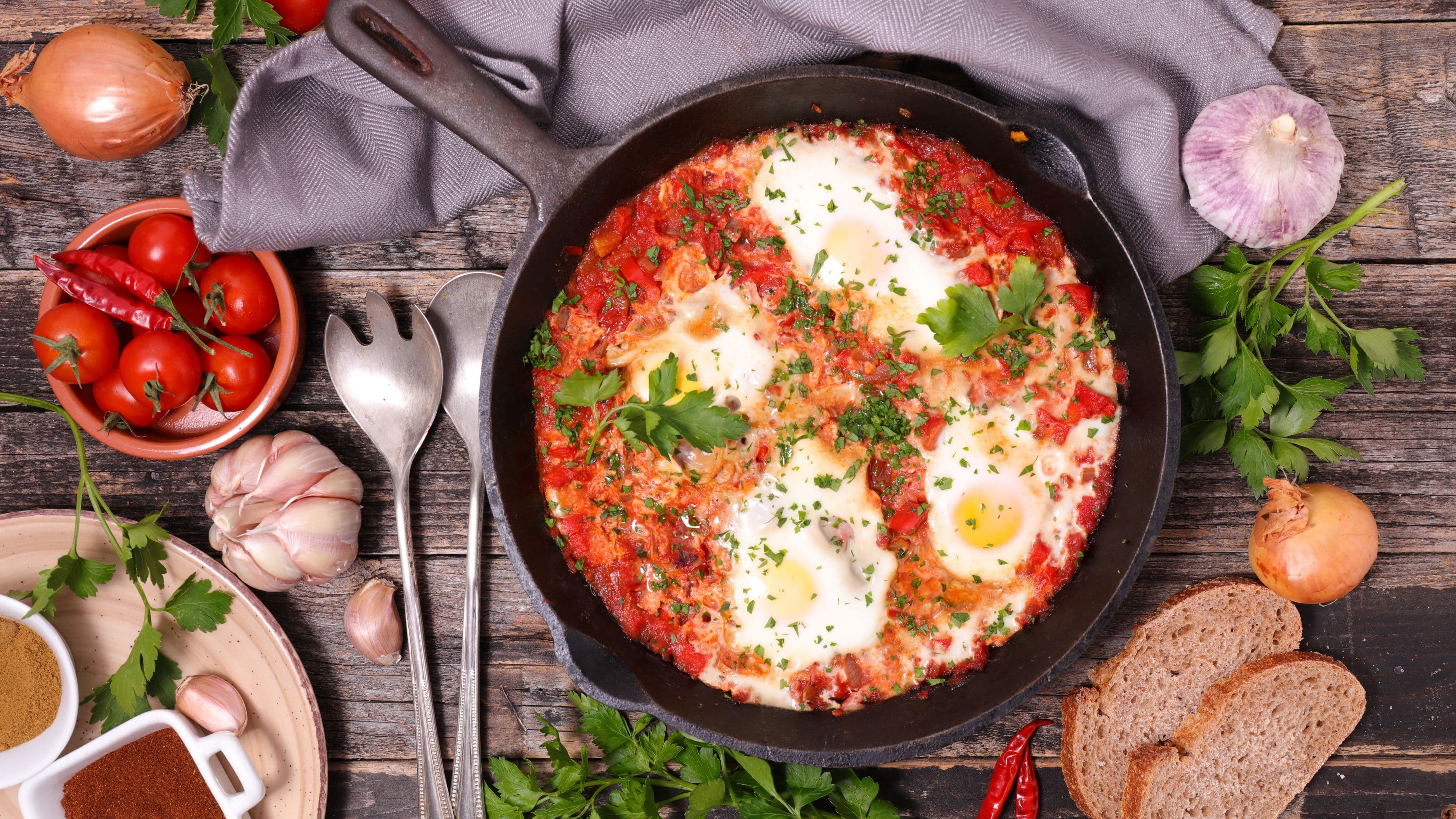
Let the sauce reduce down properly before adding the eggs, since a watery sauce won't hold the eggs in place and will make for a messy, soupy final result rather than the thick, jammy texture shakshuka is known for. The sauce should coat the back of a spoon and hold its shape when you make a well for the eggs.
Crack each egg into a small cup or ramekin first, rather than directly into the pan, especially when you're working with a large number of eggs. This gives you control over exactly where each egg lands and lets you catch any shell fragments before they end up in the sauce, which matters more when you're moving quickly to place a dozen or more eggs in sequence.
Cover the pan while the eggs finish cooking rather than leaving it uncovered. This helps the egg whites set through more evenly without needing to flip or disturb anything, while keeping the yolks appropriately soft if that's your preference.
Ingredients
1/4 cup olive oil
2 large yellow onions, diced
2 red bell peppers, diced
6 garlic cloves, minced
2 tbsp tomato paste
2 tsp ground cumin
2 tsp smoked paprika
1/2 tsp cayenne pepper (adjust to taste)
2 (28 oz) cans crushed tomatoes
1 tsp salt, plus more to taste
1/2 tsp black pepper
12-16 large eggs
1 cup crumbled feta cheese
1/2 cup chopped fresh parsley or cilantro
Crusty bread, for serving
Instructions
Start the base. Heat the olive oil in your largest wide skillet or braiser over medium heat. Add the diced onions and red peppers, and cook for 8-10 minutes, stirring occasionally, until softened and just beginning to turn golden at the edges.
Build the flavor. Add the minced garlic, tomato paste, cumin, smoked paprika, and cayenne pepper. Stir constantly for about 1 minute, until fragrant, being careful not to let the garlic burn, which can turn bitter quickly at this stage.
Add the tomatoes and simmer. Pour in the crushed tomatoes along with the salt and black pepper. Bring the mixture to a gentle simmer, then reduce the heat to medium-low and let it cook uncovered for 15-20 minutes, stirring occasionally, until the sauce has thickened noticeably and no longer looks watery.
Taste and adjust. Taste the sauce and adjust salt, pepper, or cayenne to your preference before adding the eggs, since this is your last chance to easily adjust the seasoning throughout the whole dish.
Add the eggs. Use the back of a spoon to make 12-16 small wells in the sauce, spaced evenly apart. Crack each egg into a small cup first, then gently slide it into a well. Work in batches if your pan is getting crowded, moving quickly but carefully.
Cover and cook. Cover the pan with a lid (or foil if you don't have one that fits) and cook for 8-12 minutes, checking periodically, until the egg whites are fully set but the yolks are still soft, or longer if you prefer firmer yolks.
Finish and serve. Remove from heat and immediately sprinkle with crumbled feta and fresh parsley or cilantro. Serve directly from the pan with plenty of crusty bread for scooping.
What to Avoid
Don't rush the sauce reduction step to save time when scaling up for a crowd. A properly thickened sauce is what keeps your presentation clean and prevents a runny, soupy result once you add that many eggs to the pan.
Also avoid checking the eggs by lifting the lid too frequently while they cook, since this releases heat and steam, extending your actual cooking time and making it harder to judge when they're actually done. Check at the earliest likely finish time, then only as needed after that.
Variations
For a heartier version, stir in a can of drained chickpeas or crumbled cooked merguez sausage into the sauce before adding the eggs. For a milder version suitable for guests sensitive to spice, reduce or omit the cayenne entirely, and offer hot sauce on the side for those who want extra heat.
Frequently Asked Questions
Can I make the sauce ahead of time? Yes, the tomato base can be made up to 2 days ahead and refrigerated. Reheat it gently until simmering before adding the eggs fresh, since eggs don't hold up well to being made in advance.
What if I don't have a pan big enough for the whole batch? Split the finished sauce evenly between two standard skillets and finish the eggs in each pan separately, which works just as well as one giant pan.
How do I keep it warm for a buffet-style brunch? Shakshuka is best served immediately after the eggs finish cooking, since the eggs continue to cook slightly from residual heat. If you need it to sit for a bit, aim for slightly underdone yolks to account for the additional cooking time.
📚 Sources
Serious Eats – The Food Lab's Guide to Shakshuka, https://www.seriouseats.com/shakshuka-recipe
Bon Appétit – Shakshuka Recipe and Technique, https://www.bonappetit.com/recipe/shakshuka
NYT Cooking – Shakshuka, https://cooking.nytimes.com/recipes/1017491-shakshuka