This recipe serves 6–8 and takes about 10 minutes of active prep. The cook time is 8–10 hours on low or 5–6 hours on high.
What You'll Need
For the pork and rub:
3–4 lb boneless pork shoulder (also labeled pork butt)
2 tsp smoked paprika
1 tsp garlic powder
1 tsp onion powder
1 tsp ground cumin
1 tsp black pepper
1 tsp salt
½ tsp cayenne pepper (reduce to ¼ tsp if you prefer milder heat)
1 tbsp brown sugar
For the cooking liquid:
½ cup apple cider vinegar
½ cup chicken broth (or water works fine)
1 tbsp Worcestershire sauce
To finish:
1 cup of your preferred BBQ sauce (bottled is completely fine)
Burger buns, tortillas, or rice for serving
Equipment: A 6-quart slow cooker handles this size of pork shoulder comfortably. A smaller slow cooker can work with a 2–3 lb piece.
Step-by-Step Instructions
Step 1: Mix the rub and season the pork
Combine all the dry spices and the brown sugar in a small bowl and mix them together. Pat the pork shoulder dry with paper towels – this helps the rub stick and promotes better flavor development. Rub the spice mixture all over the pork, pressing it into the surface on all sides. Don't worry about being overly precise here. A thorough coating is the goal, not perfection.
If you have time, you can let the rubbed pork sit in the fridge for a few hours or overnight, which deepens the flavor. But going straight to the slow cooker works just fine too. This recipe doesn't require marinating ahead of time to produce a good result.
Step 2: Add the liquid to the slow cooker
Pour the apple cider vinegar, chicken broth, and Worcestershire sauce into the bottom of the slow cooker. You don't need to stir them together – just add each one in. This liquid creates the steaming environment that keeps the pork moist throughout the long cook, and it builds into a flavorful braising liquid that you'll use in the final step.
Step 3: Add the pork
Place the seasoned pork shoulder in the slow cooker, fat side up if there's a visible fat cap. The fat will slowly render down over the cook, basting the meat as it goes. It's fine if the pork sits a little at an angle or if it's snug in the cooker – it will shrink significantly as it cooks.
Put the lid on. That's it for setup. The whole prep step has taken maybe ten minutes.
Step 4: Cook low and slow
Set the slow cooker to low for 8–10 hours or high for 5–6 hours. Low is genuinely better here – the longer, slower cook produces more tender, more evenly broken-down pork with a richer cooking liquid. High works when you don't have time, and the result is still very good. Either way, the pork is done when it falls apart easily when you press it with a fork – there should be no resistance. If it still feels firm or springy, give it another hour.
Resist the urge to lift the lid during cooking. Every time you do, you release heat and add 15–20 minutes to the cook time. Let the slow cooker do what it does.
Step 5: Shred the pork
Once the pork is cooked through and tender, remove it from the slow cooker and place it on a large cutting board or in a wide mixing bowl. Let it rest for about five minutes – it'll be very hot, and resting makes it easier to handle.
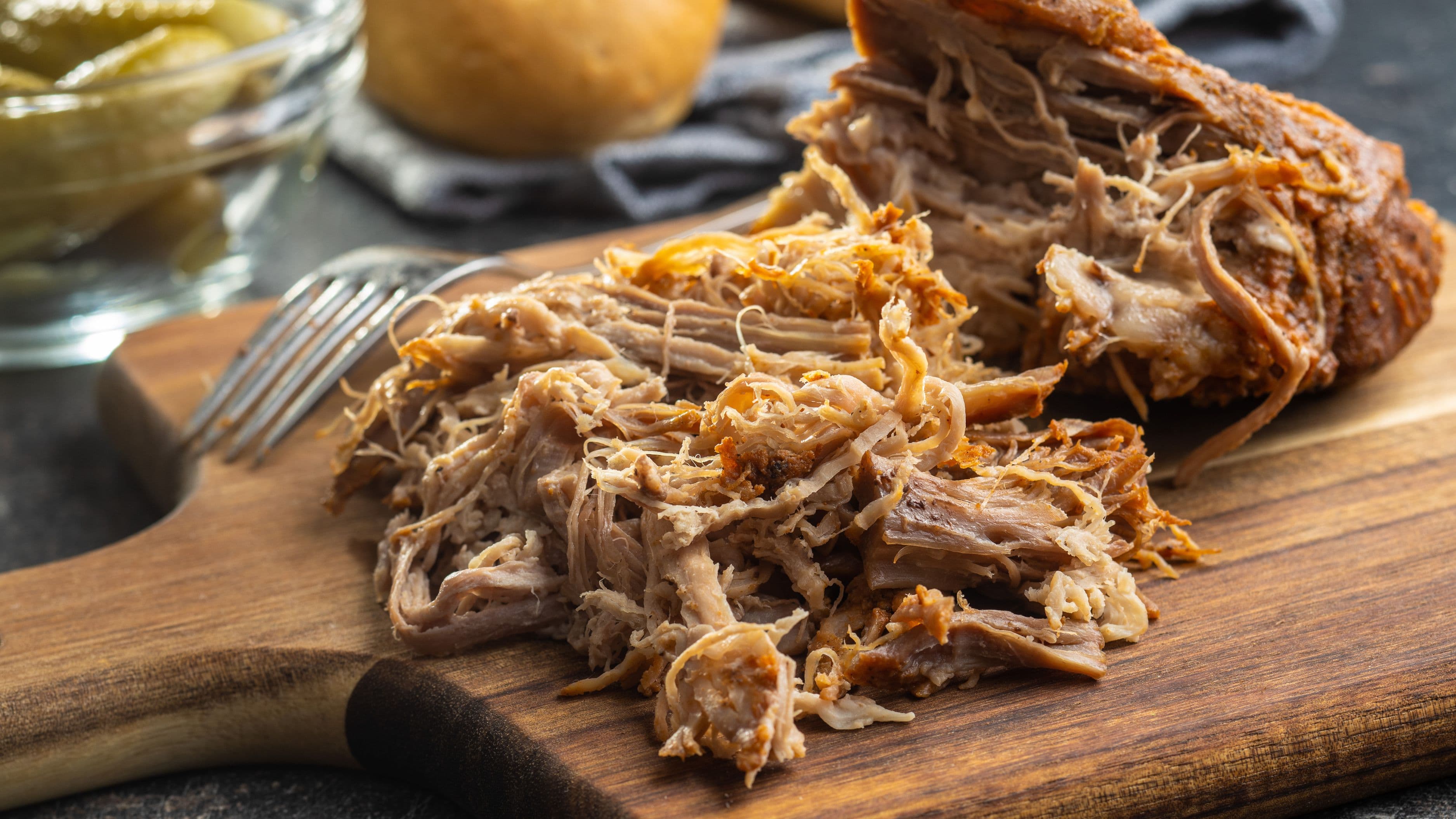
Use two forks to pull the pork apart into shreds. It should fall apart with very little effort. Discard any large pieces of fat or connective tissue as you go – most of it will have rendered away or softened to the point where it's nearly invisible in the pulled meat.
Step 6: Finish with the sauce
Pour the remaining cooking liquid from the slow cooker through a fine mesh strainer into a bowl or measuring cup. Skim off any excess fat from the surface if you like, though a little fat adds richness to the finished dish. Add a few spoonfuls of this liquid back into the shredded pork – start with about ¼ cup and add more until the pork is moist and saucy. This step is what keeps pulled pork from tasting dry.
Now add your BBQ sauce. Start with about ¾ cup, toss everything together, and taste it. Add more sauce if you want a saucier result, or hold back if you prefer the spice rub flavor to come through more. There's no right answer here – it's your pork.
Tips for the Best Results
Pork shoulder is the right cut for this recipe, not pork loin or pork tenderloin. Those cuts are leaner and will dry out over a long slow cook. Pork shoulder (sold as pork butt in many stores – same thing, different name) has the fat content and connective tissue that breaks down beautifully over low heat. Look for a piece with some visible marbling.
The cooking liquid matters more than it seems. The apple cider vinegar adds acidity that balances the richness of the pork and the sweetness of the BBQ sauce. Skipping it and using all water or broth will give you perfectly cooked pork, but it won't have quite the same depth. If you don't have apple cider vinegar, white wine vinegar or a squeeze of lemon juice work as substitutes.
If you want crispy edges on the pulled pork – the kind you get from a proper smoker – spread some of the shredded pork in a single layer on a baking sheet and broil it on high for 3–5 minutes after shredding. Watch it closely. This crisps up some of the meat while the rest stays soft, which gives you a much more interesting texture in the final dish.
The cooking liquid is underrated. Don't throw away what's left after you've sauced the pork. Store it in the fridge and use it to moisten leftovers when reheating, to deglaze a pan, or as a base for a quick weeknight soup. It's concentrated, flavorful, and worth keeping.
Variations
Tacos: Skip the BBQ sauce entirely and instead mix the shredded pork with ½ tsp more cumin, a squeeze of lime juice, and a little of the cooking liquid. Serve with corn tortillas, diced white onion, fresh cilantro, and salsa verde.
Asian-inspired: Replace the BBQ sauce with a mix of hoisin sauce, a splash of soy sauce, and a little sriracha. Serve over steamed rice with sliced scallions and sesame seeds.
Sandwiches: Classic pulled pork sandwiches with BBQ sauce, soft brioche buns, and coleslaw on top. The coleslaw isn't optional here – the crunch and creaminess balance the rich pork in a way that makes the whole thing taste better.
Rice bowls: Serve the BBQ-sauced pulled pork over white rice with quick-pickled red onion (red onion slices in lime juice and salt for 20 minutes), avocado, and a drizzle of hot sauce.
What to Avoid
Using a pork loin or tenderloin will give you dry, stringy results. These cuts aren't suited to long slow-cooking. Pork shoulder only.
Lifting the lid repeatedly to check on progress. The slow cooker works by trapping steam, and every time you remove the lid, you're extending the cook time unnecessarily.
Skipping the cooking liquid altogether. Some slow cooker recipes claim you don't need any added liquid because the pork releases its own juices. That may be technically true but the result is less flavorful and more likely to be dry around the edges. The half cup of liquid doesn't flood the cooker – it just ensures there's always moisture present.
Not tasting before serving. The BBQ sauce you use will determine a lot of the final flavor, and they vary considerably in sweetness, smokiness, and heat. Taste as you add it, not after you've dumped the whole bottle in.
FAQ
Can I cook this on high to save time? Yes. High for 5–6 hours produces excellent pulled pork. Low for 8–10 hours produces slightly more tender, more evenly cooked pork with a richer cooking liquid, but the difference is not dramatic. Cook on high if your schedule requires it.
Can I leave the slow cooker on while I'm at work? That's essentially what slow cookers are designed for. An 8–10 hour cook on low is built around the idea that you start it before you leave and it's ready when you come home. Just make sure your slow cooker is on a stable, heat-safe surface away from anything flammable and that it's not sitting right against a wall.
What's the best way to reheat pulled pork? In a saucepan or skillet with a splash of the reserved cooking liquid or a little chicken broth. Medium heat, cover the pan, and let it warm through for five to seven minutes. This keeps it moist. Reheating in a microwave works but tends to dry out the edges – if using a microwave, cover the plate with a damp paper towel.
Can I freeze leftover pulled pork? Yes, and it freezes beautifully. Let it cool completely, then portion it into zip-lock freezer bags or airtight containers. Freeze for up to three months. Thaw in the fridge overnight before reheating.
Can I use a bone-in pork shoulder? Absolutely. Bone-in often has slightly better flavor and is sometimes less expensive. Just add an extra hour to the cook time and remove the bone (it will pull out cleanly once the pork is fully cooked) before shredding.
This is the kind of recipe that earns a permanent spot in the regular rotation. It makes more than you need for one meal, the leftovers are arguably better the next day, and the effort-to-reward ratio is hard to beat. Put it on in the morning and let the slow cooker handle the rest.
📚 Sources
America's Test Kitchen – Slow Cooker Pulled Pork – https://www.americastestkitchen.com/recipes/7564-slow-cooker-pulled-pork
Serious Eats – The Food Lab: All About Pork Shoulder – https://www.seriouseats.com/the-food-lab-all-about-pork-shoulder
USDA Food Safety and Inspection Service – Slow Cookers and Food Safety – https://www.fsis.usda.gov/food-safety/safe-food-handling-and-preparation/food-safety-basics/slow-cookers-and-food-safety
The Kitchn – The Difference Between Pork Butt and Pork Shoulder – https://www.thekitchn.com/whats-the-difference-between-pork-butt-and-pork-shoulder-meat-basics-215798