What You'll Learn
By the end of this guide, you'll be able to truss a whole chicken or turkey using nothing more than kitchen twine, producing a compact, evenly shaped bird that cooks more consistently and looks considerably more polished coming out of the oven.
Why Trussing Actually Matters
An untrussed bird has wings and legs splayed outward, which means those thinner, more exposed parts cook faster than the thicker breast and thigh meat, often drying out before the rest of the bird finishes. Trussing pulls the legs and wings in close to the body, creating a more compact, uniform shape that cooks more evenly from edge to center. It also makes for a noticeably neater presentation once the bird comes out of the oven, which matters if you're serving it directly at the table.
What You'll Need
A roll of plain, unwaxed kitchen twine is essential, since waxed or synthetic twine can melt or release unwanted flavors during cooking. You'll also want kitchen shears for trimming the twine cleanly once you're finished, and it helps to have the bird at room temperature or just out of the refrigerator, since a slightly firmer bird holds its shape better while you're working.
Step-by-Step Trussing Process
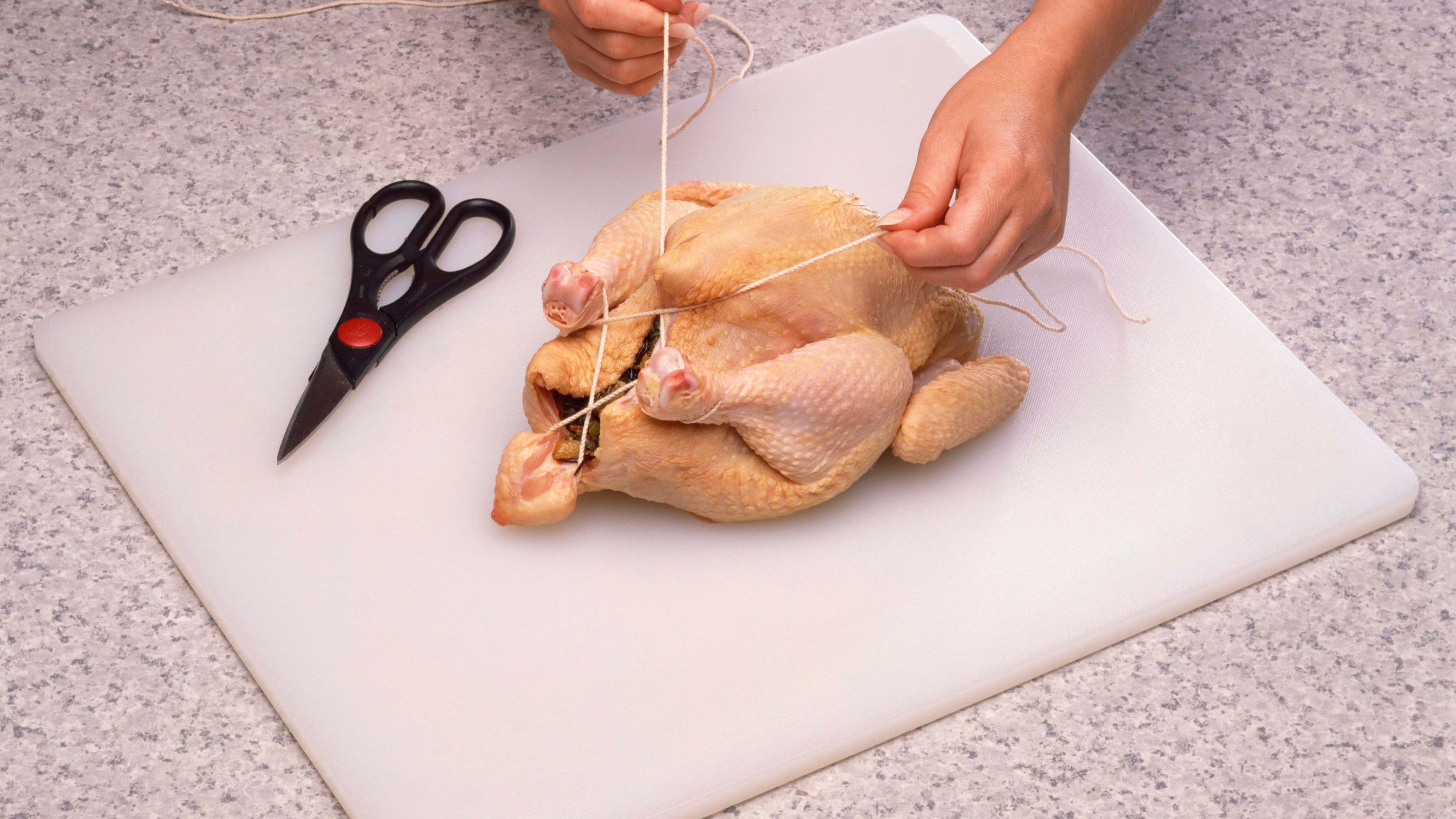
Start by placing the bird breast-side up on a cutting board or directly in your roasting pan, and tuck the wing tips underneath the body so they don't stick out and burn during cooking. Cut a piece of twine roughly three times the length of the bird, since you'll need enough to wrap around and tie securely without running short partway through.
Slide the center of the twine underneath the tail end of the bird, then bring both ends up and around, crossing them over the top where the legs meet the body. Pull the twine snugly to draw the legs together, then cross the twine ends underneath the crossed legs and pull each end around the outside of each drumstick.
Bring both ends of the twine up along the sides of the bird toward the wings, keeping tension so the legs stay pulled in close to the body as you go. Loop the twine around the wing joints on each side, pulling them in snugly against the breast, then bring the two ends together at the top and tie a secure double knot.
Trim any excess twine with your kitchen shears, leaving just enough tail to confirm the knot is secure without loose ends dangling into the pan during cooking.
Tips for Best Results
Work with the bird at a manageable temperature, not ice-cold and stiff, and not so warm that the skin becomes slippery and hard to manipulate. Pull the twine snug at each stage rather than loosely, since a loose truss loses most of its practical benefit and can come undone partway through cooking. If this is your first attempt, it's fine to take it slowly and even redo a step if the twine slips, the technique gets noticeably faster after just one or two tries.
Common Mistakes to Avoid
Using waxed or synthetic twine is one of the most common early mistakes, since it can melt onto the bird or release an unpleasant taste under high oven heat, always confirm your twine is labeled food-safe and unwaxed. Pulling too aggressively on thinner-skinned birds can occasionally tear delicate skin, so use firm, steady tension rather than a sudden hard yank. And forgetting to tuck the wing tips under before trussing is an easy oversight that leads to burnt, dried-out wing tips even with an otherwise well-trussed bird.
Variations Worth Knowing
Some cooks prefer a simplified version that skips wrapping the wings entirely and focuses only on tying the legs together, which is faster and still delivers a meaningful improvement over leaving the bird completely untrussed, though it's slightly less polished in presentation. For very large birds like a full turkey, using two separate pieces of twine, one for the legs and one for the wings, can actually be easier to manage than a single continuous piece, particularly for a first attempt.
FAQ
Do I need special equipment to truss a bird, or will regular string work? Regular string isn't ideal, since it may not be food-safe or heat-resistant in the same way kitchen twine is. Plain, unwaxed cotton kitchen twine, available at most grocery stores, is the right choice.
Does trussing actually change the cooking time? Slightly, a trussed bird cooks a bit more evenly and may need a few extra minutes compared to an untrussed bird of the same weight, since the compact shape changes how heat circulates, so it's worth checking internal temperature rather than relying solely on a fixed time.
Can I truss a bird ahead of time and refrigerate it before cooking? Yes, trussing several hours ahead and refrigerating is completely fine, and can even make your prep timeline easier on a busy cooking day, just bring the bird closer to room temperature before it goes into the oven for more even cooking.
📚 Sources
USDA Food Safety and Inspection Service – Poultry Preparation Guidance: https://www.fsis.usda.gov/food-safety/safe-food-handling-and-preparation/poultry/poultry-preparation
Butterball Turkey Talk-Line – Trussing and Roasting Tips: https://www.butterball.com/how-to/roast-a-turkey