This guide shows you how to whip cream to every useful consistency, how to tell each stage apart, and how to rescue cream that's gone a little too far.
Skill level: Beginner
Active time: 3 to 8 minutes
Yield: 1 cup of cream makes about 2 cups whipped
What You'll Learn
Whipping cream works by beating air into the liquid while the fat droplets partially break apart and cling together around those air bubbles. That network of fat is what holds whipped cream's shape. The longer you whip, the tighter that network becomes – until the fat clumps completely and separates into butter and buttermilk.
Understanding that process makes every stage predictable. You're not guessing; you're watching the structure build.
Ingredients
Heavy cream or heavy whipping cream (1 cup, cold): In the U.S., heavy cream contains at least 36% milkfat, which gives the most stable results. Lighter "whipping cream" (30 to 36%) works but holds its shape less firmly.
Powdered sugar (1 to 2 tablespoons, optional): Powdered sugar dissolves easily, and the cornstarch in it adds a little stability. Granulated sugar works too if added early.
Vanilla extract (½ teaspoon, optional): Adds flavor. Other extracts or a pinch of cinnamon work well too.
Before You Start: Keep Everything Cold
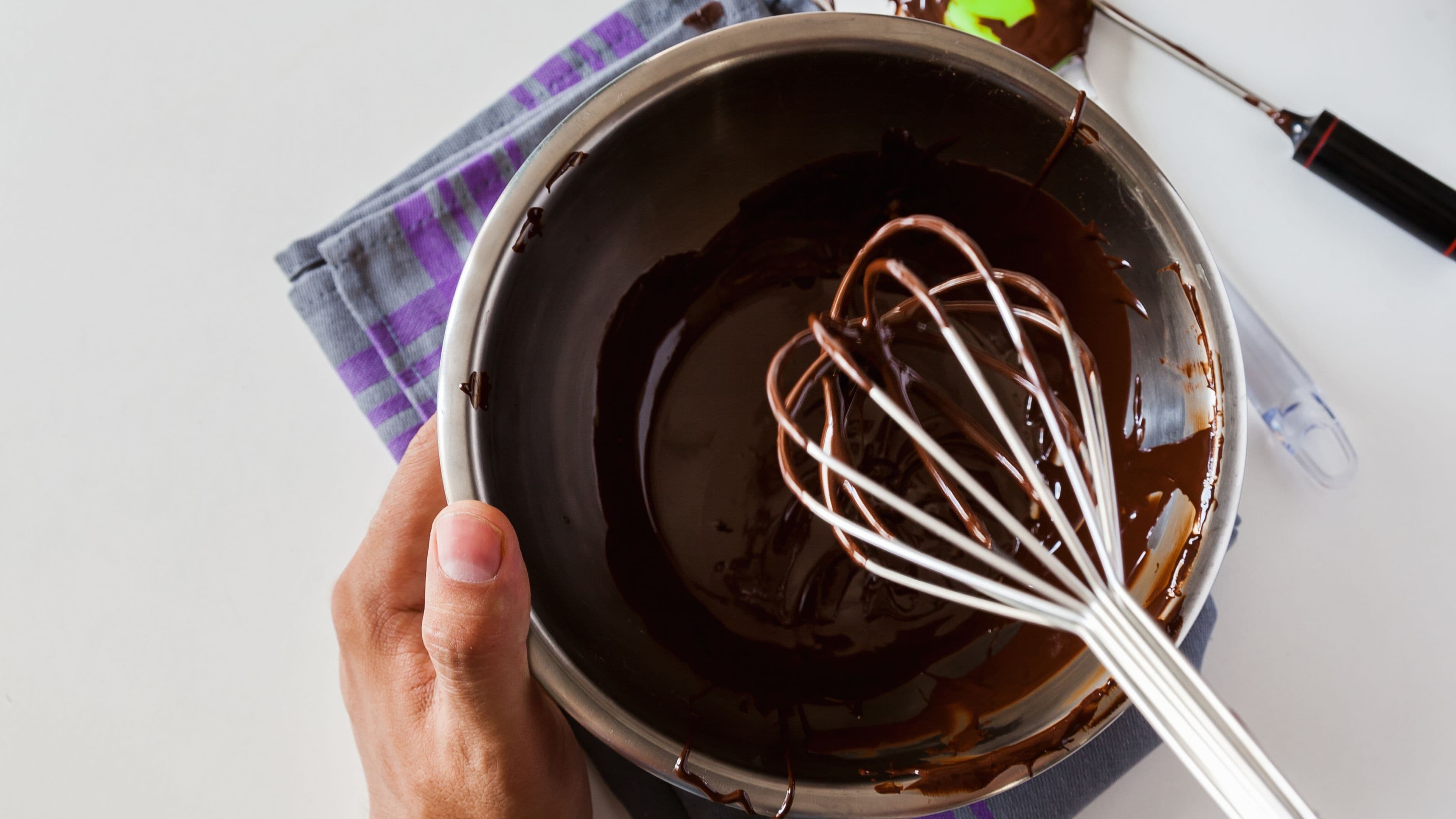
Cold fat whips better and holds air longer. Chill your bowl and whisk or beaters in the freezer for 10 to 15 minutes. Keep the cream refrigerated until you're ready to use it. On a warm day, you can set your mixing bowl over a larger bowl of ice water.
A metal or glass bowl holds cold better than plastic. Choose one deep enough to contain splashes, since cream sprays in the early stages.
Step-by-Step: Whipping Through Each Stage
Stage 1: Foamy (1 to 2 minutes)
Pour the cream into the chilled bowl and start whisking on medium speed if using an electric mixer. At first, you'll see large bubbles and a frothy, loose texture. The cream is still liquid and pourable.
Add sugar and vanilla now if using. Adding sweetener early lets it dissolve evenly.
Stage 2: Soft Peaks (2 to 3 minutes total)
The cream thickens and starts to leave visible trails from the whisk. Lift the whisk out and flip it upside down – the peak should form briefly, then flop over and melt back down. The texture looks glossy and soft.
Use soft peaks for: topping hot drinks, spooning over fruit, folding into mousse or other desserts where you want a light, airy texture.
Stage 3: Medium Peaks (3 to 4 minutes total)
The cream holds a peak with a curled tip, like a soft wave. It still looks smooth and glossy but is noticeably more structured. This is the all-purpose stage most people picture when they think of whipped cream.
Use medium peaks for: topping pies, layering in trifles, and serving with cakes.
Stage 4: Stiff Peaks (4 to 6 minutes total)
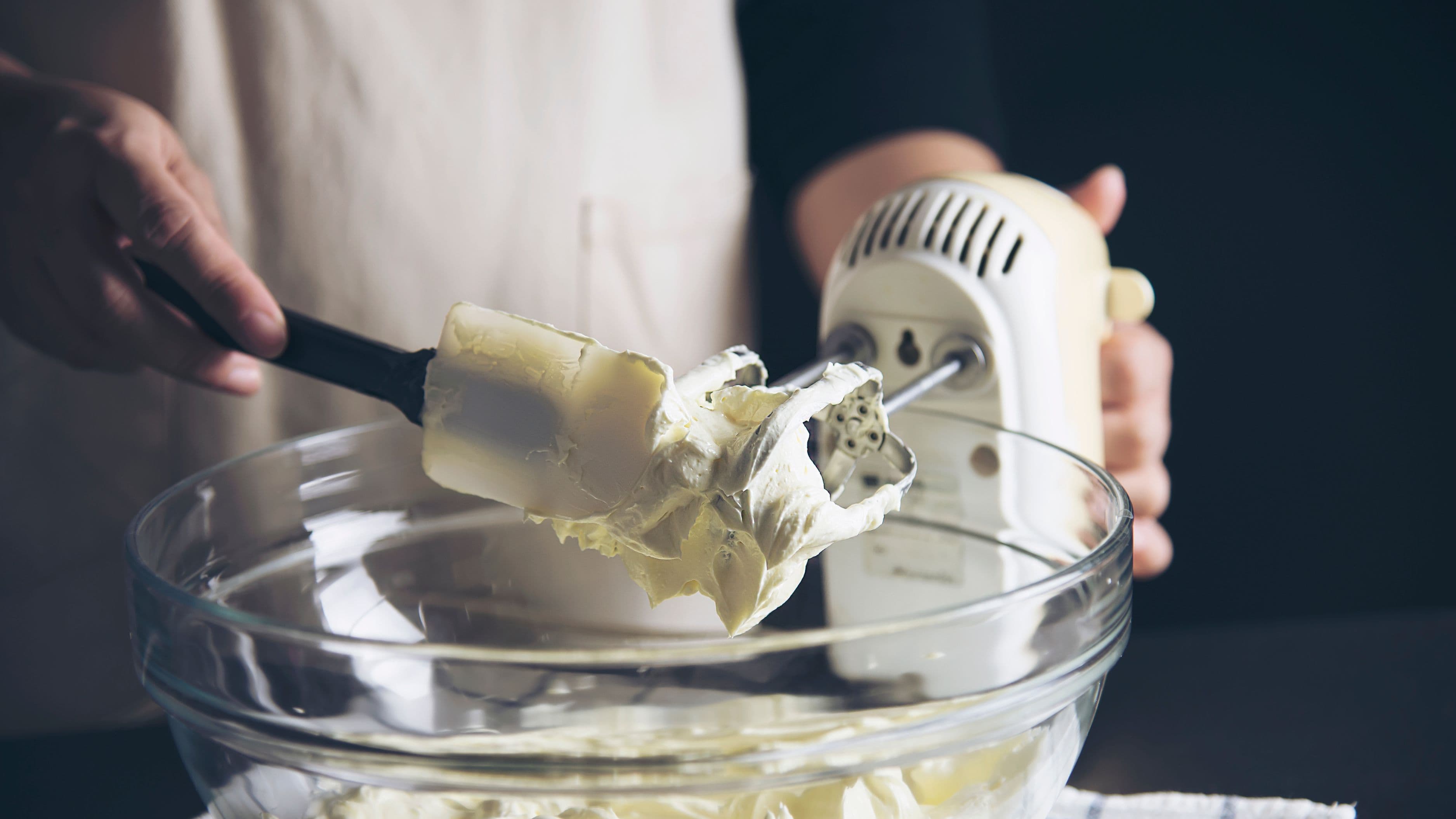
Peaks stand straight up and hold their shape firmly when you lift the whisk. The cream looks thick and slightly less glossy. Slow your mixer down as you approach this stage, since the window before overwhipping is short.
Use stiff peaks for: piping decorations, filling cream puffs, frosting cakes, and layering desserts that need to hold their shape.
Stage 5: Overwhipped (Beyond Stiff)
The cream looks grainy, clumpy, and dull. It may start weeping liquid. Keep going and it separates into butter and buttermilk. At this point, it won't pipe smoothly and has a heavier texture.
How to Fix Overwhipped Cream
If your cream just turned grainy, don't throw it out. Add a few tablespoons of cold liquid cream and gently fold or whisk by hand until it smooths out. Add more cream a little at a time until the texture returns to stiff or medium peaks.
If it's fully separated into butter, you've made homemade butter. Strain out the buttermilk, rinse the butter under cold water, and use it for toast or baking. The buttermilk can go into pancakes or biscuits.
How to Stabilize Whipped Cream
Regular whipped cream starts to lose volume within a few hours. If you need it to hold up longer, try one of these approaches. Adding 2 to 3 tablespoons of mascarpone or softened cream cheese per cup of cream before whipping makes a thick, sturdy cream that holds for a day or two. A small amount of instant pudding mix or cornstarch-based powdered sugar also adds stability.
Gelatin is another option for piping and cakes. Bloom about ½ teaspoon of gelatin in a tablespoon of cold water, gently melt it, cool slightly, and stream it into the cream at soft peaks while whisking.
Tips for Best Results
Whisk by hand if you want more control. It takes longer but makes overwhipping far less likely. With a stand mixer, stay nearby and stop to check often after the two-minute mark. Taste as you go if you're adding sugar – you can always add more but can't take it out.
Whip cream shortly before serving when possible. If you need to make it ahead, refrigerate it covered and give it a brief whisk before using.
Common Mistakes to Avoid
The most common mistake is using warm cream or equipment, which leads to slow whipping and weak structure. Another is walking away from a stand mixer, since cream goes from stiff to overwhipped quickly. Using low-fat cream or half-and-half won't work because there isn't enough fat to hold air.
Avoid adding liquid flavorings in large amounts, such as a lot of liqueur, since extra liquid can prevent the cream from thickening properly.
FAQ
Can I whip cream without a mixer?
Yes. A balloon whisk and a chilled bowl work well. Expect it to take 5 to 10 minutes of steady whisking.
How long does whipped cream last in the fridge?
Plain whipped cream is best within a day. Stabilized versions can last one to two days, covered and refrigerated.
Can I freeze whipped cream?
Yes. Pipe dollops onto a lined tray, freeze, then store in a container. They're great for topping hot drinks.
Why won't my cream whip?
It's usually too warm, too low in fat, or both. Chill everything and use heavy cream.
Final Thoughts
Once you know what each stage looks like, whipping cream becomes one of the easiest and most rewarding kitchen skills. Chill your tools, watch the peaks, slow down near the end, and you'll get exactly the texture you need.
And if you go a little too far, a splash of cream brings it right back.
📚 Sources
U.S. Code of Federal Regulations – 21 CFR 131.150 Heavy cream: https://www.ecfr.gov/current/title-21/chapter-I/subchapter-B/part-131/subpart-B/section-131.150
U.S. Code of Federal Regulations – 21 CFR 131.157 Light whipping cream: https://www.ecfr.gov/current/title-21/chapter-I/subchapter-B/part-131/subpart-B/section-131.157
FoodSafety.gov – FoodKeeper App: https://www.foodsafety.gov/keep-food-safe/foodkeeper-app