Why Most Zucchini Fritters Fail
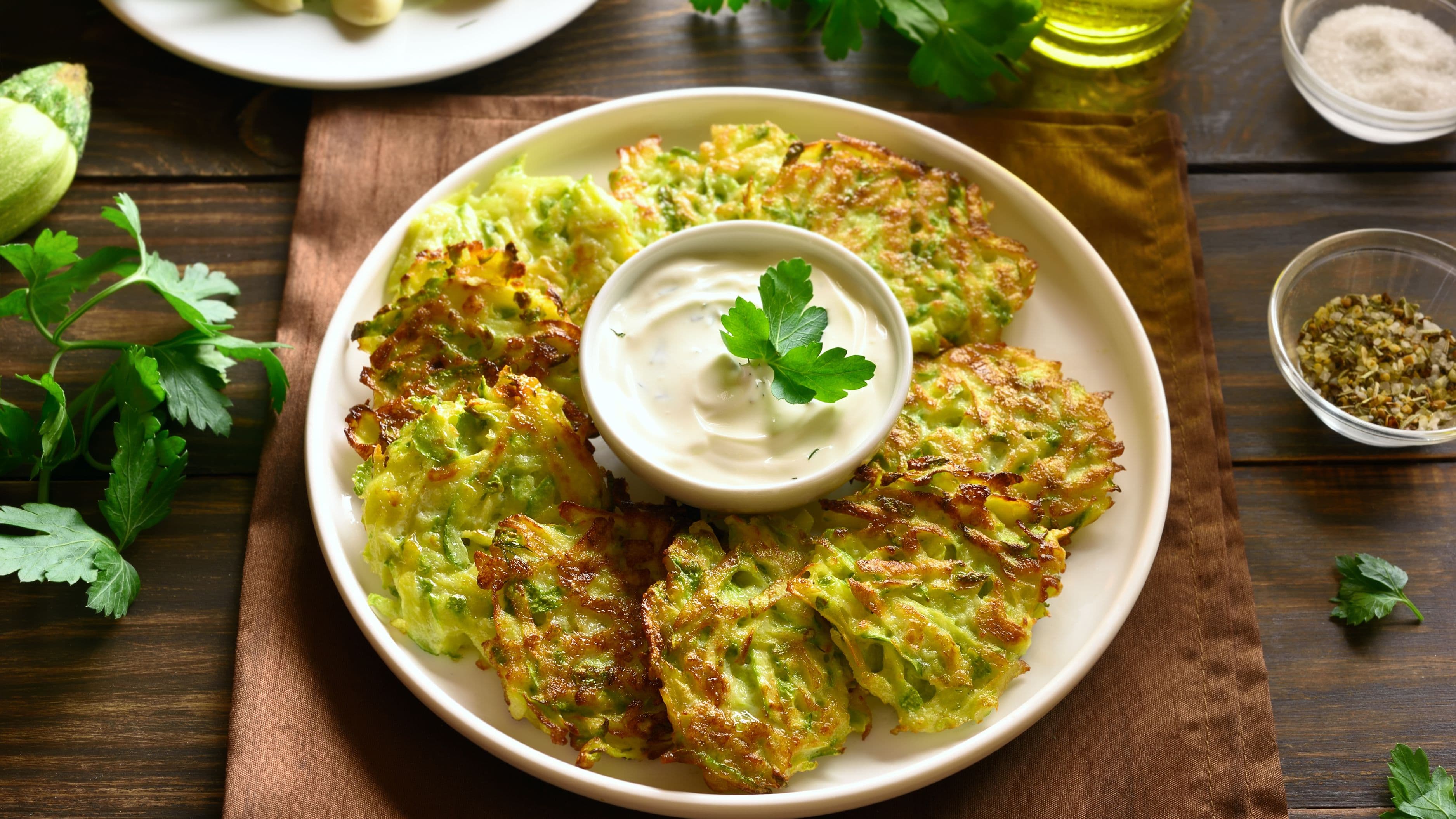
Zucchini is mostly water, and skipping the salting and squeezing step means all of that water ends up in your batter, diluting it and preventing the fritters from holding together or crisping properly in the pan. This single oversight is responsible for the vast majority of soggy, disappointing fritter attempts, and it's also the easiest problem to fix once you know to look for it.
Tips for Best Results
Squeezing the salted zucchini firmly, really wringing it out in a clean kitchen towel rather than just patting it, makes a noticeably bigger difference than people expect the first time they try this method properly. Cooking the fritters over medium rather than high heat gives the inside time to cook through before the outside over-browns, since zucchini fritters can look done on the outside while remaining underdone in the center if the heat is too aggressive.
Variations Worth Trying
Swapping the parmesan for crumbled feta adds a brighter, saltier flavor that pairs particularly well with a yogurt-based dipping sauce. Adding a pinch of red pepper flakes to the batter gives a subtle background heat without overwhelming the dish, and it's an easy way to customize the recipe to your own taste without changing the core technique.
What to Avoid
Skipping the salting and squeezing step is the single most common mistake, and it's worth resisting the temptation to rush straight to mixing and frying, since the extra 15 to 20 minutes this step takes is what actually determines whether your fritters turn out crispy or soggy. Overcrowding the pan is the second most common issue, since too many fritters at once drops the oil's temperature, causing them to absorb excess oil and turn greasy rather than crisping properly.
FAQ
Can I make the batter ahead of time? It's best to cook the fritters shortly after mixing the batter, since zucchini can release additional moisture over time even after the initial draining step, potentially affecting the batter's consistency if left to sit too long.
Can I bake these instead of frying them? Yes, though baking produces a different, less crisp texture than pan-frying. If baking, a hot oven around 425°F with a well-oiled baking sheet, flipping halfway through, gets reasonably close results.
What can I substitute for parmesan if I don't have it? Feta or a sharp cheddar both work well as substitutes, each bringing a slightly different flavor profile while still helping the fritters bind and adding a savory element.
📚 Sources
America's Test Kitchen, "The Science of Crispy Vegetable Fritters" – americastestkitchen.com
USDA National Agricultural Library, "Zucchini Nutrition and Storage" – nal.usda.gov